
Muslim Population in Asia

The Muslim population in Asia is the largest in the world. Pew Research Center estimates that 1.2 billion Muslims lived in the Asia Pacific region in 2020, about six in ten Muslims worldwide. Just two days ago, on 18 November 2026, Pew released new projections to 2070 that change the ranking of the biggest Muslim countries. This updated guide explains the numbers, the new forecast, and what they do and do not mean.
Muslim Population in Asia Today: The Latest Numbers
The most reliable global source is Pew Research Center, which combines census, survey and UN data. Its 2025 report, Muslim Population Change, gives the 2020 baseline for the Muslim population in Asia.
| Country | Muslims (Pew, 2020) | Notes |
|---|---|---|
| Indonesia | 239 million | World's largest Muslim population |
| Pakistan | 227 million | Second largest in the world |
| India | 213 million | About 15% of the population; the only non Muslim majority country in the global top ten |
| Bangladesh | 151 million | 2022 census counted 150,360,405 Muslims (91.04%) |
These four countries alone hold about 830 million Muslims, which is our own sum of Pew's figures. Pew also found that roughly one third of all Muslims live in Indonesia, Pakistan or India.
What "Asia" means in Muslim population statistics
This point confuses many readers. Pew's Asia Pacific region (1.2 billion Muslims) covers South Asia, Southeast Asia, Central Asia, East Asia and the Pacific. Pew places West Asian countries such as Iran, Turkey, Iraq and Saudi Arabia in a separate Middle East and North Africa region (414 million Muslims). So 1.2 billion is a floor for the Muslim population in Asia in the geographic sense, not the full total. I could not find a published figure that cleanly adds the Asian part of the Middle East, so I do not invent one.
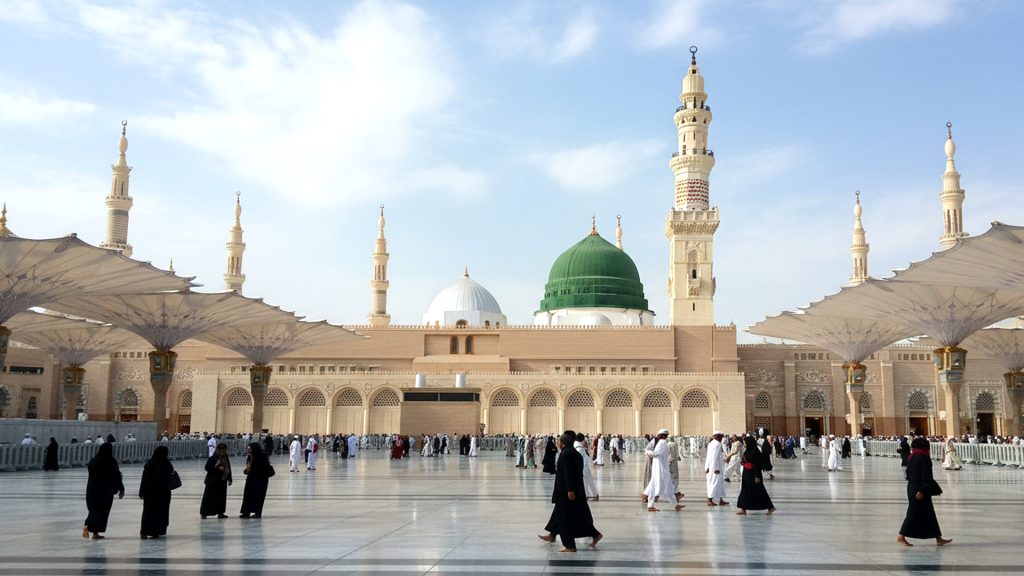
Update: What Is New for the Muslim Population in Asia
Here are the newest developments, with dates.
- 18 November 2026: Pew published The Future of the Global Muslim Population, projecting religious groups from 2020 to 2070 across 201 countries and territories.
- Pakistan to lead: Pew projects Pakistan will pass Indonesia by 2070 with 461 million Muslims, about 13% of the global total.
- India second: India is projected to have 334 million Muslims in 2070, which Outlook India notes would be about 20% of its population, up from 15%.
- Indonesia grows more slowly: Indonesia is projected to reach about 274 million by 2070 and fall behind Pakistan, India and Nigeria.
- Asia Pacific share of Muslims falls: From 59% of the world's Muslims in 2020 to about 50% in 2070, because sub Saharan Africa grows faster.
- But the regional share rises: Muslims are projected to be 37% of the Asia Pacific population in 2070, up from 26% in 2020.
- Global context: Pew expects Muslims to surpass Christians as the world's largest religious group by 2035, reaching 3.6 billion (36%) by 2070.
This replaces older projections. Pew's 2015 study expected India to have the most Muslims by 2050, with more than 310 million. The newer model, built on 2020 baselines and the UN's 2024 population revision, puts Pakistan first instead.
Asia Muslim Population 2026
What is the Asia Muslim population in 2026? Pew has not released a 2026 count. The last measured baseline is 2020, and Pew reports that Muslims in Asia Pacific rose from about 24.6% to 26% of the region's population between 2010 and 2020 (a 1.4 point gain).
That means the 2026 Muslim population in Asia is higher than 1.2 billion, but any exact 2026 number would be an estimate. Several countries have newer census data you can use directly:
- Bangladesh (2022 census): 150,360,405 Muslims, or 91.04%, up from 90.39% in 2011.
- Pakistan (2023 census): total population of about 241.5 million, with an overwhelming Muslim majority.
- India: the most recent religion count dates from the 2011 census, so Pew's modelled 213 million for 2020 is the best current guide.
Asia Muslim Population 2050
Search interest in the Asia Muslim population in 2050 is high. Pew's new report projects to 2070, so there is no official Pew 2050 number for each country. You can still estimate the path by drawing a straight line between Pew's 2020 and 2070 figures.
| Country | 2020 (Pew) | 2070 (Pew) | 2050 straight line (our estimate) |
|---|---|---|---|
| Pakistan | 227 million | 461 million | About 367 million |
| India | 213 million | 334 million | About 286 million |
| Indonesia | 239 million | 274 million | About 260 million |
On this simple path, Pakistan would already pass Indonesia in the 2030s and become the largest Muslim country well before 2050. Real growth is not a straight line, because fertility is falling in many Asian countries. So treat these 2050 numbers as a rough guide.
Bottom line: the Muslim population in Asia will keep growing in number and as a share of the region, but Asia's share of the world's Muslims will slowly fall as Africa grows faster.
Muslim Population in Asia by Percentage
Asia Pacific Muslims: two different shares
Source: Pew Research Center projections, November 2026. The first two bars use a 0 to 37 scale and the last two use a 0 to 74 scale, so compare within each pair only.
Percentages in Asia vary enormously. Bangladesh is about 91% Muslim, and Indonesia and Pakistan are also overwhelming majorities, close to nine in ten or more. India is about 15% and many East Asian countries are under 5%. So the Muslim population in Asia is a mix of overwhelming majorities, large minorities and tiny communities.
Muslim Population in Indonesia and Southeast Asia
Indonesia has the world's largest Muslim population at about 239 million. Pew projects it will rise to about 274 million by 2070, a slower rise than South Asia because Indonesian fertility is lower. Malaysia and Brunei are also Muslim majority countries, and southern Thailand, the southern Philippines, Singapore and Myanmar have significant Muslim minorities.
Southeast Asia is one of the oldest parts of the Muslim population in Asia outside Arabia, shaped by trade and by Sufi scholars. For a global comparison, see our guide to the Muslim population in the world.
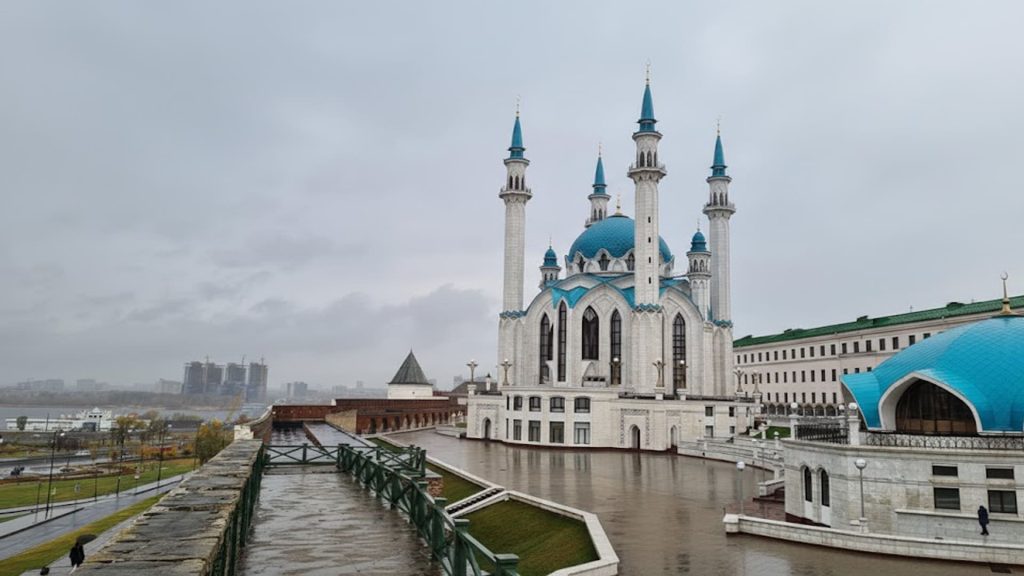
South Asia: Pakistan, India and Bangladesh
South Asia is the center of gravity for the Muslim population in Asia, and it is where growth will be strongest. About 590 million Muslims live in Pakistan, India and Bangladesh combined, by our sum of Pew's 2020 figures (227 + 213 + 151).
Pakistan
Pakistan's 2023 census counted about 241.5 million people. Pew projects its Muslim population to roughly double from 227 million in 2020 to 461 million in 2070, driven by a young population and relatively high fertility.
India
India is home to 213 million Muslims in Pew's 2020 estimate, about 15% of the population. Pew projects 334 million by 2070, or about 20% of India, while Hindus remain a majority at about 76%. India will therefore have the second largest Muslim population in the world by then.
Bangladesh
Bangladesh counted 150,360,405 Muslims in its 2022 census, or 91.04%. Pew's 2020 estimate was 151 million. Bangladesh is among the four largest Muslim countries.
Afghanistan and others
Pew projects Afghanistan will join the list of the ten largest Muslim populations by 2070. Smaller South Asian Muslim populations include Nepal, Sri Lanka, the Maldives (which is entirely Muslim by law) and Bhutan.
Central, East and West Asia
Central Asia. Kazakhstan, Uzbekistan, Kyrgyzstan, Tajikistan and Turkmenistan are Muslim majority. Pew notes that Kazakhstan's Muslim share rose between 2010 and 2020 as the Christian share fell from 27% to 19%.
East Asia. China, Japan and South Korea have Muslim minorities. Pew has cautioned that measuring religion in China is difficult, and I could not verify a reliable current Muslim count for China, so I give none.
West Asia. Turkey, Iran, Iraq, Saudi Arabia, Yemen, Syria and neighbors are Muslim majority. Pew groups them under Middle East and North Africa. Pew projects Turkey will remain among the seven Muslim majority countries with 100 million or more residents in 2070. For this region, see our guide to the Muslim population in Turkey and our list of Muslim countries.
Why the Muslim Population in Asia Is Growing
- Youth. Pew finds the global Muslim median age is 24, versus 33 for non Muslims. Six in ten Muslims worldwide are under 30.
- Fertility. Muslim women average 3.1 children globally versus 2.0 for non Muslims. Asian fertility is lower than in sub Saharan Africa, which is why Asia's share of the world's Muslims is expected to fall.
- High retention. About 99% of people raised Muslim still identify as Muslim as adults, according to Pew.
- Migration out. Asia Pacific is projected to lose about 27 million Muslims net through migration from 2020 to 2070, with Pew's modelling showing many heading to Europe and North America.
That last point links Asia to other regions. Read our reports on the Muslim population in North America and the Muslim countries in Europe to see where many Asian Muslims settle.
Mosques and daily life
Asia has the world's largest and most varied Muslim institutions, from village mosques to great national mosques, madrasas, and Sufi lodges. Daily practice follows the five pillars of Islam. Salah times shift across Asia's many time zones, so a good prayer times finder helps. Our guide to what is Ramadan, plus our pages on Zakat and halal earning, cover practices shared by Muslims across the continent.
Quran and Hadith Guidance
The Muslim population in Asia lives in many languages, cultures and legal systems. The Quran and Sunnah speak to this diversity and to the duty of checking facts. These references are paraphrased from standard translations. Please verify them on Quran.com and Sunnah.com.
يَا أَيُّهَا النَّاسُ إِنَّا خَلَقْنَاكُم مِّن ذَكَرٍ وَأُنثَىٰ وَجَعَلْنَاكُمْ شُعُوبًا وَقَبَائِلَ لِتَعَارَفُوا
Allah reminds humankind that He created them from one male and one female and made them peoples and tribes so that they may know one another.
Quran 49:13
وَمِنْ آيَاتِهِ خَلْقُ السَّمَاوَاتِ وَالْأَرْضِ وَاخْتِلَافُ أَلْسِنَتِكُمْ وَأَلْوَانِكُمْ
Among His signs are the creation of the heavens and the earth and the differences in your languages and colors.
Quran 30:22
If someone unreliable brings you news, verify it, so that you do not harm people out of ignorance. This is a useful rule when reading population claims online.
Quran 49:6 (meaning paraphrased)
The Prophet Muhammad (peace be upon him) said that whoever believes in Allah and the Last Day should honor his neighbor.
Hadith reported in Sahih al Bukhari and Sahih Muslim
These teachings suit a continent where Muslims share cities and villages with Hindus, Buddhists, Christians and others. For wider cultural background, see our overview of Islamic culture.
How to Check Muslim Population in Asia Claims
- Check the region definition. Does "Asia" include Turkey, Iran and the Gulf, or only Pew's Asia Pacific region?
- Check the year. Pew's baseline is 2020, and projections run to 2070.
- Open the primary source. Use Pew's data explorer or the national census.
- Separate data from scenarios. A projection is conditional and assumes current trends continue.
- Cross check. Compare Pew with the census when both exist, as for Bangladesh.
Example: A post says India will have a Muslim majority by 2050. Pew's 2026 projection is 20% by 2070, with Hindus still about 76%. The claim contradicts the source.
Frequently Asked Questions About the Muslim Population in Asia
What is the Muslim population in Asia in 2026?
Pew Research Center estimated 1.2 billion Muslims in the Asia Pacific region in 2020, about 59% of all Muslims worldwide and 26% of the region's population. Growth since then means the 2026 figure is higher, but Pew has not published a 2026 count. Countries in West Asia such as Iran, Turkey and Saudi Arabia are grouped by Pew under the Middle East and North Africa, so a full geographic Asia total is larger.
Which Asian country has the most Muslims?
Indonesia, with about 239 million Muslims in 2020 according to Pew. Pakistan is second (227 million), India third (213 million) and Bangladesh fourth (151 million).
Will Pakistan overtake Indonesia?
Yes, according to Pew's November 2026 projections. By 2070 Pakistan is projected to have 461 million Muslims, ahead of India with 334 million, while Indonesia is projected to reach about 274 million.
What will the Muslim population in Asia be in 2050?
Pew's new projections run to 2070, not 2050. A straight line between Pew's 2020 and 2070 figures suggests roughly 367 million Muslims in Pakistan, 286 million in India and 260 million in Indonesia by 2050. These are our own interpolations, not Pew's published numbers.
What percentage of Asia is Muslim?
Pew estimates Muslims were 26% of the Asia Pacific population in 2020, up 1.4 points from 2010. Pew projects 37% by 2070. The share in individual countries ranges from under 1% in some East Asian nations to over 90% in Bangladesh and Pakistan.
How many Muslims live in India?
Pew estimates 213 million in 2020, or about 15% of India's population, making India the only non Muslim majority country in the world's top ten Muslim populations.
Why is the Muslim population in Asia growing?
Mainly through natural increase. Pew finds Muslims are younger (global median age 24 versus 33 for non Muslims) and have higher fertility (3.1 children per woman globally versus 2.0). Asia Pacific is also expected to lose about 27 million Muslims net through migration by 2070.
What does the Quran say about diversity?
Quran 49:13 says Allah made humankind into peoples and tribes so they may know one another, and Quran 30:22 lists the variety of languages and colors among His signs.
In short, the Muslim population in Asia is about 1.2 billion in Pew's Asia Pacific region, with Indonesia, Pakistan, India and Bangladesh leading. Pew's new projections point to Pakistan as the biggest Muslim country by 2070 and to a more Muslim Asia Pacific region overall, even as Africa's share of the world's Muslims grows. Always check the definition, the year and the source, and keep exploring our research below.
Keep reading on Islamic Info Center
Sources used: Pew Research Center, The Future of the Global Muslim Population (18 November 2026) and Muslim Population Change (June 2025); Bangladesh 2022 census as reported; Pakistan 2023 census as cited by the EUAA; Outlook India reporting on Pew's India figures. Figures are as of 20 November 2026 and may be updated by the publishers.

