
Muslim Population in Norway: 9 Amazing Facts, Ultimate Guide 2026

The Muslim population in Norway is small in percentage terms, but it is one of the fastest growing religious communities in the country. According to Statistics Norway (SSB), 197,390 people were registered members of Islamic communities in 2025, up by 6,938 in one year. This guide explains what that number really means, how it compares with the past, and what credible projections say about 2050.
Muslim Population in Norway Today: The Official Numbers
The most reliable source for the Muslim population in Norway is Statistics Norway. It publishes yearly counts of members in religious and life stance communities that receive state support. You can check the raw tables on the SSB table on religious and philosophical communities and the SSB immigration fact page.
The latest published data, for 2025, shows this picture:
- Islamic communities: 197,390 members, an increase of 6,938 from the year before.
- Christian communities outside the Church of Norway: 384,324 members.
- Buddhist communities: 22,176 members, a small decline.
- Hindu communities: 14,320 members.
In SSB’s breakdown of the 775,307 people who belong to communities outside the Church of Norway, Islam accounts for roughly one in four (25.5%). Only Christian communities outside the state church are larger.
Why registered members are not the same as all Muslims
This is the single most important point for anyone researching the Muslim population in Norway. Norway funds religious communities based on the number of registered members. So SSB counts people who are enrolled in a community, not everyone who identifies as Muslim.
Some Muslims never register. Others pray at home or attend mosques occasionally without formal membership. Children are counted differently across communities. For that reason, the real number of people with a Muslim background is probably higher than the registered figure, and surveys or estimates by research centers can differ from SSB. Always state which definition a number uses.

Norway Muslim Population 2026
What is the Norway Muslim population in 2026? The honest answer has two parts.
First, what is confirmed. The newest figure I could verify from SSB is the 2025 count of 197,390 registered members. SSB’s membership tables count members on 1 January, and I could not find a published 2026 Islam figure at the time of writing.
Second, a reasonable estimate. If membership grows by about the same amount as last year (6,938), the 2026 count would land near 204,000. Treat that as a simple estimate based on one year of change, not an official statistic. When SSB publishes its 2026 table, replace this estimate with the official number.
The wider context in 2026 matters as well. SSB reports that 333,514 refugees and family members of refugees lived in Norway in 2025, which is 18,332 more than the year before. Migration patterns, family reunification, and births all feed into community membership over time.
Norway Muslim Population 2050
Search interest in the Norway Muslim population in 2050 is high, and it attracts a lot of misleading claims. Here is what is solid and what is not.
What Pew Research projected
In 2017, Pew Research Center published Europe’s Growing Muslim Population. It modelled three migration scenarios for the 28 EU countries plus Norway and Switzerland:
| Scenario | What it assumes | Europe’s Muslim share in 2050 |
|---|---|---|
| Zero migration | No migration after mid 2016 | 7.4% |
| Medium migration | Regular migration continues, refugee flows stop | 11.2% |
| High migration | Record 2014 to 2016 refugee flows continue | 14% |
For Norway specifically, reporting on the Pew study says the high scenario would take the Muslim share to about 17%. Pew itself said these are not predictions and that the most realistic outcome for Europe lies somewhere between the medium and high scenarios.
A simple trend check
Between 2013 (120,882 members) and 2025 (197,390), registered membership grew by about 76,500, or roughly 6,400 per year. If that pace simply continued for 25 more years, membership would reach about 370,000 by 2050. This is our own straight line arithmetic and it ignores migration shocks, births, deaths, and people leaving or joining. It is useful only as a sanity check against extreme claims.
Bottom line: the Muslim population in Norway will very likely keep growing, but credible figures for 2050 depend on migration policy, asylum flows, and birth rates. Be cautious with any website that gives a single exact number.
Norway Muslim Population Percentage
The Church of Norway is still the largest religious body. At the end of 2025 it had 3,427,657 members, which is about 61% of the population according to figures published from SSB data. That implies a total population of roughly 5.6 million.
Dividing 197,390 registered Muslim members by about 5.6 million gives roughly 3.5%. This is our own calculation and it covers registered members only. Estimates that include non registered people with a Muslim background are higher, which is why Pew’s 2016 estimate for Norway sat in the mid single digits.
So when you read the Norway Muslim population percentage, check whether the writer means registered members (about 3.5%) or everyone with a Muslim background (higher, and harder to measure).

Norway Muslim Population Growth: From 72,000 to 197,390
The growth of the Muslim population in Norway is clearer in a chart. Registered members of Islamic communities rose steadily:
Registered members of Islamic communities in Norway
Sources: SSB archive release for 2006, SSB reporting for 2013, Statista for 2023, SSB for 2025.
What drives the growth
- Migration and refugees. Families from Muslim majority countries settled in Norway over several decades, and many arrived as refugees.
- Family reunification and births. Muslim communities in Europe are younger on average, and Pew has found they also have higher fertility than other Europeans.
- Better registration. A new Act on religious communities and life stance communities took effect on 1 January 2021, and funding rules reward registered members, so more communities keep accurate lists.
- A shrinking state church share. As Church of Norway membership falls as a share of the population, other communities grow in relative terms.
Where Muslims Live in Norway and Who They Are
The Muslim population in Norway is mostly Sunni, with a significant Shia minority. They come from many backgrounds, and widely reported origins include Pakistan, Somalia, Iraq, Syria, Turkey, Afghanistan, and the Balkans, as well as Norwegians who converted. No single ethnic group defines the community.
Geography is concentrated. In 2013, government statistics showed 55% of registered members lived in Oslo and Akershus. Cities such as Oslo, Drammen, Bergen, Stavanger, and Trondheim host larger congregations, while many northern municipalities have only small groups. For the latest municipality level data, use the SSB municipal facts table.
How Norway compares with other European countries
The Muslim population in Norway, as a share of the total, is lower than in France, Sweden, or the UK. If you want regional context, read our guides on the Muslim population in the UK and Muslim countries in Europe. For the global picture, see the Muslim population in the world.
Mosques and Community Life in Norway
Before the 2000s, Norway had very few purpose built mosques. The World Islamic Mission built one in Oslo in 1995, and other communities later followed. Today, Muslims in Norway worship in purpose built mosques, converted buildings, and prayer rooms. The Islamic Cultural Centre in Oslo is among the best known, and the larger centers run Quran classes, funeral services, youth programs, and interfaith events.
Practical daily matters are familiar to readers of this site: Salah timings change a great deal in northern latitudes, and Ramadan in Norway can mean very long summer fasts or short winter ones. Our guide to what is Ramadan and our prayer times finder help with both. Muslims in Norway also pay attention to halal earning, halal food availability, and Zakat through local charities.
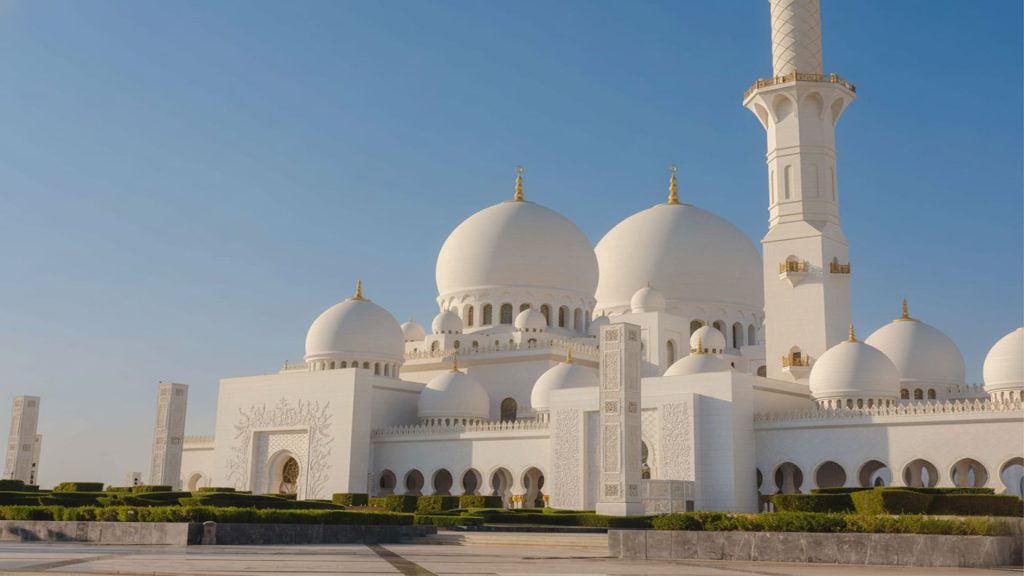
Quran and Hadith Guidance for Muslim Minorities
Many readers of our Muslim population in Norway coverage ask how Islam views life as a minority in a secular, plural society. The core teachings are about knowing one another, being just, and staying truthful. The following references are paraphrased from standard translations. Please check them against a trusted translation on Quran.com and Sunnah.com.
يَا أَيُّهَا النَّاسُ إِنَّا خَلَقْنَاكُم مِّن ذَكَرٍ وَأُنثَىٰ وَجَعَلْنَاكُمْ شُعُوبًا وَقَبَائِلَ لِتَعَارَفُوا
Allah reminds humankind that He created them from one male and one female and made them peoples and tribes so that they may know one another.
Quran 49:13
Allah does not forbid you from being kind and fair to those who do not fight you over religion and do not expel you from your homes. Allah loves those who act justly.
Quran 60:8
If someone unreliable brings you news, verify it, so that you do not harm people out of ignorance. This is a useful rule when reading population claims online.
Quran 49:6 (meaning paraphrased)
The Prophet Muhammad (peace be upon him) said that whoever believes in Allah and the Last Day should honor his neighbor.
Hadith reported in Sahih al Bukhari and Sahih Muslim
These teachings explain why many Norwegian Muslim organizations stress good neighborliness, honest dealings, and public service. If you want more background on the faith itself, start with the five pillars of Islam and our overview of Islamic culture.
History of the Muslim Population in Norway
The history of the Muslim population in Norway is short compared with older Muslim communities in Spain or the Balkans. Until the late 1960s, only a handful of Muslims lived in the country, mostly students and a few converts.
The first big change came in the early 1970s, when labor migrants from Pakistan, Turkey, and Morocco arrived. They were followed by family members and later by refugees. The Balkan wars of the 1990s brought Bosnian and Kosovar families, and later conflicts in Somalia, Iraq, Afghanistan, and Syria added new arrivals. Each wave expanded the Muslim population in Norway and also created new mosques, schools, and charities.
By 2006, SSB counted 72,000 members of Islamic communities. By 2025, the number was 197,390. That is almost a threefold increase in less than twenty years, which explains why the Muslim population in Norway is so often discussed in the media, even though it remains a minority of the total.
Work, Education, and Daily Life
Numbers tell only part of the story. The Muslim population in Norway is also a story of students, nurses, taxi drivers, engineers, shop owners, and public servants. Second generation Norwegian Muslims, born and raised in the country, now form a growing share of the community and often speak Norwegian at home and at the mosque.
SSB publishes detailed pages on immigrants’ education, employment, and income. These are not religion statistics, so avoid treating them as a measure of Muslims alone. Still, they show how migration backgrounds shape the labor market, which is helpful context when you study the Muslim population in Norway.
Common questions Muslims in Norway face
- Prayer at work or school. Many employers and schools allow short prayer breaks when asked politely in advance.
- Halal food. Larger cities have halal butchers and restaurants, while smaller towns rely on online orders.
- Religious education. Mosques run weekend Quran and Arabic classes for children.
- Funerals. Muslim cemetery sections exist in some municipalities, and communities help families with burial rites.
- Eid celebrations. Large halls are rented for Eid prayers because mosques cannot hold everyone.
For readers who are new to Islam, our guide to the basics of the Islam religion and our Eid al Adha guide explain these practices in simple language.
Why the Muslim Population in Norway Matters for Researchers
Journalists, students, and policy makers follow the Muslim population in Norway for several reasons. Funding for religious communities depends on membership numbers. Cemetery planning, school meals, and chaplaincy services need reliable counts. And public debate improves when people use accurate data instead of rumors.
If you are writing about the Muslim population in Norway, cite the year, state the definition, and link to the primary source. This small habit is a good example of the Quranic advice to verify news before spreading it.
How to Check Muslim Population in Norway Claims Yourself
A five step method
- Identify the definition. Is the number about registered members, people born in Muslim majority countries, or self identified Muslims?
- Check the date. SSB counts members on 1 January. Many viral numbers are years old.
- Find the primary source. Open SSB or Pew directly instead of trusting a screenshot.
- Separate data from scenarios. Projections for 2050 are conditional, not promises.
- Cross check. Compare at least two independent sources before sharing.
A practical example
Suppose a post says the Muslim population in Norway is already 10%. Using SSB’s 197,390 registered members and a population near 5.6 million, the registered share is about 3.5%. Even if you assume the true number of Muslims is double the registered count, the share would be about 7%. A 10% claim would need strong evidence, so ask for the source.
Frequently Asked Questions About the Muslim Population in Norway
What is the Muslim population in Norway in 2026?
The latest verified official figure is 197,390 registered members of Islamic communities in 2025, according to Statistics Norway. If growth continues at last year’s pace, the 2026 figure would be around 204,000, but that is an estimate until SSB publishes the new table.
What percentage of Norway is Muslim?
Registered Muslim community members are about 3.5% of the population by our calculation. Estimates that include non registered people with a Muslim background are higher.
What will the Norway Muslim population be in 2050?
No one can say exactly. Pew Research modelled scenarios, and reporting on its study puts Norway near 17% in a high migration scenario. A simple continuation of the recent registered growth would give roughly 370,000 members, so the real outcome depends on migration and birth rates.
Is Islam the second largest religion in Norway?
Yes, by registered membership. SSB lists the Church of Norway first, other Christian communities second at 384,324 members, and Islam third as a single community type at 197,390 members. Among non Christian religions, Islam is the largest.
Why do different websites give different numbers?
They use different definitions and dates. Some count registered members, some count immigrants from Muslim majority countries, and some use survey estimates. Always check the primary source.
Where do most Muslims in Norway live?
Mostly in and around Oslo. In 2013, 55% of registered members lived in Oslo and Akershus. Other large communities are in Drammen, Bergen, Stavanger, and Trondheim.
Are Muslims in Norway Sunni or Shia?
Most are Sunni, with a significant Shia minority. There is also a Sufi influenced tradition in some communities.
Does the Quran say anything about living as a minority?
The Quran encourages justice, kindness, and mutual knowledge between peoples, for example in 49:13 and 60:8. Many scholars cite these verses when discussing life in plural societies.
The Muslim population in Norway has grown from about 72,000 registered members in 2006 to 197,390 in 2025, and it will probably keep rising. Still, the exact path to 2050 is open, and good readers separate official counts from scenarios. Bookmark the SSB and Pew links in this guide, check numbers before you share them, and explore more of our research on Muslim demographics below.
Keep reading on Islamic Info Center
Sources used: Statistics Norway (SSB) tables and fact pages; Pew Research Center, Europe’s Growing Muslim Population (2017); published reporting on SSB religion statistics. Figures are as of 20 November 2026 and may be updated by the publishers.