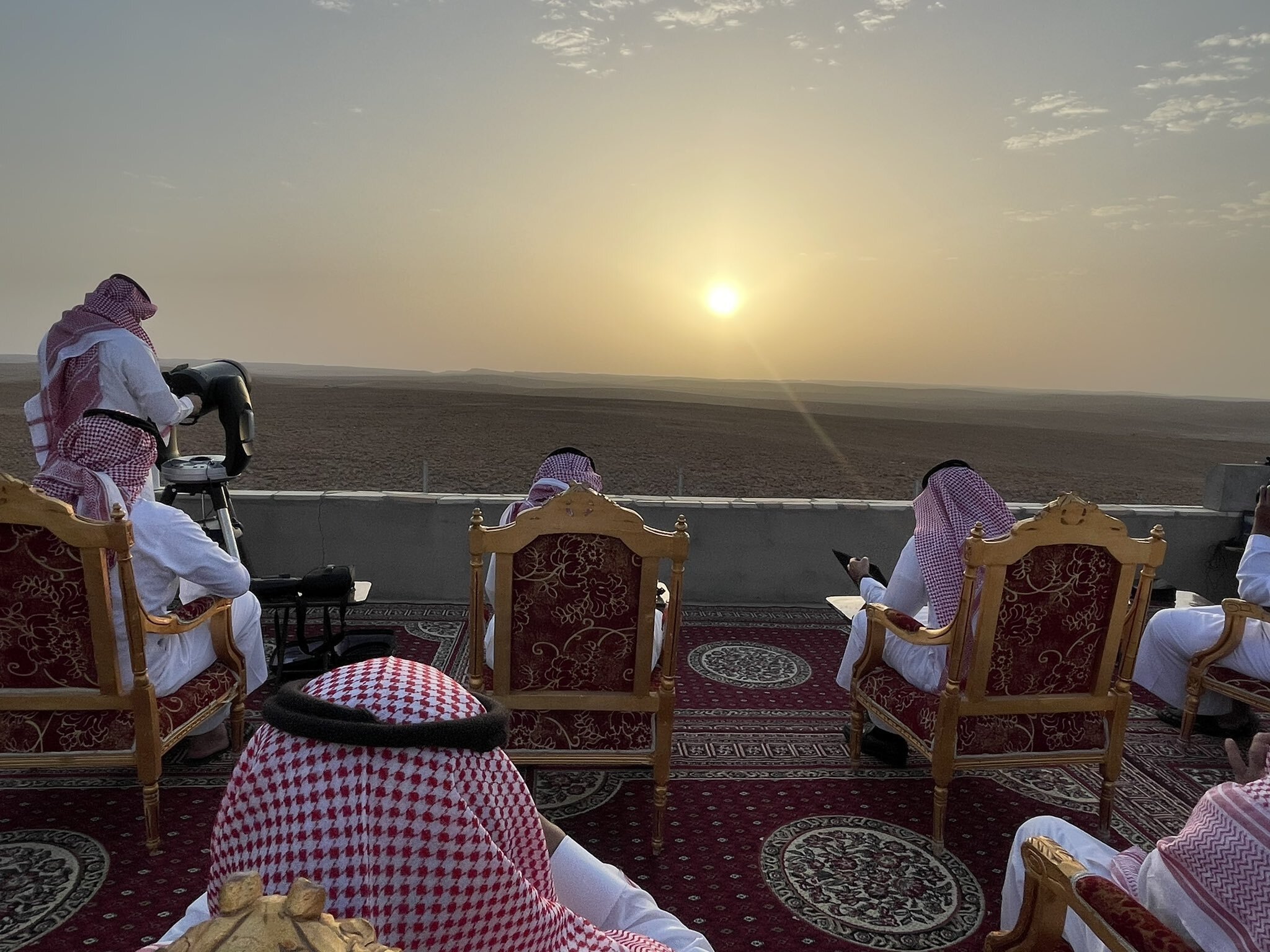
Moon Sighting News: Live Hilal Updates for Ramadan, Eid and Every Islamic Month
Every Islamic month begins the same way it has for over 1,400 years: someone, somewhere, looks up at the western sky just after sunset to search for a sliver of light. This guide breaks down how moon sighting news is confirmed, why it matters for your fasting and Eid plans, and where to find announcements you can actually trust.
Latest Moon Sighting News: Jumada al-Awwal 1448 AH
The new moon (conjunction) for Jumada al-Awwal 1448 AH occurs today, Saturday, 10 October 2026, at about 15:50 UT (7:50 pm UAE time). The crescent cannot be seen anywhere in the world today, so the key sighting evening is Sunday, 11 October 2026, which is 29 Rabi al-Thani 1448 AH in the UAE and in many sighting-based communities.
The Sharjah Space and Astronomy Hub calculates that the crescent will be about 21 hours old at sunset in Sharjah and will not be visible to the naked eye or through a telescope that evening, though it may be detected by advanced astrophotography before sunset. Forecasts for southern Africa describe a sighting as possible. Based on these projections:
- Monday, 12 October 2026: expected start of Jumada al-Awwal in countries that rely on astronomical calculation or informed visual sighting.
- Tuesday, 13 October 2026: expected start in countries that require a naked-eye or telescope sighting after sunset. Pakistani forecasts list 12 or 13 October.
These are astronomical forecasts, not final rulings. The official start of the month will only be confirmed once national moon sighting committees, such as Pakistan's Central Ruet-e-Hilal Committee and the authorities in Saudi Arabia, Bangladesh, India, the UAE and other regions, review testimony and issue their announcements. Check back here or with your local mosque for the confirmed date.
Previous update: Rabi ul Awwal 1448 AH began on Saturday, 15 August 2026 in Pakistan, after the crescent was not sighted on 13 August, which placed 12 Rabi ul Awwal (Eid Milad-un-Nabi) on 26 August there. See our guide to 12 Rabi ul Awal 2026 and Eid Milad-un-Nabi.
Upcoming Moon Sighting Nights
| Islamic Month | Expected Start (subject to sighting) |
|---|---|
| Jumada al-Awwal 1448 | 12 or 13 October 2026 |
| Jumada al-Thani 1448 | 11 or 12 November 2026 |
| Ramadan 1448 | Around Monday, 8 February 2027 (sighting attempt on the evening of 7 February) |
Dates can move by a day depending on weather and the method each country follows. The Ramadan 2027 date is an early astronomical projection; the confirmed date will be announced in early February 2027.
What Is Moon Sighting in Islam?
Moon sighting, known in Arabic as Ruyat al-Hilal, is the practice of confirming a new Islamic month by observing the thin crescent moon low on the western horizon shortly after sunset. Unlike the Gregorian calendar, which runs on fixed solar dates, the Islamic calendar is purely lunar, so the appearance of the hilal is what officially starts a new month.
This single sighting decides whether Ramadan fasting begins tonight or tomorrow, whether Eid al-Fitr falls on a particular Friday or Saturday, and when pilgrims mark the Day of Arafah during Hajj season. That is why "moon sighting news" becomes one of the most searched Islamic topics several times a year.
How Moon Sighting News Is Determined
Moon sighting announcements are not guesswork. They follow a fairly structured process that combines observation, testimony, and, in many places today, scientific verification.
1. Physical Observation With the Naked Eye
The traditional method is simple: trained observers, scholars, or ordinary community members go out after sunset and scan the horizon for the crescent. In many Muslim-majority countries, mosques still send volunteers to open fields or coastlines with a clear western view, since even light haze or tall buildings can hide the hilal.
2. Testimony Before a Religious Authority
If someone sights the moon, they typically report it to a local mosque, court, or moon sighting committee. The testimony is reviewed for reliability, sometimes cross-checked against known astronomical data, before an official announcement is made public.
3. Astronomical Calculation as a Supporting Tool
Modern observatories can calculate, to the minute, when the moon will be born (conjunction) and whether it will be visible from a given location. Many national committees now use these calculations alongside physical sighting, either to plan where observers should look or, in some regions, as the primary basis for the calendar itself.
Example
If astronomers confirm the moon's altitude and elongation are too low for visibility anywhere on Earth on a given evening, some authorities will announce in advance that the month will complete 30 days, even before observers report back empty-handed.

Astronomical calculation and calendar tools support, but do not always replace, physical moon sighting.
Why Moon Sighting News Matters for Ramadan and Eid
For most Muslims, moon sighting news is not an abstract calendar detail. It directly shapes daily life, worship schedules, travel plans, and family gatherings.
Start of Ramadan
The sighting of the Shaban-to-Ramadan crescent determines the very first day of fasting. Millions of people adjust their Suhoor and Iftar timings, work schedules, and Taraweeh prayer plans the moment the announcement is made, often just hours before the fast begins.
Eid al-Fitr
The Shawwal crescent marks the end of Ramadan and the start of Eid al-Fitr. Because this news often arrives late in the evening on the 29th of Ramadan, it can mean a last-minute scramble to prepare Eid clothes, food, and travel.
Eid al-Adha and the Days of Hajj
The Dhul Hijjah crescent sets the date for the Day of Arafah and Eid al-Adha. Pilgrims performing Hajj, and Muslims fasting the Day of Arafah at home, both rely on accurate, early moon sighting news from Saudi Arabia and their own regions.
Where to Find Reliable Moon Sighting News
Not every post claiming "moon sighted tonight" is accurate. Following a few trustworthy sources will save you from confusion.
Official National Moon Sighting Committees
Most countries with sizable Muslim populations have an official body responsible for verifying testimony and issuing the final ruling. These include national fiqh councils, ministries of religious affairs, and recognized regional Islamic centers.
Recognized Local Mosques and Islamic Centers
Your local mosque usually follows one specific committee or method consistently. Checking with them directly, rather than relying on a random social media post, keeps you aligned with your community's practice.
- Confirm which authority your region or mosque follows before Ramadan begins each year.
- Cross-check breaking announcements with at least one official source before sharing them further.
- Bookmark a dependable Islamic calendar or Hijri date tool so you can track the current lunar date at any time.
Why Moon Sighting Dates Differ Between Countries
It is common to see Ramadan or Eid celebrated on different days in different countries, and even within the same city. This usually comes down to three factors.
| Factor | Effect on the Date |
|---|---|
| Geographic longitude | The moon becomes visible earlier in some regions than others on the same evening. |
| Weather and horizon clarity | Clouds, dust, or pollution can hide a crescent that is technically present. |
| Method followed | Local sighting, following Saudi Arabia's announcement, or astronomical calculation can each produce a different result. |
None of these approaches is universally agreed upon among scholars, which is why respectful differences in practice have existed for centuries and are not a sign of division, but of genuine juristic diversity.
Practical Tips for Following Moon Sighting News
- Set a reminder for the 29th evening of Shaban, Ramadan, and Dhul Qi'dah so you are not caught off guard.
- Prepare both scenarios — have Suhoor ingredients ready in case fasting starts the next morning, and keep Eid essentials on standby a day early.
- Verify before sharing — check an announcement against an official source before forwarding it in family or community group chats.
- Use a reliable Hijri calendar to track how many days remain in the current Islamic month at a glance.

Confirmed moon sighting news marks the start of fasting, prayer, and community traditions during Ramadan.
The Spiritual Meaning Behind Watching for the Moon
Beyond logistics, searching for the hilal carries a quiet spiritual weight. It is a shared act of anticipation, connecting today's Muslims to the same practice observed by the earliest generations. Standing outside, waiting for a thin curve of light, is a small reminder that faith is often lived through patience, community, and attentiveness to the natural signs Allah has placed in the sky.
Many families treat moon sighting night itself as an occasion, gathering to make dua, prepare a simple meal, and share the anticipation of a blessed month ahead, whether that month is Ramadan, Shawwal, or Dhul Hijjah.
Track the current Islamic date and count down to the next moon sighting night with our free calendar tool.
Open the Hijri Date ConverterFrequently Asked Questions
When does Jumada al-Awwal 1448 AH start?
The new moon is on 10 October 2026, and the key sighting evening is Sunday, 11 October. Countries that rely on calculation are expected to begin on Monday, 12 October, while those requiring a naked-eye or telescope sighting are expected to begin on Tuesday, 13 October. Official dates come from each country's moon sighting committee.
When is Ramadan 2027 expected to start?
Ramadan 1448 AH is expected around Monday, 8 February 2027, with the sighting attempt on the evening of Sunday, 7 February. The exact date depends on moon sighting announcements.
What is moon sighting in Islam?
Moon sighting, or Ruyat al-Hilal, is the traditional method of confirming the start of a new Islamic month by physically observing the crescent moon after sunset. It determines dates such as the start of Ramadan, Eid al-Fitr, and Eid al-Adha.
Why do Ramadan and Eid dates differ between countries?
Dates differ because of local visibility conditions, weather, geographic longitude, and which method a region follows, whether that is local sighting, following Saudi Arabia's announcement, or astronomical calculation.
Is astronomical calculation allowed instead of physical moon sighting?
Scholars hold different views. Some require an actual sighting or credible testimony, while others accept astronomical calculation as a valid and precise supporting tool, particularly when clouds prevent direct observation.
Where can I find reliable moon sighting news?
Look to official national moon sighting committees, recognized fiqh councils, and trusted Islamic authorities in your region rather than unverified social media posts.
What happens if the moon is not sighted on the 29th night?
The current Islamic month is completed to 30 days, and the new month begins automatically the following evening, without needing any further confirmation.
How does moon sighting affect the Islamic calendar overall?
Because the calendar is purely lunar, months shift roughly ten to eleven days earlier each Gregorian year, which is why Ramadan, Hajj, and other Islamic occasions land on different Gregorian dates annually.
Conclusion
Moon sighting news will always carry a certain suspense, a whole community waiting on one thin crescent to decide the next month's plans. Understanding how the process works, who to trust for announcements, and why dates can differ between regions helps you approach each Ramadan, Eid, and Hajj season with clarity instead of confusion.


