
Muslim Population in Dearborn Michigan: 7 Amazing Facts
The Muslim population in Dearborn Michigan is one of the most discussed community statistics in America, yet it is also one of the most misunderstood. Many headlines repeat a single big number. The real picture is more careful, more interesting, and more human. This guide explains what the data actually says, what it cannot say, and how the community came to shape a Detroit suburb.
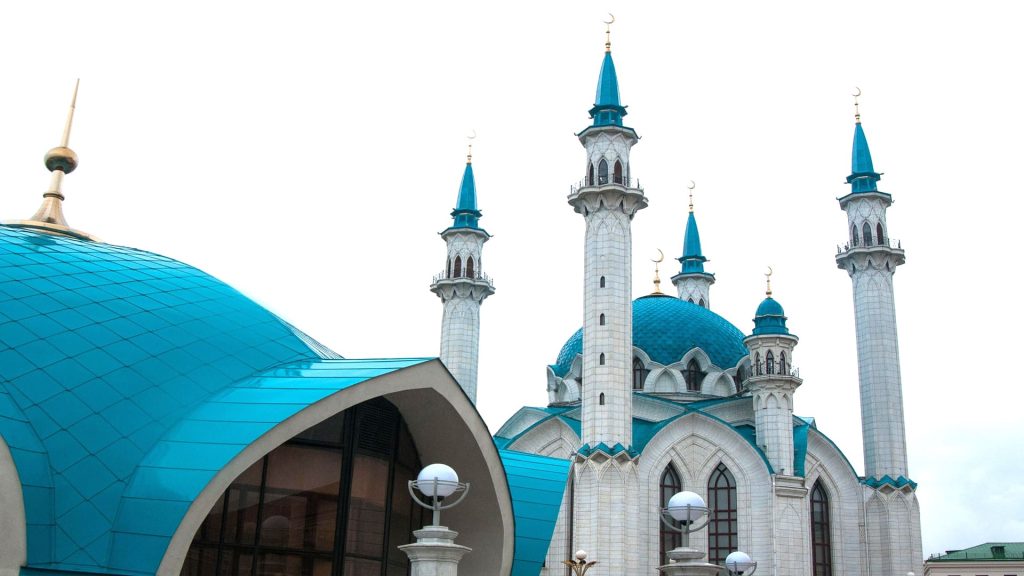
- Dearborn had 109,976 residents in the 2020 census, and about 54.5% reported Middle Eastern or North African ancestry.
- The U.S. Census does not ask about religion, so any Muslim headcount is an estimate. News coverage commonly cites roughly 40% to 55%.
- Most Arab residents are believed to be Muslim, but Dearborn also has Arab Christians, and Muslims from South Asia and African American communities.
7 Amazing Facts About the Muslim Population in Dearborn Michigan
Fact 1: The city has about 110,000 residents
The U.S. Census Bureau QuickFacts page for Dearborn lists 109,976 people in the 2020 census. Later estimates are lower. The Arab American News reported a Census Bureau estimate of 105,611 for 2025, and local leaders have questioned whether that figure reflects a real decline or an undercount.
Fact 2: The Muslim population in Dearborn Michigan sits inside an Arab majority
According to local news coverage of the 2020 data, 54.5% of Dearborn residents reported Middle Eastern or North African ancestry. That is roughly 60,000 people. It was the first census to offer this category directly.
Fact 3: The census never counted Muslims
Federal surveys avoid religion questions. That is why every figure for the Muslim population in Dearborn Michigan comes from ancestry data, community surveys, mosque attendance, or research models.
Fact 4: Estimates of the Muslim population in Dearborn Michigan range widely
Reports describe the Muslim share as anywhere from about 40% to 55%. Why such a gap? Researchers make different assumptions about how many Arab residents are Christian, how many non Arab Muslims live in the city, and how to count recent arrivals.
Fact 5: The Muslim population in Dearborn Michigan is very diverse
Lebanese, Yemeni, Iraqi, Palestinian and Syrian families live beside Bangladeshi, Pakistani, Indian, Bosnian and African American Muslims. Sunni and Shia traditions are both present.
Fact 6: Dearborn has national institutions
The Arab American National Museum, which opened in 2005, is the first museum in the world devoted to Arab American history and culture. The Islamic Center of America is widely described as the largest mosque in North America.
Fact 7: Civic leadership of the Muslim population in Dearborn Michigan has grown
In 2021 Dearborn elected its first Arab American mayor, Abdullah Hammoud. That milestone reflected decades of voting, organizing and public service.
Understanding the Muslim Population in Dearborn Michigan Through Data
Numbers matter, but only when you know where they come from. Let us look at each kind of evidence and how much weight it deserves.
| Data point | Figure | How reliable? |
|---|---|---|
| Total population, 2020 census | 109,976 | High. Official count. |
| Middle Eastern or North African ancestry | About 54.5% (59,983 people) | High for ancestry. Not a religion count. |
| Estimated Muslim share | Roughly 40% to 55% | Medium to low. Modelled estimates. |
| Dearborn Heights and Hamtramck, MENA share | About 39% each | High for ancestry. |
| Michigan statewide MENA population | 310,087 (3.1%) | High for ancestry. |
Why ancestry does not equal the Muslim population in Dearborn Michigan
Imagine two neighbors who both write "Lebanese" on a census form. One may be a practicing Muslim, the other a Maronite Christian. The form records ancestry, not faith. This is why careful writers say that most Arab residents are believed to be Muslim, and why the exact percentage stays unclear.
Why non Arab Muslims matter
Counting only Arab ancestry misses South Asian families, Bosnian refugees, converts and African American Muslims who have lived in Metro Detroit for generations. Any honest estimate of the Muslim population in Dearborn Michigan must include them.
How to judge a statistic you find online
Use this simple checklist before you share a number:
- Does it name a source such as the Census Bureau, Pew Research Center or a university?
- Does it say which year the data is from?
- Does it separate ancestry from religion when describing the Muslim population in Dearborn Michigan?
- Does it give a range instead of a suspiciously exact figure?
The Pew Research Center religion section and the Arab American Institute are good starting points for national and Arab American data.
A Short History of the Muslim Population in Dearborn Michigan
Factory work and the first Muslim arrivals
Early in the 20th century, Henry Ford’s factories drew workers from across the world. Arab immigrants, including Muslims and Christians from the Levant, settled near the Rouge plant in the area now known as the South End. The famous five dollar day wage made Dearborn a magnet for people seeking steady work.
Chain migration after the 1960s
Family networks did the rest. A man would work, save, and bring his brother, then his wife and children. Lebanese families were followed by Yemenis, Palestinians and Iraqis. Conflicts in the region added refugees, especially from Lebanon in the 1970s and 1980s and from Iraq in the 1990s and 2000s.
Building mosques, schools and businesses
Community members founded mosques, weekend Quran schools, bakeries, halal butchers and law offices. A newcomer could shop, pray and find a job in Arabic. Over time that infrastructure attracted more families.
From newcomers to civic leaders
By the 2020s the community had city council members, school board trustees, a mayor, and state and national voices. The 2020 census confirmed what residents already knew about the Muslim population in Dearborn Michigan: Arab Americans had become the largest group in the city.

Who Makes Up the Muslim Population in Dearborn Michigan?
Arab Muslims
This is the largest part of the Muslim population in Dearborn Michigan. Lebanese and Yemeni families are especially visible, with Iraqi, Palestinian and Syrian communities close behind. Arabic is heard in shops, schools and clinics. Many second and third generation residents speak English at work and Arabic at home.
South Asian and other Muslims
Bangladeshi, Pakistani and Indian families have grown steadily, and Bosnian Muslims arrived as refugees in the 1990s. Their mosques, grocery stores and restaurants, along with the wider Muslim population in Dearborn Michigan, add new flavors to the city.
African American Muslims
Metro Detroit has a long history of African American Muslim leadership, going back to the early and mid 20th century. This history is often left out of Dearborn stories, but it is part of the wider Muslim story in Southeast Michigan.
Sunni and Shia communities
Both traditions are present, with their own mosques and community centers. Public events such as the annual Ashura procession are held by the Shia community, while Sunni mosques are central to Friday prayers and Ramadan gatherings. Most residents simply say "Muslim" and worship where it is convenient for their family.
A practical example
On a Friday around midday, you may see traffic slow near large mosques as thousands arrive for Jumuah prayer. During Ramadan, restaurants stay busy after sunset because families break their fast together. Knowing this helps visitors plan their day.
Mosques, Schools and Daily Life for the Muslim Population in Dearborn Michigan

Mosques as community hubs
Mosques in Dearborn do more than host prayer. They run food drives, youth programs, funeral services, marriage counseling and classes for new Muslims. Many welcome visitors for open house events. If you wish to learn more about worship basics, the five pillars of Islam guide and the Salah (prayer) page offer beginner friendly guidance.
Education
Public schools in Dearborn serve a large share of Arab American and Muslim students. Many families also send children to weekend Islamic schools to learn Quran recitation and Arabic. Some respond to demand by offering halal lunch options and prayer room accommodations, which reflects how local institutions adapt.
Business and the local economy
Michigan Avenue and Warren Avenue are known for restaurants, bakeries, grocers and shops owned by Arab American families. These businesses employ thousands of people and attract visitors from across the region. Halal food, in particular, has become a signature part of the city’s identity.
Healthcare, charity and social services
Nonprofits serve both Muslim and non Muslim residents with health care, legal aid, job training and refugee support. Charity is deeply rooted in the faith. Zakat, the annual obligatory giving, and voluntary sadaqah fund many of these efforts. Readers who want to understand giving and fasting rules can explore our Zakat guide and the fasting guide.
Quran and Hadith Guidance for the Muslim Population in Dearborn Michigan

Members of the Muslim population in Dearborn Michigan often explain their civic life through their faith. Here are a few references that residents, imams and teachers commonly cite.
Knowing one another
This verse, which you can read on Quran.com, is often used to encourage friendship across ethnic and religious lines.
Justice for everyone
Kindness to peaceful neighbors
The rights of the neighbor
The Prophet Muhammad ﷺ said that whoever believes in Allah and the Last Day should honor his neighbor (Sahih al Bukhari and Sahih Muslim). He also stressed that a person whose neighbor is not safe from his harm is not a true believer (Sahih al Bukhari).
These teachings explain why many Muslim leaders in Dearborn host interfaith dinners, support food pantries and take part in citywide cleanups. Translations vary, so readers should consult a trusted scholar for deeper study.
Common Myths About the Muslim Population in Dearborn Michigan
Myth: Dearborn runs on a separate legal system
Dearborn is governed by city ordinances, Michigan law and U.S. federal law, like every other American city. Its mayor and city council are elected by voters, and its courts and police follow the same constitutional rules as elsewhere. Muslims, like members of any faith, may follow religious practices privately, but that does not replace civil law.
Myth: Everyone in Dearborn is Muslim
Not true. The city includes Christians, including many Arab Americans, as well as Jewish residents, Polish Americans, Italian Americans and people of no religion. The Free Press notes that Dearborn has churches with Arab American congregants.
Myth: The community votes as one block
Residents hold a wide range of political views. Election results in recent years have shown that Arab and Muslim voters weigh foreign policy, economy, schools and local services differently from person to person. Treating them as a single bloc is both inaccurate and unfair.
Myth: Muslim residents are newcomers
Some families have been in Dearborn for four or five generations. The community is as rooted in Michigan as the auto industry itself.
How the Muslim Population in Dearborn Michigan Compares With Nearby Cities
Dearborn is not alone. Dearborn Heights and Hamtramck each have a MENA share of about 39%, according to 2020 census coverage, and Hamtramck is known for its large Bangladeshi and Yemeni communities. Together, these cities form one of the densest Muslim regions in the country. Still, the Muslim population in Dearborn Michigan stands out for its size, its institutions and its long history.
Why compare cities at all?
Comparisons help readers avoid a common mistake: treating one city as if it were the whole story. Muslim life in Southeast Michigan stretches across Wayne and Oakland counties, with mosques in Canton, Troy, Sterling Heights and Detroit itself. A family may live in Dearborn Heights, pray in Dearborn, and work in Detroit.
A simple example
Suppose a student studies at the University of Michigan Dearborn, lives with parents in Dearborn Heights, and volunteers at a mosque food pantry in Dearborn. Which city does she belong to? All of them. This overlap is one reason researchers use ranges rather than precise counts for the Muslim population in Dearborn Michigan.
Visiting Dearborn: Practical Tips With Respect

- Dress modestly at mosques. Cover shoulders and knees, and bring a scarf if you are a woman who wishes to cover your hair. Remove shoes at the prayer hall door.
- Ask before taking photos. Worshippers deserve privacy during prayer.
- Time your visit. Avoid Friday midday and the last ten nights of Ramadan if you want a quiet experience.
- Try the food. Ask staff for recommendations. They love sharing their dishes.
- Visit the museum. The Arab American National Museum is an excellent first stop for context.
- Ask kindly. If you have a question about Islam, most people are happy to answer.
Why the Muslim Population in Dearborn Michigan Keeps Changing
The Muslim population in Dearborn Michigan will keep shifting for several reasons. Migration patterns change with events overseas. Housing costs push some families to nearby suburbs such as Dearborn Heights and Canton. Birth rates have slowed in some groups. Meanwhile new arrivals continue to join relatives already in the city. Census undercounts, which local leaders say may affect Arab American neighborhoods, make precise tracking harder.
The best approach is to follow primary sources. Watch for new American Community Survey releases, the next decennial census, and research from universities and nonprofits. If a website gives a very exact Muslim headcount for Dearborn without explaining its method, treat it carefully.
Key Takeaways on the Muslim Population in Dearborn Michigan
The Muslim population in Dearborn Michigan lives in a city of roughly 105,000 to 110,000 people where Arab Americans form a majority and Muslims are widely believed to represent somewhere around 40% to 55% of residents. The census does not ask about religion, so the exact figure is unknown. What is certain is the community’s long history, its diversity, and its visible contribution to Michigan’s economy, culture and civic life.
If you want to go deeper into Islamic practice, from prayer to Hajj, explore the Hajj guide or read what is Ramadan. For the bigger picture, see our Muslim population in the U.S., Muslim population in the UK and Muslim population in the world guides.
Visit islamicinfocenter.com for guides written for beginners and curious readers.
Frequently Asked Questions
What is the Muslim population in Dearborn Michigan?
No official count exists because the census does not ask about religion. News coverage commonly estimates that roughly 40% to 55% of Dearborn’s residents are Muslim, out of about 110,000 people in 2020.
Is Dearborn a Muslim majority city?
It may be, but this is not certain. Arab Americans form 54.5% of the population, and most are believed to be Muslim. Since some Arab residents are Christian and some Muslims are not Arab, the exact share remains unclear.
What percentage of Dearborn is Arab?
About 54.5% of residents reported Middle Eastern or North African ancestry in the 2020 census, most of them Arab.
Why did the Muslim population in Dearborn Michigan grow?
Early immigrants came for jobs in Ford factories. Later families followed relatives, and the city developed mosques, schools, shops and services that made new arrivals feel at home.
What is the biggest mosque in Dearborn?
The Islamic Center of America is widely described as the largest mosque in North America. Dearborn also has many other mosques and prayer centers serving different communities.
Is the Muslim population in Dearborn Michigan only Arab?
No. South Asian, Bosnian, African American and other Muslims also live in the city, along with Arab Muslims from many countries.
Is Dearborn governed by Sharia law?
No. Dearborn follows U.S. federal law, Michigan state law and city ordinances. Its officials are elected by residents.
Can non Muslims visit mosques in Dearborn?
Many mosques welcome respectful visitors, often through scheduled tours or open houses. Call ahead, dress modestly and follow staff instructions.
How big is the Muslim population in Michigan overall?
Estimates vary by source. Census data shows 310,087 Michiganders with Middle Eastern or North African ancestry in 2020, about 3.1% of the state, though that group includes non Muslims.
How has the Muslim population in Dearborn Michigan changed over time?
It has grown from a small group of factory workers in the early 1900s to a large, diverse community. Arab ancestry rose from about 30% in 2000 to 54.5% in 2020, according to coverage of census data.
Where can I find reliable data?
Start with the Census Bureau, the Arab American Institute and Pew Research Center.
Related Reading on Islamic Info Center
- Muslim Population in the U.S.
- Muslim Population in the UK
- Muslim Population in the World
- Muslim Countries: The Ultimate List
- Islamic Culture