
Muslim Population in Iran: 7 Shocking Facts Revealed (2026)
The Muslim population in Iran is close to 91 million people today, and almost every one of them lives in a country where Shia Islam is the state faith. Here is the full picture, from the latest estimates to the history behind the numbers.
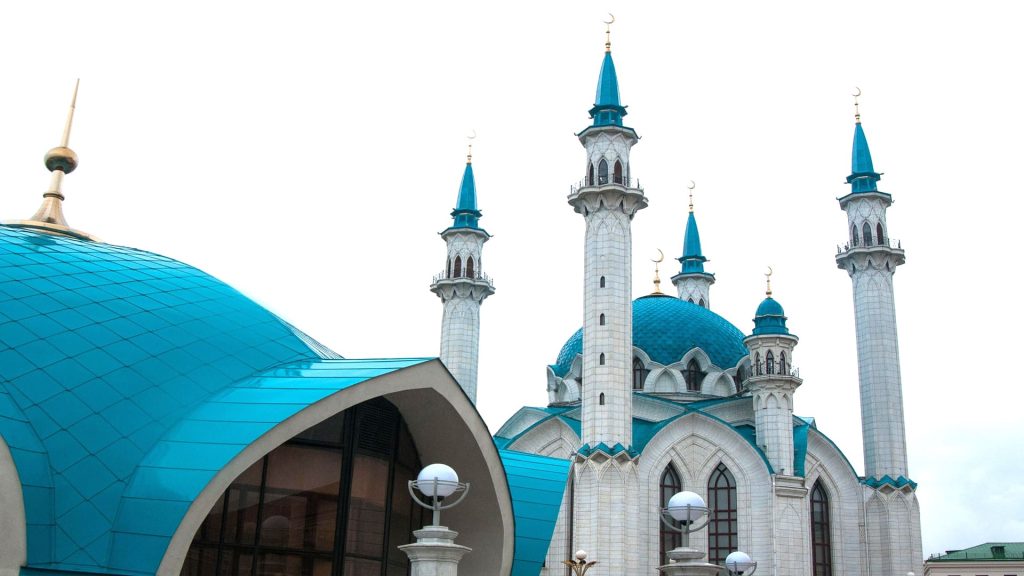
The Muslim population in Iran attracts attention for good reason. Iran sits at the crossroads of the Middle East and Central Asia, it is the heart of the Shia world, and its religious makeup shapes politics, culture and daily life. Yet the numbers are often repeated without context. This guide walks you through what we know, what is estimated, and what is still debated.
Whether you came for a quick figure or a deeper understanding, you will find clear answers below, plus references to the Holy Quran and the Sunnah that help explain how Muslims understand unity and diversity.
- Total population in 2026: roughly 91 to 93 million.
- Officially Muslim: about 99 percent, or around 90 to 92 million people.
- Shia share of Muslims: about 90 to 95 percent. Sunni share: about 5 to 10 percent.
- Largest non Muslim groups: Christians, Baha'is, Zoroastrians and Jews, each very small.
Muslim Population in Iran by Religion
When people search for the Muslim population in Iran by religion, they usually want one thing: how big is the Muslim majority compared with everyone else? The short answer is that Islam is by far the dominant faith. Official figures, along with the CIA World Factbook and demographic reference works, put Muslims at about 99.4 percent of the population.
Religious breakdown at a glance
| Group | Approximate share | Approximate people (2026) |
|---|---|---|
| Muslims (all) | about 99% | 90 to 92 million |
| Twelver Shia Muslims | 90 to 95% of Muslims | 82 to 87 million |
| Sunni Muslims | 5 to 10% of Muslims | 4.5 to 9 million |
| Christians (Armenian, Assyrian and others) | under 0.5% | about 300,000 or fewer |
| Baha'is (not officially recognised) | under 0.5% | about 300,000 or more |
| Zoroastrians | under 0.1% | tens of thousands |
| Jews | under 0.1% | under 20,000 |
Figures are rounded estimates compiled from official census results, the CIA World Factbook and demographic references. Treat them as ranges, not exact counts.
For a wider view of how Iran fits among Muslim countries, you can explore more demographic guides in the Islamic Info Center library.
Muslim Population in Iran 2022
The Muslim population in Iran in 2022 was roughly 87 million. That figure follows from a total population of about 88 million according to United Nations estimates, and a Muslim share of about 99 percent. Iran last published a full national census in 2016, which counted about 79.9 million residents, so every later number is a projection.
What drove growth between 2016 and 2022
Iran's population grew more slowly in this period than in earlier decades. The fertility rate dropped from more than six children per woman in the 1980s to below replacement level in recent years. Even so, the country added several million people because a large generation born in the 1980s reached adulthood and started families.
Urban life and religion
About three quarters of Iranians now live in cities such as Tehran, Mashhad, Isfahan and Shiraz. Religious life in urban areas is varied. Mosques, shrines and Quran classes remain central for many families, while others practise more privately. Official statistics record religion by legal category, not by how often a person prays.
Muslim Population in Iran Before 1979
The Muslim population in Iran before 1979 was about 33 million people, which was roughly 98 to 99 percent of a nation of about 33.7 million in the 1976 census. In other words, the share of Muslims has stayed almost the same for generations, while the total number has nearly tripled.
| Year | Total population | Muslim share | Approximate Muslims |
|---|---|---|---|
| 1976 (census) | 33.7 million | about 98 to 99% | about 33 million |
| 2011 (census) | 75.1 million | 99.4% (official) | about 74.6 million |
| 2016 (census) | 79.9 million | about 99% | about 79 million |
| 2022 (estimate) | about 88 million | about 99% | about 87 million |
| 2026 (estimate) | 91 to 93 million | about 99% | 90 to 92 million |
What changed after 1979
The share of Muslims did not change much, but the role of religion in public life did. The 1979 revolution created the Islamic Republic and made Twelver Shia Islam the state religion in the constitution. Religious minorities lost some public space, and some communities, including many Baha'is and a number of Jews, left the country or faced restrictions. The population boom that followed explains most of the growth in the number of Muslims.
Iran Muslim Shia or Sunni?
Iran is a Shia majority country. Roughly 90 to 95 percent of its Muslims follow Twelver Shia Islam, which honours twelve Imams from the family of the Prophet Muhammad (peace be upon him), beginning with Ali ibn Abi Talib. Article 12 of the constitution makes the Twelver Jafari school the official religion, and it also recognises the Hanafi, Shafi'i, Maliki, Hanbali and Zaydi schools with full respect.
This makes Iran unusual. Most Muslim majority countries are Sunni, and Shia Muslims make up roughly 10 to 15 percent of Muslims worldwide. Iran alone is home to around two fifths of the world's Shia.
Where Sunni Muslims live in Iran
The Sunni minority is concentrated along the borders, where ethnic identity and religion often overlap:
- Kurds in Kurdistan, Kermanshah and West Azerbaijan, mostly Shafi'i.
- Baloch in Sistan and Baluchestan, mostly Hanafi, with Zahedan as a major centre.
- Turkmen in Golestan and North Khorasan, mostly Hanafi.
- Arabs, Talysh and others in smaller communities, especially in the south and along the Persian Gulf coast.
Many readers also ask how the two branches compare. If you want a simple explanation of beliefs and practices, see the explainers at the Islamic Info Center.
Shared foundations
Sunni and Shia Muslims share the same core: belief in one God, the prophethood of Muhammad, the Quran, the five daily prayers in some form, fasting in Ramadan, zakat and Hajj. The main historical disagreement is about leadership after the Prophet. Both groups call themselves Muslims, and both are counted in Iran's total Muslim population.
Iran Muslim Population 2026
The Iran Muslim population in 2026 is estimated at between 90 and 92 million. This is based on a total of about 91 to 93 million residents. The United Nations and national estimates are close but not identical, so you will see slightly different totals depending on the source and the month of publication.
Projected breakdown for 2026
- Total Muslims: about 90 to 92 million.
- Shia: about 82 to 87 million, depending on whether you use 90 or 95 percent.
- Sunni: about 4.5 to 9 million, depending on whether you use 5 or 10 percent.
Is the Muslim population still growing?
Yes, but slowly. Annual growth is now below 1 percent. Because the median age is in the mid thirties and fertility is low, demographers expect Iran's population to age and level off in the coming decades. This means the Muslim population in Iran will probably keep rising modestly for some years before stabilising.
Why the Muslim Population in Iran Statistics Are Debated
The headline of 99 percent Muslim is official and widely repeated, but researchers point out several limits.
1. The census does not ask about sect
Iran's census records broad categories such as Muslim, Christian, Jewish and Zoroastrian. It does not publish a Shia and Sunni split, so the 90 to 95 percent and 5 to 10 percent ranges are estimates from academic and government sources.
2. Self reporting and legal categories
Only four faiths are listed as recognised in the constitution: Islam, Christianity, Judaism and Zoroastrianism. People who belong to other groups, or who do not practise, may still be counted under a recognised category in official records.
3. Independent surveys give different results
In 2020, the GAMAAN research group ran a large online survey of Iranians. It found a much smaller share identifying as Shia Muslim, roughly one third, and a larger share describing themselves as non religious or following other paths. The authors noted that online surveys over represent younger, urban and educated respondents, so the results cannot be treated as a census. Even so, the study shows why the question of belief and the question of legal identity are not the same thing.
How Iran Became a Muslim Majority Country
Before Islam, the Persian world was largely Zoroastrian under the Sasanian Empire, with Christian, Jewish and Buddhist communities. Muslim armies reached Persia in the seventh century, and the conversion of the population was gradual, taking several centuries. Many Persians became leading scholars, such as the hadith compiler Imam al-Bukhari, who was born in Bukhara, and the jurist Abu Hanifa, who was of Persian descent according to many historians.

The Safavid turning point
For most of its history, Iran had a mixed Sunni and Shia population. That changed in 1501, when Shah Ismail I founded the Safavid dynasty and made Twelver Shia Islam the state religion. Over the next two centuries, scholars and rulers worked to spread Shia teaching, and the country became the Shia majority nation we know today.
Religious centres today
Qom is the leading seminary city, and Mashhad hosts the shrine of Imam Reza, which receives millions of visitors each year. Sunni seminaries operate in places such as Zahedan and in Kurdish regions. These institutions help sustain religious life across both communities.
Quran and Hadith on Unity and Diversity
Muslims, whether Shia or Sunni, look to the Quran and the Sunnah for guidance on how to live as one community with many backgrounds. A few references are especially relevant when we talk about the Muslim population in Iran and its many peoples.

The Prophet (peace be upon him) also praised the people of Persia in a well known narration. When Surah al-Jumuah was revealed, he placed his hand on Salman al-Farsi and said that even if faith were at the Pleiades, men from among these people would attain it. This is recorded in Sahih al-Bukhari 4897 and Sahih Muslim 2546. Scholars often cite it to show the long and honoured contribution of Persian Muslims to Islamic learning.
Another hadith reminds believers that a Muslim is the brother of a Muslim, who neither wrongs him nor abandons him (Sahih al-Bukhari 2442, Sahih Muslim 2580). Islamic ethics treat that brotherhood as stronger than ethnic or sectarian labels, which is why statistics should always be read with respect for the people behind them.
For further reading on these themes, browse the Quran articles and hadith guides on our site.
Why the Muslim Population in Iran Matters Today
Knowing the facts helps you read the news with more clarity. Iran's role in regional politics, energy and diplomacy is shaped by its large Shia majority, but it is also shaped by ethnic diversity, a young and urban society, and a growing debate about how religion and public life should relate. The Muslim population in Iran is large, but it is not uniform.
Practical tips for using these statistics
- Always check the year. A figure for 2016 is not a figure for 2026.
- Separate legal religion from personal belief. Census data and survey data answer different questions.
- Use ranges for Shia and Sunni shares. Exact numbers do not exist in official publications.
- Cite primary sources such as the Statistical Centre of Iran, the United Nations or Pew Research when you can.
Trusted Sources for Further Research
To verify and extend the numbers in this guide, use these external resources:
- CIA World Factbook: Iran for the 99.4 percent Muslim figure and the Shia and Sunni ranges.
- UN World Population Prospects for total population by year.
- Pew Research: Mapping the Global Muslim Population for comparisons between countries.
- Statistical Centre of Iran for census releases.
- Constitution of Iran (Constitute Project) for Articles 12 and 13 on state religion and recognised minorities.
- Encyclopaedia Britannica: Iran for background on history and society.
Frequently Asked Questions About the Muslim Population in Iran
What is the Muslim population in Iran?
Iran has roughly 91 to 93 million people in 2026, and about 99 percent are officially counted as Muslim. That puts the Muslim population in Iran at around 90 to 92 million.
Is Iran Muslim Shia or Sunni?
Iran is mostly Shia. Estimates say 90 to 95 percent of Iranian Muslims follow Twelver Shia Islam, while 5 to 10 percent are Sunni.
What was the Muslim population in Iran before 1979?
The 1976 census counted about 33.7 million people, and roughly 98 to 99 percent were Muslim, so about 33 million Muslims lived in Iran before the 1979 revolution.
What was the Muslim population in Iran in 2022?
In 2022 Iran had about 88 million people. With about 99 percent identified as Muslim, the Muslim population in Iran was close to 87 million.
How many Sunni Muslims live in Iran?
Using the common 5 to 10 percent estimate, between about 4.5 and 9 million Sunni Muslims live in Iran today, mostly among Kurds, Baloch, Turkmen and some Arab communities.
Does Iran have non Muslim minorities?
Yes. Christians, Zoroastrians and Jews are recognised in the constitution, and there are also Baha'is and followers of other faiths, though they make up only a small share of the population.
Is Iran the biggest Muslim country in the world?
No. Indonesia, Pakistan, India and Bangladesh all have larger Muslim populations. Iran is, however, the largest Shia majority country.
Why are Iran religion statistics debated?
Iran's census does not ask people to state their Islamic sect, and independent surveys use different methods, so figures for Shia, Sunni and non religious groups vary.
Conclusion: The Muslim Population in Iran at a Glance
The Muslim population in Iran stands at about 90 to 92 million in 2026, or roughly 99 percent of the country, with Twelver Shia Muslims forming the large majority and Sunni Muslims making up a meaningful minority of several million. The share of Muslims has barely moved since before 1979, while the total number has nearly tripled.
Remember that the data has limits, that ranges are more honest than single numbers, and that behind every statistic are real communities with their own languages and traditions. Explore more guides on Muslim countries, beliefs and history at Islamic Info Center, and share this article if you found it useful.