
Khwaja Moinuddin Chishti (RA), widely revered as Gharib Nawaz (Helper of the Poor), is among the greatest Sufi saints the world has ever known. His name is synonymous with love, mercy, tolerance, and service to humanity. At a time when societies were fractured by political ambition, religious rigidity, and social inequality, Khwaja Sahib (RA) emerged as a beacon of spiritual enlightenment whose influence reshaped the moral and spiritual fabric of the Indian subcontinent.
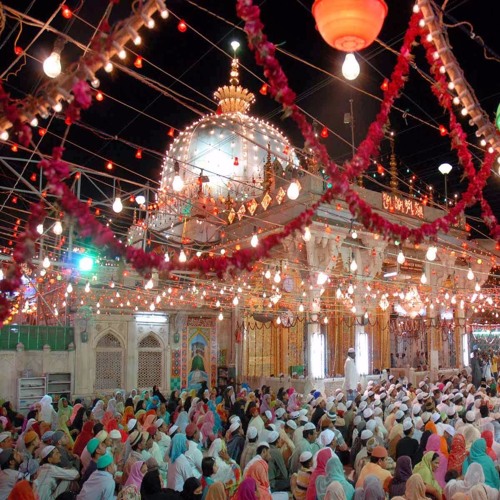
Unlike rulers who conquered lands through force, Khwaja Moinuddin Chishti (RA) conquered hearts through compassion. His shrine in Ajmer, famously known as Ajmer Sharif Dargah, remains one of the most visited spiritual centers in the world, attracting millions regardless of religion, caste, or nationality.
This essay presents a deep, scholarly yet accessible exploration of his life, spiritual journey, teachings, social contributions, and timeless relevance.
Historical Context of His Era

Khwaja Moinuddin Chishti (RA) lived during the 12th and early 13th centuries, a period marked by political instability, warfare, and social unrest across Central Asia and the Indian subcontinent. The collapse of older empires and the emergence of new ruling powers created widespread insecurity among common people.
Religious understanding at the grassroots level was limited, and spiritual guidance often became inaccessible to the masses. In this environment, Sufism emerged as a healing force, emphasizing inner purification, moral conduct, and closeness to Allah rather than external authority.
It was within this turbulent historical setting that Khwaja Moinuddin Chishti (RA) began his mission.
Birth, Family Background, and Lineage
Khwaja Moinuddin Chishti (RA) was born in 1141 CE (536 AH) in Sijistan, a region known for its scholarly and spiritual traditions. His family was noble, pious, and respected, tracing its lineage directly to Imam Ali ibn Abi Talib (RA) through Imam Hasan (RA).
From an early age, he was surrounded by an atmosphere of faith, discipline, and ethical refinement. His parents instilled in him a strong sense of responsibility toward society and unwavering devotion to Allah.
Early Orphanhood and Spiritual Awakening
Khwaja Sahib (RA) lost both parents while still young. Though he inherited a modest orchard and mill, he never developed attachment to material wealth. A defining moment came when a wandering mystic visited him and spoke about the impermanence of the world and the reality of divine love.
This encounter ignited a profound spiritual transformation. Khwaja Moinuddin Chishti (RA) sold his possessions, distributed the proceeds among the poor, and embarked on a lifelong journey in search of divine truth.
Journey in Search of Knowledge (Ilm and Ma‘rifah)
Formal Islamic Education
Khwaja Moinuddin Chishti (RA) pursued extensive religious education across Persia, Transoxiana, and the Arabian Peninsula. He mastered:
-
Qur’an and its interpretation (Tafsir)
-
Hadith sciences
-
Islamic jurisprudence (Fiqh)
-
Arabic and Persian literature
His intellectual foundation was strong, but he realized that knowledge without spiritual refinement remains incomplete.
Initiation into the Chishti Sufi Order
Khwaja Sahib (RA) became a disciple of Khwaja Usman Harooni (RA), one of the most prominent Chishti Sufi masters of the time. Under his guidance, he underwent rigorous spiritual discipline that included:
-
Extended fasting
-
Night-long prayers
-
Continuous remembrance of Allah (Zikr)
-
Total obedience to spiritual instruction
-
Service to the needy
After years of training, Khwaja Usman Harooni (RA) granted him khilafat (spiritual succession) and instructed him to take the Chishti message to India.
Arrival in the Indian Subcontinent
Khwaja Moinuddin Chishti (RA) arrived in India in the late 12th century. Unlike conquerors who sought power and wealth, he sought broken hearts and suffering souls.
He chose Ajmer, a city known for political significance and religious diversity. This decision reflected his wisdom—Ajmer was a crossroads of cultures, making it an ideal center for spreading spiritual harmony.
Establishment of the Khanqah System
In Ajmer, Khwaja Sahib (RA) established a khanqah (spiritual lodge) that functioned as:
-
A center for worship
-
A school of ethics
-
A shelter for travelers
-
A kitchen for the hungry
The khanqah rejected all forms of discrimination. Hindus, Muslims, rich, poor, rulers, and laborers sat together without distinction. This radical equality was revolutionary for its time.
Core Teachings of Khwaja Moinuddin Chishti (RA)
Love as the Foundation of Faith
Khwaja Sahib (RA) taught that love is the essence of Islam. Without love for Allah’s creation, one cannot claim love for Allah.
Service to Humanity (Khidmat-e-Khalq)
According to him, the highest spiritual station is reached by serving the suffering. Feeding the hungry, caring for orphans, and helping the oppressed were considered acts of worship.
Detachment from Materialism
He emphasized zuhd (simple living), warning against excessive attachment to wealth, status, and power.
Approach to Interfaith Harmony
Khwaja Moinuddin Chishti (RA) never imposed beliefs on others. His approach was rooted in:
-
Respect for human dignity
-
Dialogue instead of debate
-
Example instead of argument
Many people embraced Islam after witnessing his character, humility, and compassion—not through coercion.
Relationship with Political Authority
Although he lived during the era of Muhammad of Ghor, Khwaja Sahib (RA) maintained independence from political power. He neither flattered rulers nor feared them.
He advised kings to rule with justice and warned against oppression, emphasizing accountability before Allah.
Miracles (Karamat) and Spiritual Influence
Numerous accounts describe miracles associated with Khwaja Moinuddin Chishti (RA), including:
-
Providing food during famine
-
Healing through prayer
-
Transforming violent individuals into gentle souls
However, he discouraged obsession with miracles, teaching that true miracle is moral transformation.
The Urs and Concept of Spiritual Union
Khwaja Sahib (RA) passed away in 1236 CE (633 AH) in Ajmer. In Sufi tradition, this day is commemorated as Urs, symbolizing union with Allah.
The Urs of Khwaja Gharib Nawaz is marked by:
-
Qur’an recitation
-
Zikr gatherings
-
Qawwali
-
Distribution of food (langar)
Spread of the Chishti Order in India
Khwaja Moinuddin Chishti (RA) laid the spiritual foundation for the Chishti Order in South Asia. His disciples carried his teachings far and wide.
Prominent Disciples
-
Qutbuddin Bakhtiar Kaki (RA)
-
Fariduddin Ganjshakar (RA)
-
Nizamuddin Auliya (RA)
Through them, Chishti values became deeply rooted in Indian spiritual culture.
Cultural and Social Contributions
Promotion of Spiritual Arts
-
Growth of Qawwali
-
Encouragement of Persian and vernacular poetry
-
Spiritual storytelling for moral education
Social Reform
-
Rejection of caste hierarchy
-
Empowerment of the marginalized
-
Emphasis on compassion over ritualism
Ajmer Sharif Dargah: A Living Legacy
The shrine of Khwaja Moinuddin Chishti (RA) remains a symbol of hope and mercy. Millions visit every year seeking peace, healing, and guidance.
The continued relevance of the shrine proves that spiritual sincerity outlives political power.
Relevance of His Teachings in the Modern World
In today’s world of conflict, intolerance, and material obsession, Khwaja Sahib’s message offers:
-
Peace over violence
-
Compassion over hatred
-
Service over selfishness
His teachings align perfectly with universal human values.
Lessons for Humanity
-
True faith manifests through character
-
Service to humanity is service to Allah
-
Humility leads to spiritual elevation
-
Love breaks barriers that power cannot
-
Spirituality must benefit society
Conclusion
Khwaja Moinuddin Chishti (RA) was not merely a Sufi saint of medieval India; he was a universal guide for humanity. His life demonstrates that real spiritual reform occurs through love, patience, and service-not force or fear. Centuries have passed, empires have vanished, but the fragrance of his teachings continues to spread. Ajmer remains alive because the heart that beats there beats with mercy, unity, and divine love.