
Eid ki Namaz ka Tarika: Complete Illustrated Guide
Eid-ul-Fitr and Eid-ul-Adha are the most significant celebrations in the Islamic calendar. They begin with a special congregational prayer called Salat-al-Eid. Because this prayer is only performed twice a year and includes essential additional Takbirs (saying "Allahu Akbar"), it is common for people to seek a detailed reminder on the correct method.
This article provides a complete, easy-to-follow, and illustrated step-by-step guide to the Eid ki Namaz ka Tarika, ensuring you can perform this beautiful act of worship with confidence and peace of mind.
Preparation and Niyyah (Intention)
Before you begin the prayer, ensure you have performed Wudu (ablution). The Eid prayer is performed in the congregation (Jama'at) behind an Imam.
The Niyyah
Stand in the row, calm your mind, and make the intention in your heart. You may also recite it silently:
"I intend to perform two Rakat of the Eid-ul-Fitr (or Eid-ul-Adha) prayer, which is Wajib, with six extra Takbirs, for the sake of Allah, following this Imam."
The First Rakat (Rak'ah)
The core difference in Eid prayer lies in the distribution of the extra Takbirs. In the first Rakat, these occur before the main recitation of the Qur'an.
-
Takbir-e-Tahrima: The Imam will begin by raising his hands and saying "Allahu Akbar." Follow the Imam: raise your hands, say "Allahu Akbar," and then fold them over your chest (or below the navel, according to your school of thought).

- Recite Sana: Silently recite the opening supplication: "Subhanaka Allahumma wa bihamdika..."
-
The 3 Extra Takbirs: The Imam will now say "Allahu Akbar" three times, pausing between each.
- 1st Takbir: Raise your hands to your ears, say "Allahu Akbar," and let your hands hang by your sides.
- 2nd Takbir: Raise your hands, say "Allahu Akbar," and let your hands hang by your sides.
- 3rd Takbir: Raise your hands, say "Allahu Akbar," and this time, FOLD your hands as you normally would for recitation.
- Recitation: The Imam will proceed with the recitation of Surah Al-Fatiha and another Surah. Listen silently and attentively.
-
Complete the Rakat: The Imam will say "Allahu Akbar" and move into Ruku (bowing), then to Sujud (prostration). Complete these movements normally following the Imam.

The Second Rakat (Rak'ah)
Rise from the prostration for the second Rakat. This Rakat reverses the order of the extra Takbirs; they occur after the recitation and just before the Ruku.
- Recitation: The Imam will begin by reciting Surah Al-Fatiha and another Surah immediately upon standing.
-
The 3 Extra Takbirs: After the recitation is complete, but before moving to Ruku, the Imam will say "Allahu Akbar" three times.
- 1st Takbir: Raise your hands, say "Allahu Akbar," and let your hands hang by your sides.
- 2nd Takbir: Raise your hands, say "Allahu Akbar," and let your hands hang by your sides.
- 3rd Takbir: Raise your hands, say "Allahu Akbar," and let your hands hang by your sides.
-
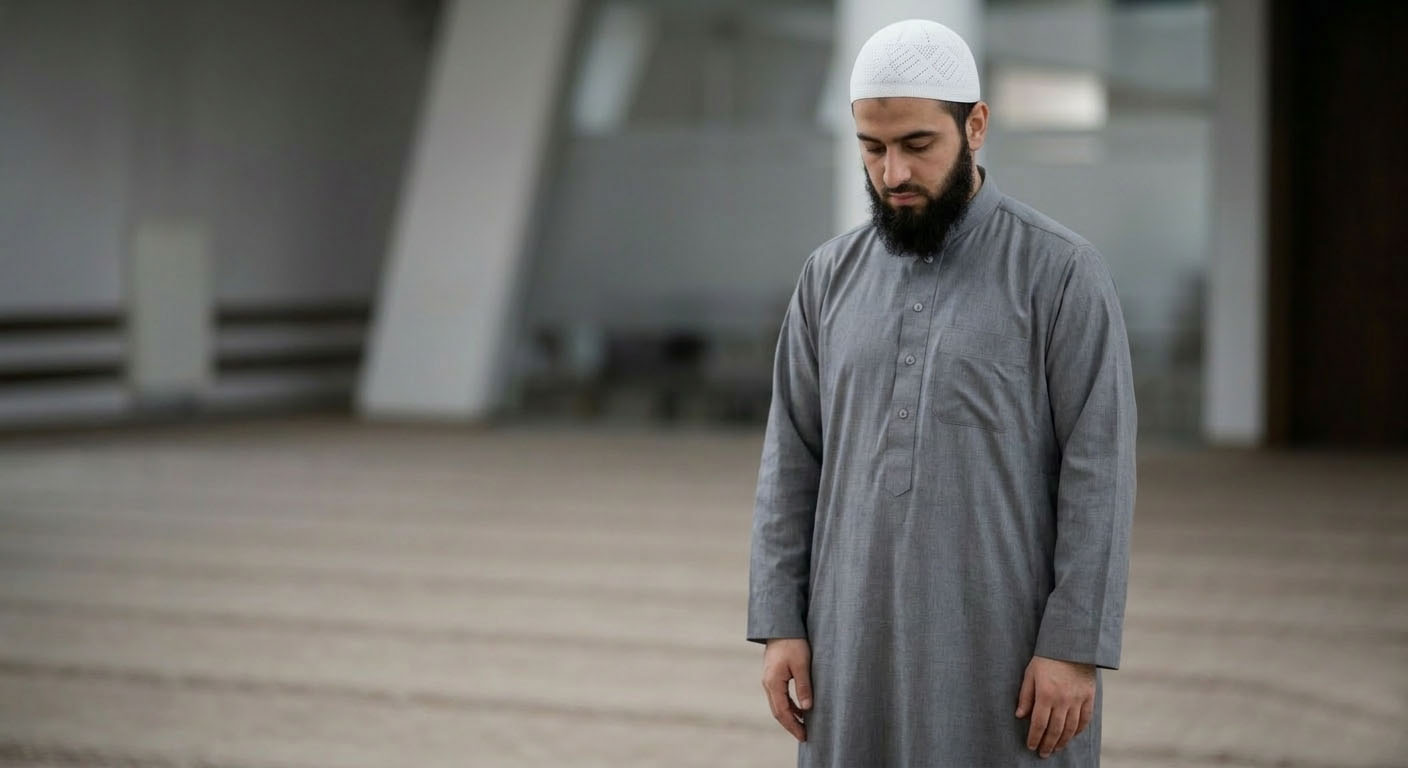
Moving to Ruku (4th Takbir): The Imam will say "Allahu Akbar" a fourth time. Do NOT raise your hands for this fourth Takbir. Immediately move into the Ruku position.
-
Conclusion: Complete the Ruku, two Sujud, the Tashahhud (sitting), and the final Salam (turning the head right and left) with the Imam.

Important Final Step: The Khutbah
Once the Salam is complete, the prayer is officially over, but your obligations are not. It is a vital Sunnah (practice of the Prophet) to remain seated and listen to the Eid Khutbah (sermon) delivered by the Imam.
Unlike the Friday prayer (Jumu'ah) where the Khutbah comes first, the Eid Khutbah is delivered *after* the prayer. It generally covers the significance of the day, the concept of charity (Sadqat-ul-Fitr), and community unity. Leaving before the Khutbah concludes is highly discouraged.
Eid Mubarak!
We hope this illustrated guide helps you perform your Eid prayer accurately. May Allah accept your prayers and good deeds. Eid Mubarak to you and your loved ones!
