
Eid al-Fitr: Sunnahs & Traditions
Celebrating the Festival of Breaking the Fast
Eid al-Fitr is a joyous occasion marking the end of the month-long fast of Ramadan. Beyond the celebrations, there are specific Sunnahs (practices of the Prophet Muhammad, peace be upon him) that enrich the day with spiritual rewards.

The Sunnahs of Eid Morning
1. Ghusl (Ritual Bath)
It is a Sunnah to perform a ritual bath before heading to the Eid prayer to ensure cleanliness and purity.
2. Adorning Best Clothes
Prophet Muhammad (PBUH) used to wear his best cloak on the days of Eid. Men are also encouraged to wear perfume (Attar).
3. Eating Before Prayer
Unlike Eid al-Adha, for Eid al-Fitr, it is Sunnah to eat an odd number of dates before leaving for the prayer ground.
4. Zakat al-Fitr
Giving the mandatory charity (Fitrana) to the poor before the Eid prayer is essential so that everyone can celebrate.
5. Changing Routes
It is Sunnah to go to the prayer ground by one route and return by a different one to spread the greetings of peace.
6. Reciting Takbeeraat
Reciting "Allahu Akbar, Allahu Akbar..." loudly while walking to the prayer area.
Global Eid Traditions
While the religious practices remain the same, cultural traditions vary beautifully across the globe:
- Eidi: The practice of elders giving money or gifts to children.
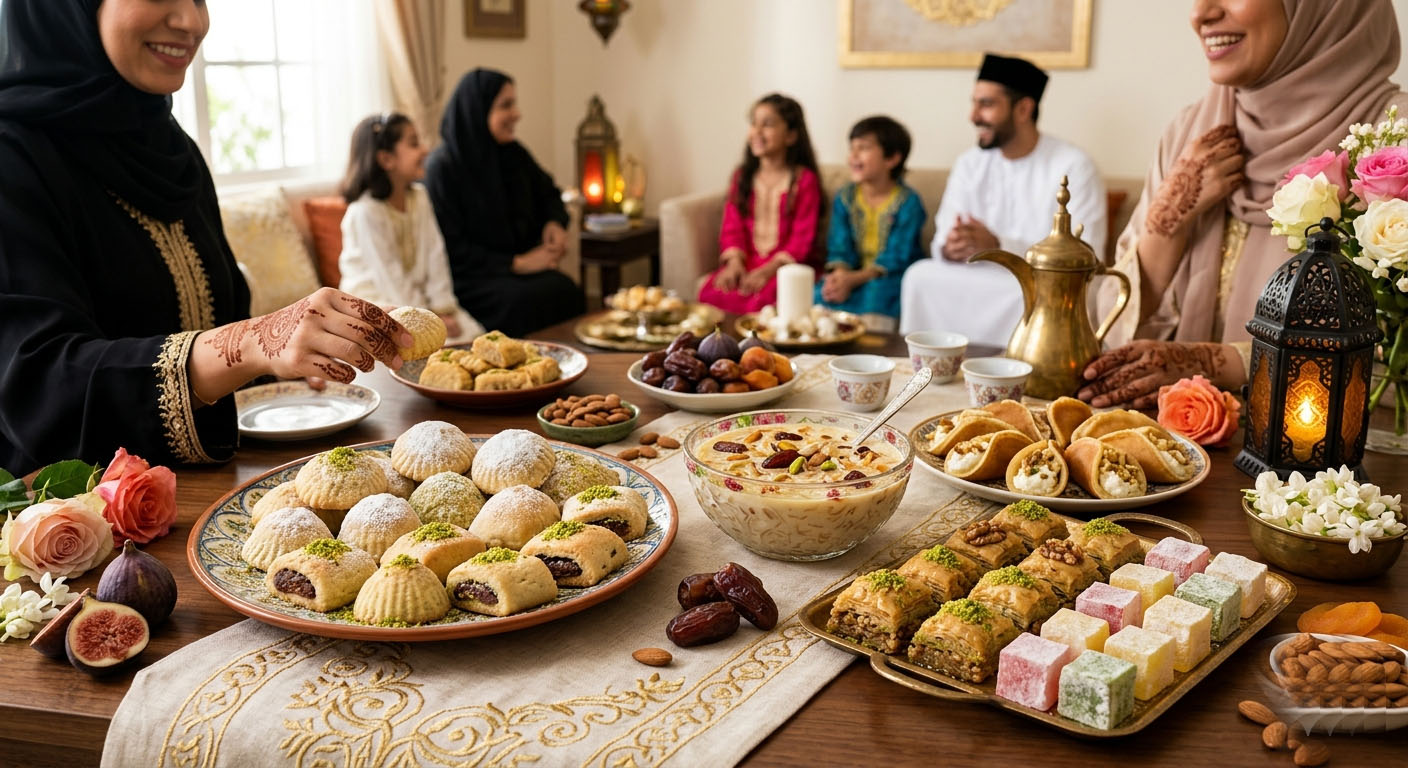
- Sweet Feasts: In South Asia, "Sheer Khurma" is a staple, while in the Middle East, "Maamoul" cookies are popular.
- Henna (Mehendi): Women and children often adorn their hands with intricate henna designs.
- Community Prayer: Thousands gather in open fields (Eidgah) for congregational Salah.
Further Learning & Resources:
- Learn more about Islamic jurisprudence at Islamic Info Center.
- Find prayer timings and global dates at TimeAndDate.
- Authentic Hadith references available at Sunnah.com.