
How to Give Ghusl to a Dead Body
Ghusl for a dead body (ghusl mayyit) is one of the final acts of care a community performs for a departed Muslim. It is far more than a physical washing-it is an act of worship, humility, and communal responsibility carried out with gentleness, modesty, and reverence. This guide walks through the Hanafi method step by step, explaining not just what to do, but why each step matters.
Understanding Ghusl for the Deceased
In Islamic law, ghusl for the deceased is classified as fard kifayah-a communal obligation. This means the responsibility falls on the Muslim community as a whole, not any single individual. If a sufficient number of people (usually close family, or trained community members) carry it out properly, the obligation is lifted from everyone else. If nobody performs it, the entire community is considered to have fallen short.
The underlying purpose is twofold: first, ritual purification of the body before it meets its Creator; and second, preserving the dignity of the deceased, since Islamic teaching holds that a dead body still deserves the same respect, privacy, and gentle handling as a living person.
Who Should Perform Ghusl?
- Trustworthy and knowledgeable: The person performing ghusl should understand the correct method and be someone who will not gossip about anything unusual noticed on the body. Confidentiality is considered part of the honor owed to the deceased.
- Same gender, generally: Men wash men, and women wash women. This preserves modesty, which remains important even after death.
- Spousal exception: In the Hanafi school, a husband may give ghusl to his deceased wife and a wife may give ghusl to her deceased husband, since the marriage relationship is considered to continue in this limited ritual sense during the waiting period.
- Children: Young children who have died can be washed by either gender, since strict gender-based modesty rules are relaxed for them.
Preparations Before Ghusl
Proper preparation prevents delays and interruptions once the process begins, which is important both practically and out of respect for the deceased. Gather the following beforehand:
- Clean water, lukewarm if possible-cold water can be harsh, and hot water can damage the skin of the deceased, which is treated with the same care as a living body.
- A lota or pouring vessel-for controlled, gentle pouring rather than splashing.
- Mild, non-alcoholic soap or cleaning solution-alcohol-based products are avoided since alcohol is considered impure in this context.
- Towels and disposable gloves-gloves protect both the washer and the deceased, and help maintain hygiene.
- Cotton wool-used for internal cleaning (nostrils, mouth) and for covering wounds or orifices.
- Kafan (burial shroud)-should be ready in advance so the body is not left uncovered for long after washing.
- Camphor or rosewater-added to the final rinse; camphor is traditionally believed to have a cooling, purifying, and mildly antiseptic effect.
Step-by-Step: Ghusl for a Dead Body (Hanafi Method)

Step 1: Lifting and Laying the Body

- Place the body on a clean, slightly raised surface (a washing table, bench, or platform), ideally tilted slightly so water drains away rather than pooling.
- Position the body so the head is toward the left side of the person giving ghusl — this is the traditional Hanafi orientation, which makes it easier to work systematically from the head downward.
- Keep the body covered with a sheet throughout, exposing only the area currently being washed. This single practice does more than anything else to preserve the modesty of the deceased.
Step 2: Istinja and Cleaning Impurities


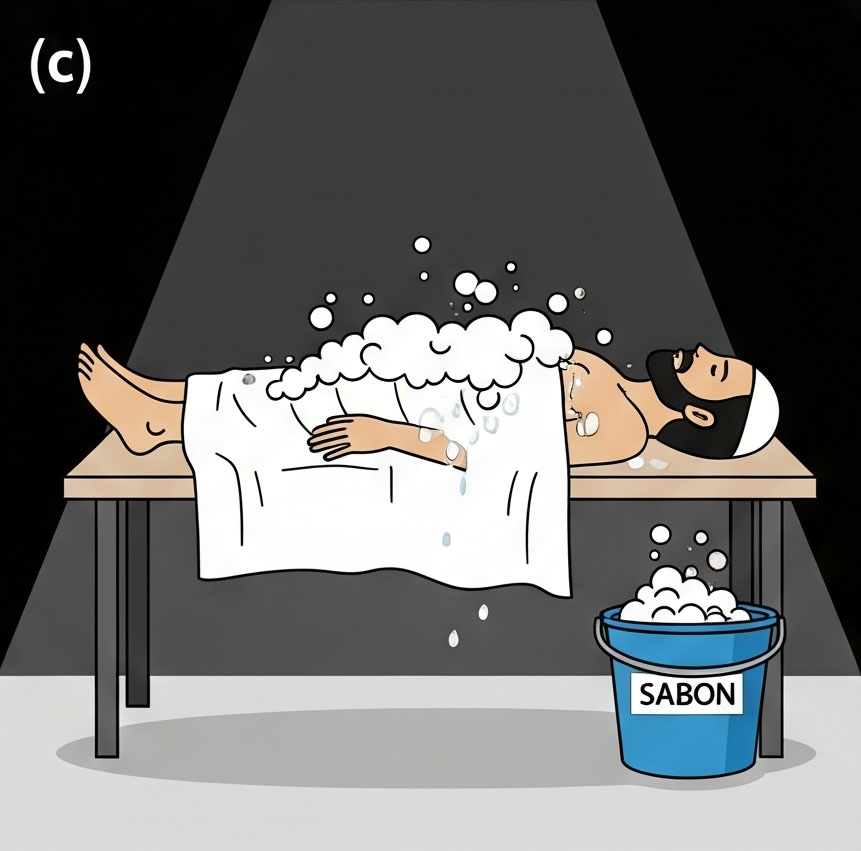

- Wearing gloves, gently press on the lower abdomen. This can help expel any remaining waste so that the body is fully clean before the ghusl proper begins, and so nothing is expelled afterward that would undo the purification.
- Use cotton wool, not bare hands, to clean the private areas, working carefully and without unnecessary exposure or looking directly at the area more than needed.
- Any wounds, especially those still oozing fluid or blood, should be gently cleaned and then packed or covered with cotton to prevent further leakage during the wash.
Step 3: Performing Wudu
The deceased is given a form of wudu resembling the ablution performed before prayer in life, symbolically preparing them just as they would prepare themselves:
- Wash the face, then the arms up to the elbows (right arm first, then left).
- Wipe over the head with wet hands.
- Wash the feet up to the ankles (right foot first, then left).
- Water is not poured directly into the mouth or nose, since this risks water entering the airways or stomach. Instead, moistened cotton wool is used to gently wipe the lips, teeth area, and nostrils.
Step 4: Washing the Entire Body
- Begin with the right side of the body, from head to foot, then move to the left side-mirroring the order used in wudu and in many other Islamic rituals, where the right side is given precedence.
- Use mild soap or a cleaning solution with clean water, washing gently rather than scrubbing vigorously.
- The full body wash is repeated in odd numbers-typically three times, though five or seven may be done if the body needs more thorough cleaning (for example, after a difficult illness). Odd numbers are preferred based on the Sunnah pattern followed in many acts of purification.
- For the final wash, water mixed with a small amount of camphor is used. This is meant to leave the body with a light, pleasant fragrance and is considered a mark of honor, not a medical necessity.
Step 5: Final Drying and Shrouding (Kafan)
- Gently pat the body dry with clean towels-dragging or rubbing harshly is avoided.
- Light perfume (non-alcoholic) may be applied, particularly to areas that touch the ground in prostration during prayer: the forehead, nose, palms, knees, and feet.
- The body is then wrapped in the kafan according to Islamic guidelines- traditionally three plain white sheets for a man, and five pieces (including a head covering and chest wrap) for a woman, though local scholarly guidance should be followed for specifics.
Key Principles in Hanafi Fiqh
- Obligatory before burial: A Muslim should not be buried without ghusl except in extraordinary circumstances (such as a martyr on the battlefield, who is buried in the clothes they died in).
- Validity depends on care: If the process is done carelessly, disrespectfully, or leaves major areas unwashed, it may not be considered properly fulfilled, and scholars advise it be corrected before burial if there is still time.
- Odd-numbered washing reflects a broader pattern found in Islamic purification rituals, where odd numbers are seen as spiritually preferable.
- Modesty and privacy are treated as inseparable from the validity of the act-dignity is not an added courtesy but part of the ritual's purpose.
Traditional Hanafi references on this topic include Al-Hidayah by Burhan al-Din al-Marghinani and Radd al-Muhtar by Ibn Abidin. For an actual death in the family, it's best to consult a local imam or scholar, since minor regional practices and specific rulings can vary.
Common Mistakes to Avoid
- Using very hot or very cold water — both can affect the skin and are best avoided in favor of lukewarm water.
- Rushing or being careless-the process should never feel hurried; unnecessary roughness is considered disrespectful.
- Allowing too many people to be present-beyond those actually assisting, extra onlookers compromise the privacy owed to the deceased.
- Forgetting to cover the body between steps-exposure should always be minimized to only what is strictly necessary at each stage.
- Pouring water into the mouth or nose-this is avoided in favor of wiping with moist cotton, as noted in Step 3.
FAQs About Ghusl for Deceased Muslims
Q1: Can a non-Muslim give ghusl?
A: No-ghusl must be performed by a practicing Muslim familiar with the correct method.
Q2: What if water is unavailable?
A: Tayammum (dry ablution using clean earth or sand) may be performed as a last resort, following the same principle used for the living when water cannot be accessed or used.
Q3: Can ghusl be done without gloves?
A: Gloves are strongly recommended for hygiene, but the priority is that the washing itself is done correctly and respectfully; gloves are a practical safeguard rather than a ritual requirement.
Q4: What if there's bleeding or fluid leakage?
A: Cotton wool is used to absorb blood or fluid, and the source of leakage should be packed or covered as best as possible before continuing, so the body remains clean through burial.
Q5: What is done after ghusl?
A: The body is dried, lightly perfumed, and wrapped in the kafan, after which it is ready for the funeral prayer (Janazah) and burial.
Q6: How many people are usually involved?
A: Typically two to four people — enough to lift, turn, and support the body safely and respectfully, without unnecessary extra people present.
Q7: What happens if the body cannot be fully washed (severe injury, etc.)?
A: Scholars generally allow washing whatever parts can safely be washed, with tayammum performed for the rest, or tayammum done entirely if washing would cause further harm to the body.
Conclusion
Understanding how to give ghusl to a dead body according to the Hanafi method is knowledge every Muslim community benefits from having available. It is an act that blends technical care with deep compassion-a final act of service rendered to someone who can no longer ask for it themselves, carried out quietly, gently, and with full respect for their dignity.

