
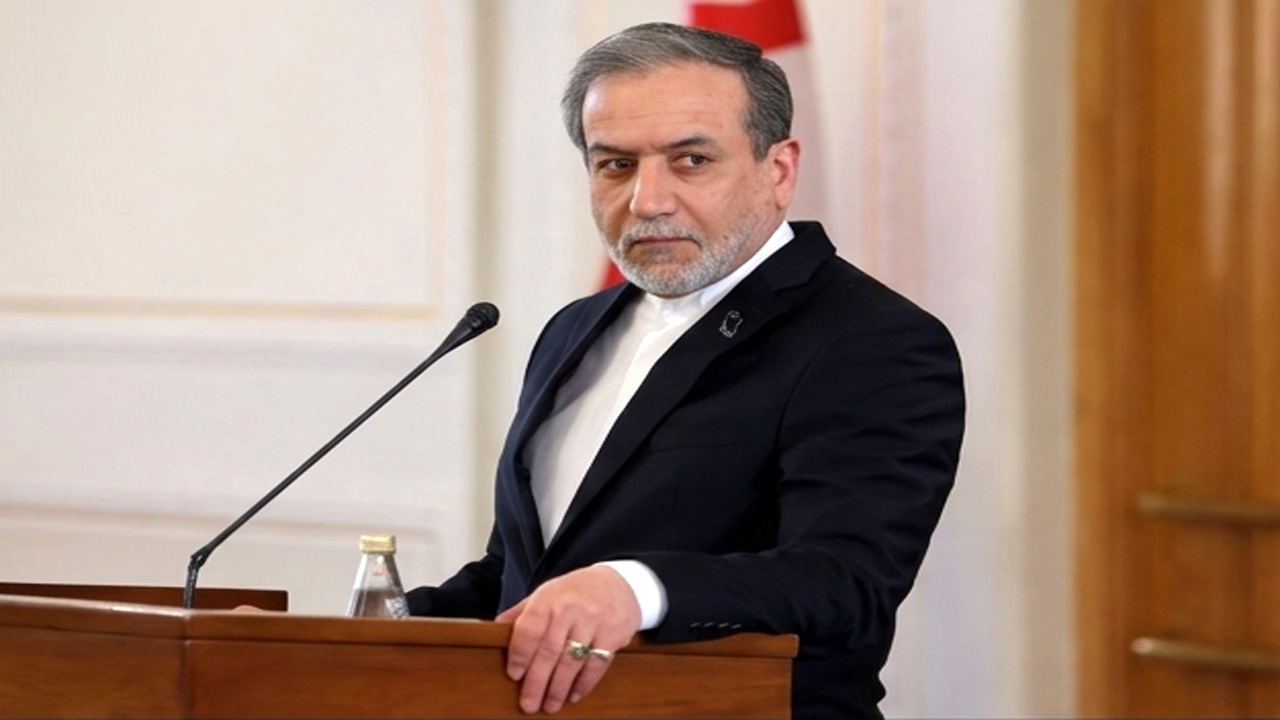
Abbas Araghchi: Iran's Foreign Minister & Master Nuclear Diplomat
Few figures in Iranian diplomacy combine the paradoxes of Abbas Araghchi so completely: a former Revolutionary Guard soldier who spent decades negotiating with the West, a man described simultaneously as a pragmatist and a revolutionary, and today the foreign minister of a nation at one of the most turbulent crossroads in its modern history.
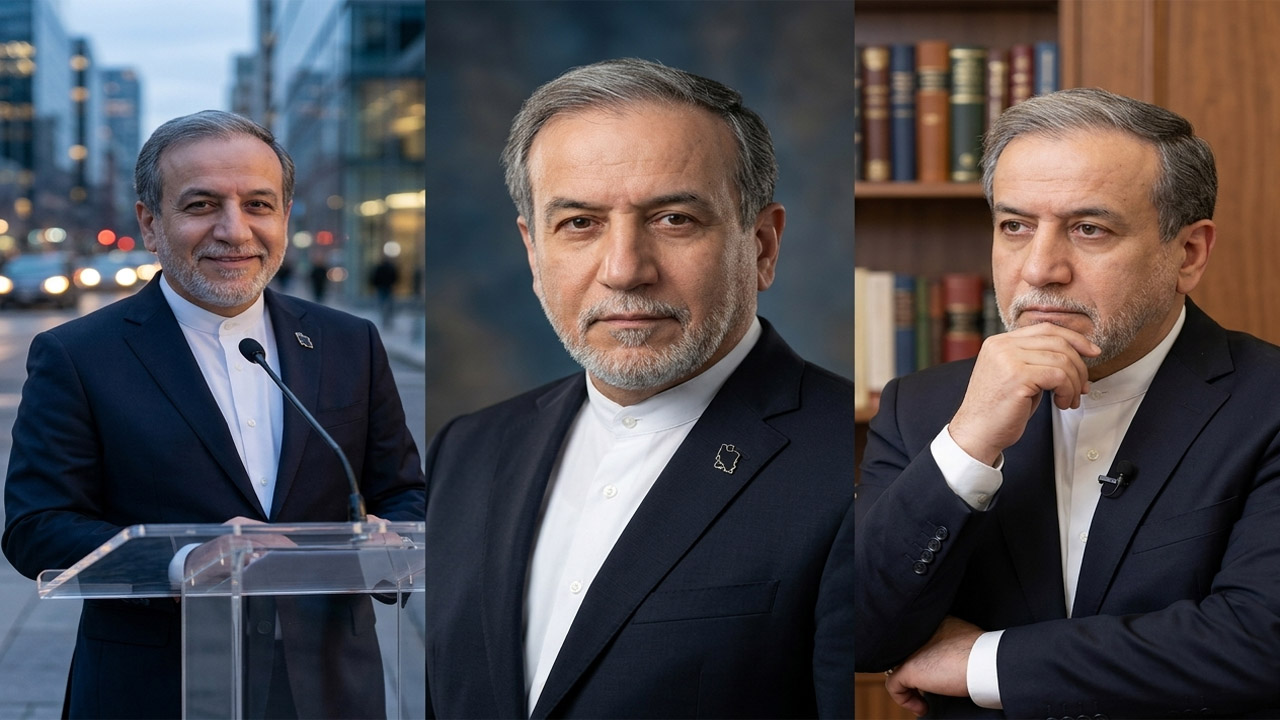
Early Life and Family Background
Abbas Araghchi was born on December 5, 1962, in the Iranian capital of Tehran, though his family roots lie in Isfahan, the historic city famed for its Persian architecture and craft. His grandfather was a carpet trader — a detail that, to those who know Iranian culture well, speaks of a family embedded in the mercantile fabric of Persian society.
Araghchi grew up in a large household with three sisters and three brothers, most of whom would go on to careers in trade and commerce, continuing the family tradition. His father, however, died when Araghchi was only 17 years old — a loss that coincided, almost exactly, with one of the most convulsive political events in Iranian history.
Coming of Age in the Revolution
The year 1979 shook Iran to its foundations. The Islamic Revolution swept away the Pahlavi monarchy and replaced it with a theocratic republic under Ayatollah Ruhollah Khomeini. For the teenage Araghchi, as for millions of young Iranians, this was not a distant political event — it was a personal calling. He participated actively in the revolution, an experience that would form the ideological bedrock of his worldview.
In the immediate aftermath, Araghchi did what many of his generation did: he joined the Islamic Revolutionary Guard Corps (IRGC). He would serve in the IRGC for nearly a decade, including active combat duty during the devastating Iran–Iraq War (1980–1988), one of the longest conventional wars of the 20th century. This military background is not incidental — it is something Araghchi has continued to cite as central to his identity as a "revolutionary" statesman, giving him credibility in Iran's hard-line circles even as he spent his career engaging the West.
Education: From Tehran to Canterbury
What distinguishes Araghchi from many of his diplomatic peers is the depth and breadth of his academic formation. After concluding his military service, he pursued higher education with a focus that pointed unmistakably toward an international career.
He earned a bachelor's degree in international relations from the School of International Relations in Tehran, an institution affiliated with Iran's Ministry of Foreign Affairs. This was followed by a master's degree in political science from Islamic Azad University (Central Tehran Branch).
Most notably, Araghchi obtained a PhD in Political Thought from the University of Kent in the United Kingdom, supervised by David McLellan, a distinguished scholar of Marxism. His doctoral thesis — The Evolution of the Concept of Political Participation in Twentieth-Century Islamic Political Thought (1996) — examined how modern Islamic thinkers have tried to reconcile divine sovereignty with popular sovereignty, weaving Western democratic theory into an Islamic framework. It is a sophisticated, even surprising academic project for someone who would later be cast as a hardline figure in Western media.
He is fluent in Persian, Arabic, and English, a linguistic range that would prove critical in his years of direct negotiations with Western counterparts.
Diplomatic Career: A Step-by-Step Rise
Araghchi joined Iran's foreign ministry in 1989, the year after the Iran–Iraq War ended and just months after Ayatollah Khomeini's death. Over the following three decades, he built one of the most substantial diplomatic résumés in the Islamic Republic.
Served as chargé d'affaires at Iran's permanent mission to the Organisation of Islamic Cooperation (OIC) in Jeddah, Saudi Arabia, and later as Director General of the Institute for Political and International Studies (IPIS).
Appointed Ambassador to Finland, with accreditation also covering Estonia. This was his first ambassadorial posting, placing him in the heart of Northern Europe at a time when EU–Iran relations were a live diplomatic project.
Served as Dean of the School of International Relations (2004–2005) and then as Deputy Foreign Minister (2005–2007), cementing his position in Iran's foreign policy establishment.
Appointed Ambassador to Japan, one of Iran's most significant bilateral relationships in Asia given Japan's role as a major buyer of Iranian oil.
Held the post of Deputy for Asia–Pacific and Commonwealth Affairs, overseeing Iran's relationships across a vast geographic sweep.
Became Deputy Foreign Minister for Legal and International Affairs and briefly served as the ministry's spokesperson. This period saw his emergence as Iran's chief nuclear negotiator.
Served as Political Deputy at the Foreign Ministry, the most senior deputy role, making him effectively the number-two figure in Iranian diplomacy.
Following the Raisi government's inauguration, Araghchi was sidelined from the ministry but was appointed Secretary of the Strategic Council on Foreign Relations by Supreme Leader Ali Khamenei — a move that kept him close to the centre of power.
Confirmed as Minister of Foreign Affairs under President Masoud Pezeshkian by a vote of the Islamic Consultative Assembly.
The Nuclear Negotiations: Araghchi's Defining Stage
If any single chapter defines the biography of Abbas Araghchi, it is his role as Iran's lead nuclear negotiator during the talks that produced the Joint Comprehensive Plan of Action (JCPOA) in 2015. This agreement — struck between Iran and the P5+1 (the United States, United Kingdom, France, Russia, China, and Germany) — placed verifiable limits on Iran's nuclear programme in exchange for sanctions relief, and was hailed as one of the landmark diplomatic achievements of the Obama era.
Architect of the 2015 JCPOA
Working as deputy to chief negotiator Mohammad Javad Zarif, Araghchi led many of the technical and political sessions. His combination of legal expertise, fluency in English and Arabic, and deep knowledge of Iran's nuclear programme made him uniquely equipped for the role. Western negotiators who dealt with him during the Vienna talks consistently described him as meticulous, knowledgeable, and — crucially — a man who clearly had the trust of Iran's Supreme Leader.
That last point mattered enormously. Iranian foreign ministers have historically had limited ability to make binding commitments without the blessing of the Office of the Supreme Leader and the IRGC. Araghchi's revolutionary credentials — his IRGC service, his participation in the 1979 revolution — meant that agreements he signed carried a domestic legitimacy that agreements signed by more purely technocratic diplomats might have lacked.
The JCPOA's Collapse and Revival Efforts
In May 2018, President Donald Trump withdrew the United States from the JCPOA and reimposed sweeping sanctions on Iran. The deal effectively collapsed, and Iran progressively rolled back its compliance commitments. When the Biden administration sought to revive the agreement starting in 2021, Araghchi — by then in a political advisory role — remained a key voice arguing for a return to the framework, though the negotiations ultimately stalled.
"Resolving the problem is not feasible, but managing it is imaginable."
— Abbas Araghchi, on U.S.–Iran relations, January 2024
This statement, made early in 2024, captures the pragmatic realism that analysts at the Stimson Center and elsewhere have identified as Araghchi's hallmark: not the idealism of full normalization, but the strategic patience of managed competition — keeping channels open without abandoning revolutionary principles.
Foreign Minister Under Pezeshkian: 2024 and Beyond
When Masoud Pezeshkian won the Iranian presidency in July 2024, running on a platform that prioritised seeking a new deal with the West for sanctions relief, his choice of Araghchi as Foreign Minister was widely read as a clear policy signal. Pezeshkian needed someone with revolutionary legitimacy credible to the hard-liners, and diplomatic sophistication credible to Western counterparts. Araghchi fit both criteria.
Challenges in a Turbulent Region
Araghchi assumed office at one of the most challenging moments in decades for Iranian foreign policy. The fallout from the Israel-Hamas War dominated the region. Iran's strategic depth — built over years through proxies like Hezbollah in Lebanon and the Assad government in Syria — was severely eroded. The decapitation of Hezbollah's senior leadership and the fall of Bashar al-Assad in Syria in late 2024 represented major blows to Iran's regional influence.
Direct military confrontations with Israel in late 2024 exposed vulnerabilities in Iran's air defence and missile systems. Araghchi navigated these pressures while simultaneously pursuing diplomatic engagement on the nuclear file, with 2025 flagged by UN Security Council Resolution 2231 (which enshrined the JCPOA) as a critical deadline year.
Key Diplomatic Positions Held
- Minister of Foreign Affairs (2024–present)
- Political Deputy at the Foreign Ministry (2017–2021)
- Deputy FM for Legal & International Affairs (2013–2017)
- Chief Nuclear Negotiator, P5+1 / JCPOA talks
- Ambassador to Japan (2008–2011)
- Ambassador to Finland & Estonia (1999–2003)
- Secretary, Strategic Council on Foreign Relations (2021–2024)
Personal Life and Character
Araghchi has been married twice. His first marriage to Bahareh Abdollahi produced two sons and a daughter. Following that divorce, he married Arezoo Ahmadvand, with whom he has another daughter. He has three children from his first marriage: Saeideh Sadat, Seyed Hossein, and Seyed Reza.
His family connections extend into Iran's financial and political world. His nephew, Ahmad Araghchi, served as the Central Bank of Iran's deputy governor for foreign exchange before being arrested amid a government investigation into Iran's currency crisis — a reminder of the complex web of family, politics, and institution that characterises Iranian elite society.
The Paradox at the Heart of His Identity
Those who have followed Araghchi's career closely consistently note the same paradox: here is a man educated at a British university, fluent in English, deeply versed in Western political philosophy, who spent years sitting across the table from American and European diplomats — and who simultaneously identifies as a revolutionary and continues to cite his IRGC service as a core part of his identity.
Analysts at institutions like the Stimson Center have described this duality as a feature rather than a bug: it is precisely Araghchi's dual credibility — as a known quantity to Western negotiators and as a trusted insider to Iran's hardline establishment — that gives him the political space to pursue deals that others could not.
Legacy and Historical Significance
The biography of Abbas Araghchi is, in many ways, a biography of the Islamic Republic's engagement with the world: a story of a state that is simultaneously hostile to the international order it emerged in conflict with, and deeply enmeshed in it; that trains its diplomats at Western universities while insisting on its own revolutionary purity; that negotiates nuclear deals and then walks away from them when domestic politics demand it.
Araghchi has been at the centre of that story for over three decades. Whether as the cautious deputy in Vienna working through technical annexes, or as Foreign Minister facing cascading regional crises, he has remained one of the most consequential figures in a foreign policy architecture that few outsiders truly understand.
His legacy will ultimately be judged by whether Iran can navigate its nuclear programme toward a durable agreement, and whether the country can rebuild the regional influence that has been severely tested. Both tasks will demand precisely the qualities Araghchi has spent a lifetime developing: revolutionary legitimacy married to diplomatic pragmatism.
Frequently Asked Questions
Answers to the most commonly asked questions about the biography of Abbas Araghchi.

