
Muslim Holidays: 12 Essential Dates Every Muslim Must Know
Muslim holidays follow the Islamic lunar calendar, so their dates move about ten days earlier on the Gregorian calendar each year. That is why many families search for a reliable Muslim holidays calendar before planning travel, work leave, school events and charity giving. This guide explains every major occasion, shows what each day means, and gives you a full Hijri 1447 to 1456 AH table so you can plan a decade ahead.

What Are Muslim Holidays and Why Do the Dates Change?
The Islamic calendar, called the Hijri calendar, has twelve months of 29 or 30 days. A Hijri year is about 354 or 355 days, roughly eleven days shorter than a solar year. Because of this gap, Ramadan travels through every season over a cycle of about 33 years.
Each month starts when the new crescent is seen, not at midnight. Some communities rely on local sighting, others follow a global sighting, and many countries use astronomical calculation. The Umm al Qura calendar in Saudi Arabia is one widely used reference, and you can read more at the Umm al Qura official website.
Official festivals versus commemorated days
Scholars agree that Islam has two annual festivals: Eid al Fitr and Eid al Adha. Other dates on a Muslim holidays calendar are blessed days of worship, remembrance or history. Some, such as Mawlid, are observed widely, while scholars hold different views on how they should be marked. Always follow guidance from a qualified scholar you trust.
The 12 Essential Muslim Holidays and Observances
1. Islamic New Year (1 Muharram)
The Hijri year begins on 1 Muharram, one of the four sacred months. The calendar counts from the Hijra, the migration of the Prophet Muhammad (peace be upon him) from Makkah to Madinah. Most Muslims mark the day quietly through reflection, dua and setting spiritual goals rather than celebration.
Practical example: Many families write three realistic goals for the new year, such as finishing one Quran recitation, praying Fajr on time and giving monthly charity.
2. Ashura (10 Muharram)
Ashura is a day of fasting and gratitude. Authentic narrations say the Prophet (peace be upon him) fasted it and encouraged fasting the ninth or the eleventh with it. For Shia Muslims, Ashura also carries deep mourning for the martyrdom of Imam Hussain at Karbala. Both traditions treat the day with seriousness and respect.
3. Mawlid al Nabi (12 Rabi al Awwal)
Mawlid marks the birth of the Prophet Muhammad (peace be upon him). Many communities hold recitations, lectures and charity meals, while others do not observe the day, believing it was not practiced by the early generations. Whatever your view, the occasion is a good reminder to study the Seerah and to improve your character.
4. Isra and Miraj (27 Rajab)
This commemorates the night journey from Makkah to Jerusalem and the ascension through the heavens, when the five daily prayers were prescribed. Many Muslims spend the night in voluntary prayer and learning. The exact night is a matter of historical difference, so treat the date as a reminder rather than a ritual.
5. Mid Shaban (15 Shaban)
Often called Laylat al Bara'ah, this night is observed in many regions with prayer and forgiveness. Scholars differ about the strength of the narrations, so many recommend modest worship such as extra prayer, repentance and fasting in Shaban in general.
6. First Day of Ramadan
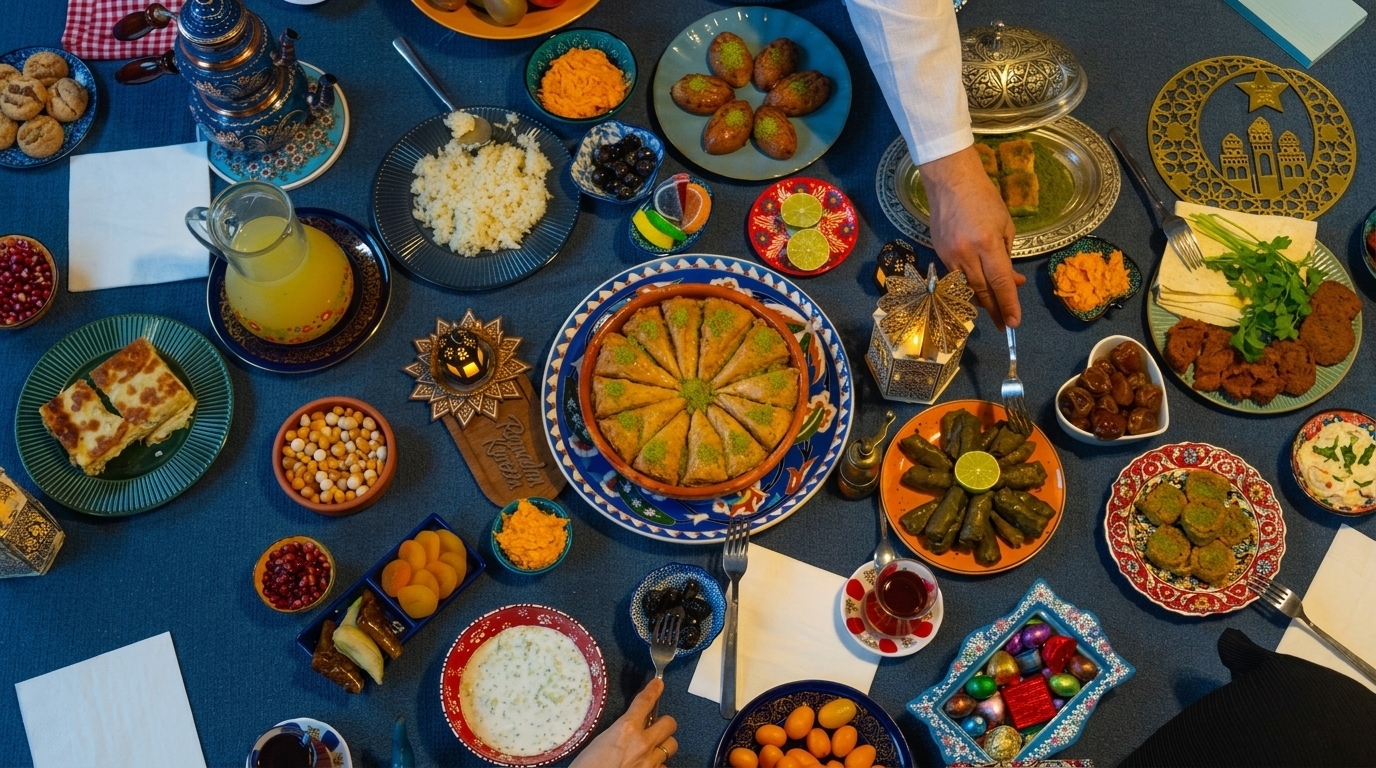
Ramadan is the ninth month, when the Quran was first revealed. Adult Muslims who are healthy and not travelling fast from dawn to sunset. Mosques fill for Taraweeh prayers, and communities share iftar meals. For background, see the Britannica overview of Ramadan.
7. Laylat al Qadr (Night of Power)
Laylat al Qadr falls in the last ten nights of Ramadan, most often sought on the odd nights. The Quran describes it as better than a thousand months. The 27th night is commonly used as an estimate, but the safest approach is to increase worship on all of the last ten nights.
8. Eid al Fitr (1 Shawwal)
Eid al Fitr celebrates the end of Ramadan. Muslims give Zakat al Fitr before the Eid prayer, dress well, pray in congregation and visit relatives. Fasting on this day is forbidden. Learn more from the Britannica guide to Eid al Fitr, and browse our Eid articles for practical tips.
9. Day of Arafah (9 Dhul Hijjah)
On this day pilgrims stand at Mount Arafah, the central rite of Hajj. Muslims not performing Hajj are encouraged to fast, as it is reported to expiate the sins of the previous and coming year. It is one of the best days for dua.
10. Eid al Adha (10 Dhul Hijjah)
Eid al Adha honors the willingness of Prophet Ibrahim to obey Allah. After the Eid prayer, families who are able offer a sacrifice and divide the meat into three parts: for the family, for relatives and friends, and for the needy. See the Britannica article on Eid al Adha for history.
11. Days of Tashreeq (11 to 13 Dhul Hijjah)
These three days follow Eid al Adha and are for eating, drinking and remembering Allah. Fasting is not allowed on them except in specific Hajj cases. Takbir continues after prayers.
12. The Sacred Months and Weekly Fridays
Though not a single holiday, Jumuah is the weekly festival of Muslims, and the four sacred months (Muharram, Rajab, Dhul Qadah and Dhul Hijjah) add spiritual weight to the year. Include them on your personal calendar for fasting and charity.
Muslim Holidays Calendar: Hijri 1447 to 1456 AH
Use this Muslim holidays calendar as a planning guide. Dates are estimated using astronomical calculation and may move by one or two days after local moon sighting. Always confirm with your mosque or national authority.
| Hijri Year | Islamic New Year | Ashura | Mawlid | Isra and Miraj | Ramadan Begins | Eid al Fitr | Arafah | Eid al Adha |
|---|---|---|---|---|---|---|---|---|
| 1447 | 26 Jun 2025 | 5 Jul 2025 | 4 Sep 2025 | 16 Jan 2026 | 18 Feb 2026 | 20 Mar 2026 | 26 May 2026 | 27 May 2026 |
| 1448 | 16 Jun 2026 | 25 Jun 2026 | 25 Aug 2026 | 5 Jan 2027 | 8 Feb 2027 | 9 Mar 2027 | 15 May 2027 | 16 May 2027 |
| 1449 | 6 Jun 2027 | 15 Jun 2027 | 15 Aug 2027 | 26 Dec 2027 | 29 Jan 2028 | 27 Feb 2028 | 4 May 2028 | 5 May 2028 |
| 1450 | 26 May 2028 | 4 Jun 2028 | 4 Aug 2028 | 15 Dec 2028 | 18 Jan 2029 | 16 Feb 2029 | 24 Apr 2029 | 25 Apr 2029 |
| 1451 | 15 May 2029 | 24 May 2029 | 24 Jul 2029 | 4 Dec 2029 | 7 Jan 2030 | 5 Feb 2030 | 13 Apr 2030 | 14 Apr 2030 |
| 1452 | 5 May 2030 | 14 May 2030 | 14 Jul 2030 | 24 Nov 2030 | 28 Dec 2030 | 26 Jan 2031 | 3 Apr 2031 | 4 Apr 2031 |
| 1453 | 24 Apr 2031 | 3 May 2031 | 3 Jul 2031 | 13 Nov 2031 | 17 Dec 2031 | 15 Jan 2032 | 22 Mar 2032 | 23 Mar 2032 |
| 1454 | 13 Apr 2032 | 22 Apr 2032 | 22 Jun 2032 | 2 Nov 2032 | 6 Dec 2032 | 4 Jan 2033 | 12 Mar 2033 | 13 Mar 2033 |
| 1455 | 2 Apr 2033 | 11 Apr 2033 | 11 Jun 2033 | 22 Oct 2033 | 25 Nov 2033 | 24 Dec 2033 | 1 Mar 2034 | 2 Mar 2034 |
| 1456 | 22 Mar 2034 | 31 Mar 2034 | 31 May 2034 | 11 Oct 2034 | 14 Nov 2034 | 13 Dec 2034 | 18 Feb 2035 | 19 Feb 2035 |
How to read the table
Take Eid al Fitr 1448 as an example. The table shows 9 March 2027, so you can request leave early, book flights before prices rise and tell your employer which days you may need. If your country sights the moon a day later, simply shift your plan by one day.
Why year to year dates shift earlier
Notice how Eid al Adha moves from 27 May 2026 to 16 May 2027, then to 5 May 2028. That ten to eleven day shift is normal. It also explains why Ramadan 1456 AH arrives in November 2034, during winter fasting days that are far shorter in the northern hemisphere.
Muslim Holidays by Year: Dynamic Year to Year Calendar
Choose any Hijri year from 1447 to 1456 AH, or switch to a Gregorian year, and this interactive Muslim holidays calendar shows every date instantly. It also tells you how many days remain and how far each holiday moves earlier compared with the previous year.
Dates are astronomical projections and may change by one or two days after local moon sighting.
How Moon Sighting Affects Muslim Holidays
Local sighting
Some communities begin each month only when the crescent is seen in their own region. This approach follows a literal reading of the hadith about seeing the moon.
Global sighting
Others accept a credible sighting anywhere, which can unite a large region on one day. Both views have classical scholarly support.
Astronomical calculation
Many councils use calculations, which allow Muslims to plan weeks ahead. Calculations are especially useful for schools, hospitals and employers. A good habit is to plan using the calendar and confirm using your local announcement.

Practical Ways to Prepare for Muslim Holidays
Plan work, school and travel
- Check the Muslim holidays calendar at the start of each Hijri year.
- Submit leave requests at least four weeks ahead for Ramadan and both Eids.
- Keep one flexible day in case the moon sighting shifts the date.
Prepare your heart
- Set a Quran reading goal before Ramadan, even five pages a day.
- Settle outstanding debts and mend broken family ties.
- Learn one new supplication for each blessed day.
Prepare your wallet and charity
Budget for Zakat al Fitr, Qurbani and extra sadaqah. Pay Zakat al Fitr before the Eid prayer so that it reaches the needy in time. For community resources, explore the Islamic Info Center homepage and our Ramadan guides.
Tip for families with children
Make a simple paper calendar and let children cross off the days to Eid. Small rituals such as new clothes, Eid cards and a family charity jar create positive memories and teach meaning, not only fun.
Common Mistakes to Avoid
- Treating projected dates as final. Always wait for your local authority.
- Mixing cultural customs with religious rulings. Many Eid foods and traditions are cultural, which is fine, but they are not obligations.
- Fasting on both Eid days. Fasting is not allowed on Eid al Fitr or Eid al Adha.
- Ignoring Zakat al Fitr timing. It is due before the Eid prayer.
Muslim Holidays Around the World
Customs differ across regions. In Indonesia and Malaysia, millions travel home for Eid in a tradition called mudik or balik kampung. In Turkey, Eid is known as Bayram and is marked with sweets and visits. In Bangladesh and Pakistan, Eid al Adha involves large community markets for sacrificial animals. In Europe and North America, many schools and employers now recognize Eid, and Muslim communities host open days to share the festival with neighbors.
These differences show that the core of the Muslim holidays is shared worship, gratitude and generosity, while local culture adds color. For deeper study of the lunar calendar and the Quran, visit Quran.com, a respected online reference.
Frequently Asked Questions About Muslim Holidays
How many Muslim holidays are there?
There are two official festivals, Eid al Fitr and Eid al Adha. Many Muslims also observe blessed days such as Ashura, Mawlid, Isra and Miraj, and the Day of Arafah.
When is the next Eid al Fitr and Eid al Adha?
According to the table, Eid al Fitr 1448 AH is projected for 9 March 2027, and Eid al Adha 1448 AH for 16 May 2027, subject to moon sighting.
Why do Muslim holidays change every year?
The Hijri calendar is lunar and about eleven days shorter than the solar year, so dates shift earlier on the Gregorian calendar each year.
Is Mawlid a Muslim holiday?
It is observed by many Muslims but is not one of the two official festivals. Scholars hold different opinions on how it should be marked.
Can Muslim holidays differ by country?
Yes. Different moon sighting methods can cause a difference of one day between countries and even between communities.
What is the best Muslim holidays calendar to follow?
Use a calculation based calendar for planning and follow your local mosque or national religious authority for the final date.
Do Muslims get time off work for the holidays?
In Muslim majority countries Eid days are public holidays. Elsewhere, employees usually request leave, and many workplaces are happy to accommodate with advance notice.
How much earlier do Muslim holidays come each year?
About ten to eleven days earlier on the Gregorian calendar each year. The interactive calendar above shows the exact shift for every holiday.
Is fasting allowed on Eid?
No. Fasting on the day of Eid al Fitr and Eid al Adha is prohibited.
Muslim holidays give the year its spiritual rhythm, from the reflection of Muharram to the joy of Eid. Keep the Hijri 1447 to 1456 AH calendar above bookmarked, confirm dates locally, and use each occasion to grow in faith, kindness and gratitude. Share this guide with family and friends, and explore more at the Islamic Info Center.