
Famous Mosques Around the World: 10 Stunning Sites + Map
Famous mosques around the world are far more than beautiful buildings. They are places of worship, learning and community that carry 1,400 years of faith, art and history. This guide takes you through the top 10 landmarks, a map you can explore, and a practical visiting guide so you arrive prepared and respectful.

- Among famous mosques around the world, Masjid al Haram in Mecca is the largest and holiest.
- Three mosques hold special status in Islam: Mecca, Medina and Al Aqsa.
- Many famous mosques welcome non Muslim visitors outside prayer times, but not Mecca.
- Modest dress, no shoes and quiet behaviour are the universal rules.
- Rules, prices and hours change, so check official sources before you go.
What Makes Famous Mosques Around the World Special?
A mosque, or masjid in Arabic, means a place of prostration. Every mosque is a place to pray, yet some become world famous. Famous mosques around the world usually earn that fame for one of five reasons:
- Sanctity: a link to the Prophet ﷺ or to the early revelation.
- History: centuries of continuous worship, such as Kairouan or Damascus.
- Architecture: a masterpiece of domes, tilework or calligraphy.
- Scale: size that shapes a city or a nation.
- Community: a living centre of education, charity and celebration.
Anatomy of a Mosque
Once you know the parts, every mosque becomes easier to read. The mihrab is the niche that shows the direction of Mecca. The minbar is the pulpit for the Friday sermon. The minaret carries the call to prayer, the dome shapes the sound and light inside, and the courtyard with its fountain is for ablution and gathering.
The Quran says that mosques belong to Allah alone. To see how prayer shapes daily life, read our guide to Salah and the Five Pillars of Islam.
Famous Mosques Around the World on a Map
Use the selector below to explore famous mosques around the world, from Mecca to Jakarta. The map shows each location, and the button opens it in the Google Maps app for directions. It is a quick way to plan a route through famous mosques around the world, for example Istanbul in the morning and Abu Dhabi later in the week.
Top 10 Mosque in the World
Our ranking of famous mosques around the world balances holiness, history, beauty and visitor value. It is not a measure of which mosque is better, since all mosques are equal before Allah. Here are the ten that most people mean when they search for Famous mosques around the world.
| # | Mosque | Country | Era | Open to non Muslims? |
|---|---|---|---|---|
| 1 | Masjid al Haram | Saudi Arabia | Ancient | No |
| 2 | Al Masjid an Nabawi | Saudi Arabia | 622 CE | Check current rules |
| 3 | Al Aqsa Mosque | Jerusalem | 705 to 715 CE | Limited, check rules |
| 4 | Sheikh Zayed Grand Mosque | UAE | 2007 | Yes, free tours |
| 5 | Hassan II Mosque | Morocco | 1993 | Yes, guided tours |
| 6 | Blue Mosque | Turkey | 1616 | Yes, outside prayers |
| 7 | Hagia Sophia | Turkey | 537 CE | Yes, ticketed gallery |
| 8 | Badshahi Mosque | Pakistan | 1673 | Yes |
| 9 | Faisal Mosque | Pakistan | 1986 | Yes |
| 10 | Istiqlal Mosque | Indonesia | 1978 | Yes, guided tours |
1. Masjid al Haram, Mecca
- Country: Saudi Arabia
- Founded: ancient, expanded many times
- Known for: the Kaaba

Among famous mosques around the world, Masjid al Haram is the largest mosque and the holiest site in Islam. The Kaaba stands at its centre, and Muslims everywhere face it in prayer. Around it you also find the well of Zamzam, the Station of Ibrahim, and the hills of Safa and Marwa.
Its size comes from constant growth. Successive rulers have expanded the mosque to receive millions of pilgrims during Hajj and Ramadan. For many Muslims it is the single most meaningful place on earth. You can read how pilgrims prepare in our guides to Hajj and Umrah.
Visitor tip: Non Muslims are not permitted to enter Mecca. Muslims should use only official channels for Umrah and Hajj permits.
2. Al Masjid an Nabawi, Medina
- Country: Saudi Arabia
- Founded: 622 CE by the Prophet ﷺ
- Known for: the Green Dome
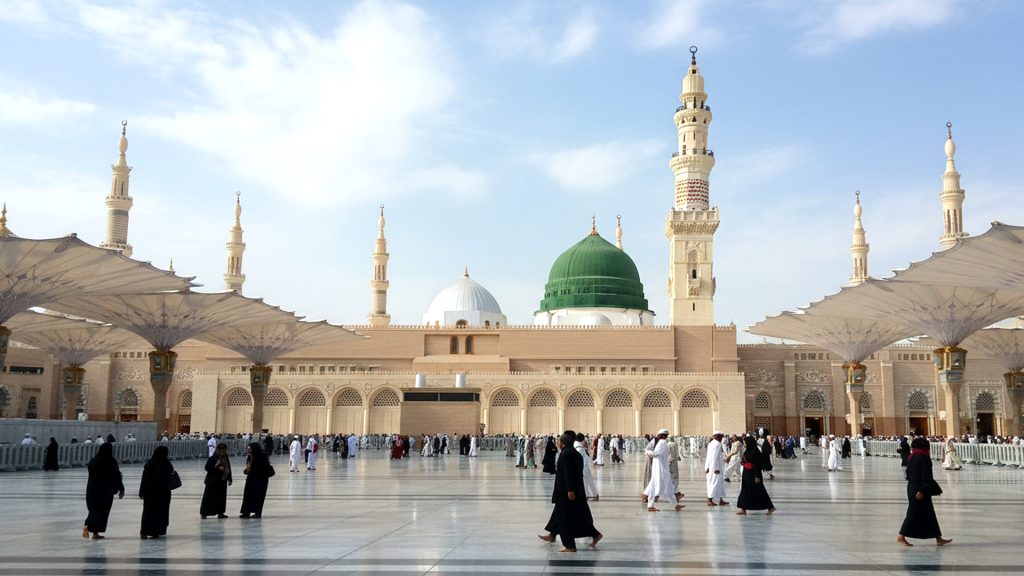
The Prophet’s Mosque was built by the Prophet Muhammad ﷺ after his migration to Medina. It grew from a simple courtyard with palm trunk pillars into a vast complex with huge umbrellas that shade the plaza.
Under the Green Dome rests the Prophet ﷺ, with Abu Bakr and Umar. Visitors also seek the Rawdah, the area between his house and the pulpit, which the hadith describes as a garden from the gardens of Paradise.
Visitor tip: Go for Fajr prayer. The plaza is calm, the light is soft and queues for the Rawdah are shorter.
3. Al Aqsa Mosque, Jerusalem
- Country: Jerusalem
- Built: 705 to 715 CE, rebuilt many times
- Known for: the first qibla

Al Aqsa is the third holiest mosque in Islam and the first direction of prayer for Muslims. The Quran links it to the Night Journey of the Prophet ﷺ. The compound includes the silver domed Al Qibli prayer hall and, nearby, the golden Dome of the Rock.
Many travellers confuse the two buildings. If you picture a golden dome, that is the Dome of the Rock, a shrine, and not the main prayer hall.
Visitor tip: Access rules and visiting times can change at short notice. Check current official guidance before you travel.
4. Sheikh Zayed Grand Mosque, Abu Dhabi
- Country: United Arab Emirates
- Opened: 2007
- Known for: 82 domes, white marble

This is one of the most visited famous mosques around the world. It blends Mamluk, Ottoman and Mughal ideas into pure white marble. It has more than 1,000 columns, 82 domes and a prayer hall that holds about 40,000 worshippers.
Its reflective pools make it glow at sunset, and one of the largest hand knotted carpets in the world covers the main hall. Free guided tours welcome visitors of every background. See the official Sheikh Zayed Grand Mosque website for hours.
Visitor tip: Visit near sunset, then stay for the lights. Women should bring a scarf, although abayas are also provided.
5. Hassan II Mosque, Casablanca
- Country: Morocco
- Completed: 1993
- Known for: 210 metre minaret
Among famous mosques around the world, Hassan II Mosque rises over the Atlantic coast, partly built on the water. Its minaret of about 210 metres is widely cited as the tallest in the world, and its roof can slide open above the prayer hall.
Moroccan craftsmen carved cedar, plaster and marble by hand. It is one of the few major mosques in Morocco that welcomes non Muslims on guided tours.
Visitor tip: Book the morning tour and walk the sea facing esplanade at golden hour.
6. Blue Mosque (Sultan Ahmed Mosque), Istanbul
- Country: Turkey
- Built: 1609 to 1616
- Known for: six minarets, blue tiles
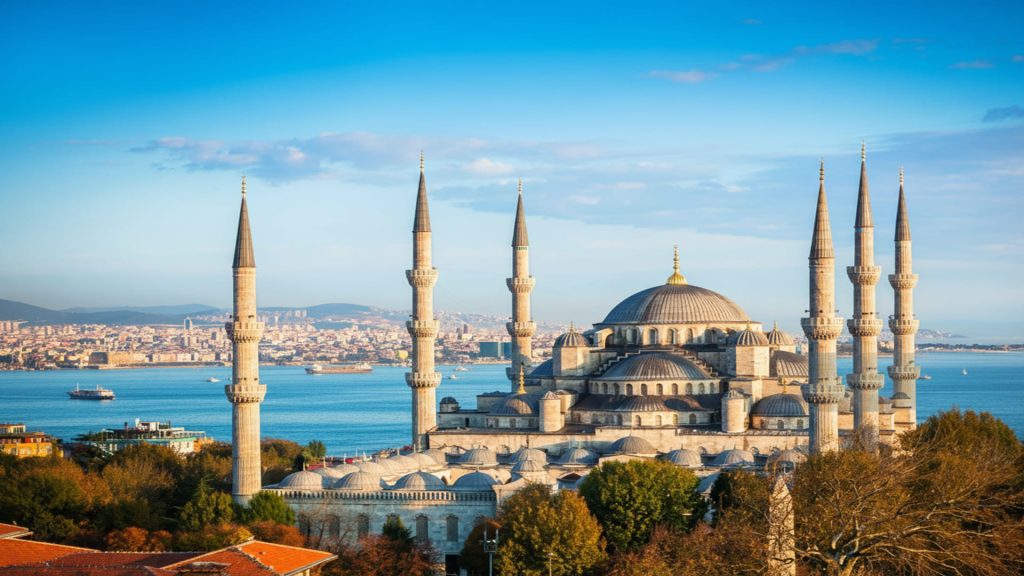
The Blue Mosque is one of the famous mosques around the world, named for the thousands of blue and white Iznik tiles that cover its interior. Its cascade of domes and six minarets define Istanbul’s skyline, directly across the square from Hagia Sophia.
Entry is free outside prayer times, and the mosque is still very much in daily use. Visitors enter through a dedicated tourist door.
Visitor tip: Arrive before 9 am. The mosque closes to tourists at each prayer, so check the board at the entrance.
7. Hagia Sophia Grand Mosque, Istanbul
- Country: Turkey
- Built: 537 CE
- Known for: the giant dome
Hagia Sophia, one of the most discussed famous mosques around the world, began as a Byzantine cathedral, became a mosque in 1453, a museum in 1934 and a mosque again in July 2020. Its dome seems to float, and calligraphic roundels of Allah, Muhammad and the early caliphs hang beside Byzantine mosaics.
Since January 2024, foreign visitors use a separate entrance and pay about 25 euros for the upper gallery, while the ground floor is reserved for worship. Read the Lonely Planet explanation of the rules and also the UNESCO listing for the Historic Areas of Istanbul.
Visitor tip: Rules and prices change. Confirm hours and tickets on the day, and dress modestly.
8. Badshahi Mosque, Lahore
- Country: Pakistan
- Built: 1671 to 1673
- Known for: red sandstone Mughal grandeur
Emperor Aurangzeb built Badshahi Mosque, one of the famous mosques around the world, as the crown of Mughal Lahore. Its enormous courtyard can hold around 100,000 people, and three marble domes sit above a red sandstone prayer hall.
It faces the Lahore Fort, so you can easily see both in one afternoon.
Visitor tip: Visit near Maghrib, when the stone turns deep orange and the courtyard fills.
9. Faisal Mosque, Islamabad
- Country: Pakistan
- Opened: 1986
- Known for: tent shaped modern design
Faisal Mosque is among the famous mosques around the world that broke with tradition. Designed by Turkish architect Vedat Dalokay, it has no dome. Instead, a tent inspired roof sits between four tall minarets, set against the Margalla Hills.
It is among the largest mosques in the world, with room for hundreds of thousands in the hall and grounds.
Visitor tip: Go at dusk, when the white structure is lit against the dark hills.
10. Istiqlal Mosque, Jakarta
- Country: Indonesia
- Opened: 1978
- Known for: largest in Southeast Asia
Among famous mosques around the world, Istiqlal means independence. The national mosque of Indonesia was designed by Frederich Silaban, a Christian architect, and it stands across from Jakarta Cathedral, linked by an underground tunnel of friendship.
Indonesia has the largest Muslim population on earth, which makes this mosque a living symbol of the nation. For the population context, see our Islam overview.
Visitor tip: Friday is the busiest day. Visit on a weekday for guided tours and calmer halls.
More Famous Mosques Around the World Worth Knowing
The top 10 is only the beginning. These famous mosques around the world are just as important to history and travel.
Quba Mosque, Medina
Often described as the first mosque built in Islam, Quba was founded by the Prophet ﷺ as he arrived near Medina. The Prophet ﷺ encouraged visiting it, and many pilgrims pray two rakah here.
Great Mosque of Kairouan, Tunisia
Founded in 670 CE, it is one of the oldest and best preserved mosques in the Islamic West and a model for later North African mosques. See the UNESCO listing for Kairouan.
Umayyad Mosque, Damascus
Built between 705 and 715 CE, this mosque combines early Islamic design with shimmering mosaics and a vast courtyard.
Jama Masjid, Delhi
Commissioned by Shah Jahan and completed in 1656, it stands in red sandstone and white marble above Old Delhi. Climb a minaret for a view across the city.
Great Mosque of Djenne, Mali
The world’s largest mud brick building is replastered by the community every year in a festival. It sits in a UNESCO site, the Old Towns of Djenne.
Sheikh Lotfollah Mosque, Isfahan
Built between 1603 and 1619, this small mosque has a famous dome whose tiles seem to shift colour with the sun, inside a stunning Persian square.
Baitul Mukarram National Mosque, Dhaka
The national mosque of Bangladesh serves as a major gathering place in the capital, especially during Ramadan and Eid. Learn about Ramadan and the festivals in our guides.
Other highlights
Do not miss the Selimiye Mosque in Edirne by the architect Sinan, the Mezquita of Cordoba in Spain, the Sultan Qaboos Grand Mosque in Muscat and the Al Azhar Mosque in Cairo, founded in 972 CE. Germany also has a striking modern landmark, covered in our guide to the Cologne Central Mosque.
Mosque Photo Gallery
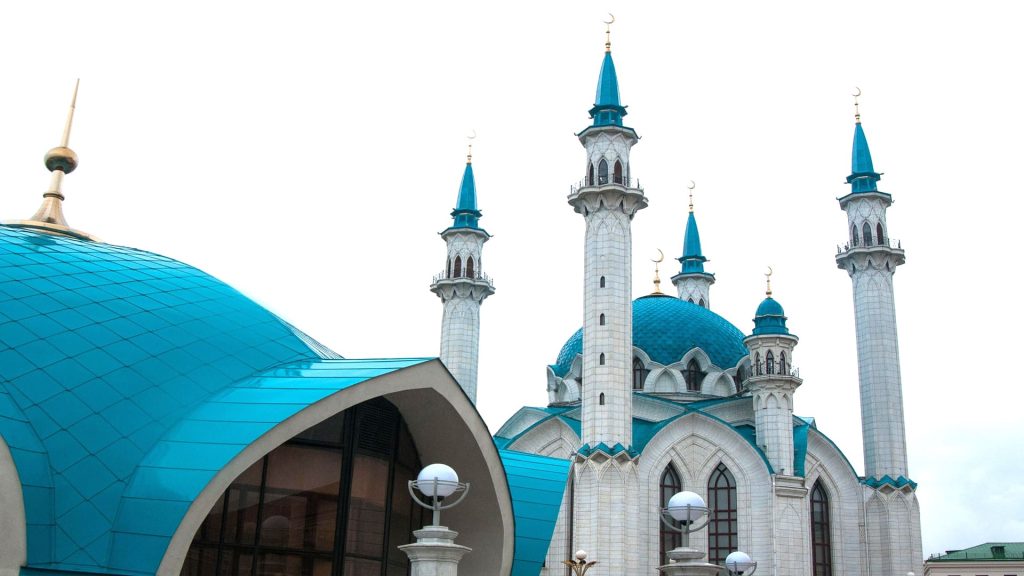
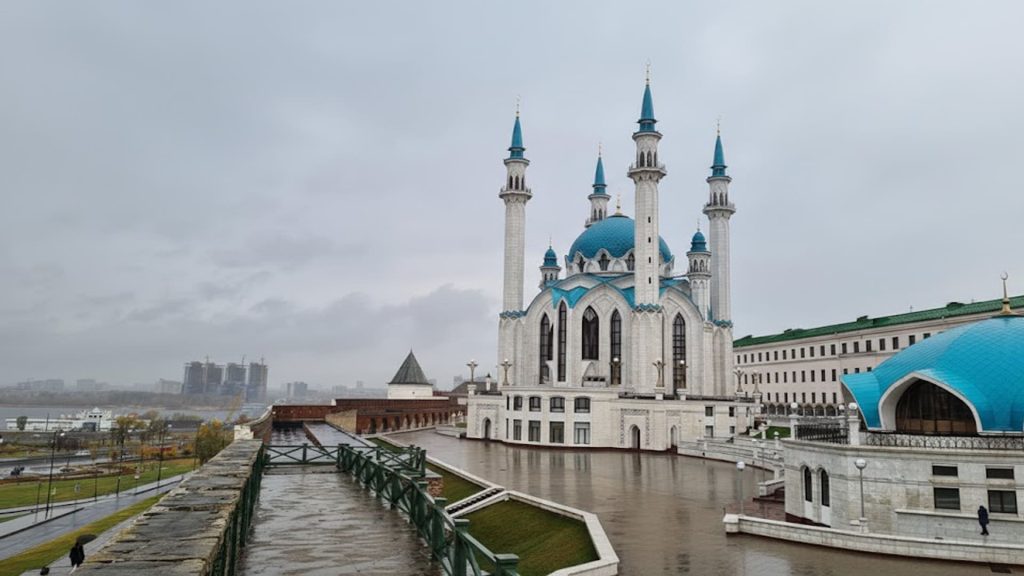
A few more views from the Islamic Info Center collection. For hundreds more, browse our Islamic pictures gallery and our guide to the Islamic place of worship.


Architectural Styles Across Famous Mosques
| Style | Key features | Example |
|---|---|---|
| Hypostyle | Forests of columns under a flat roof | Kairouan, Cordoba |
| Ottoman central dome | One huge dome with half domes and pencil minarets | Blue Mosque, Selimiye |
| Persian iwan | Arched halls around a courtyard, blue tiles | Isfahan mosques |
| Mughal | Red sandstone, white marble domes, big courtyards | Badshahi, Jama Masjid |
| Sudano Sahelian | Mud brick with protruding wooden beams | Djenne |
| Modern | Bold geometry, glass and concrete | Faisal Mosque, Istiqlal |
The pattern is simple across famous mosques around the world. Mosques borrow local materials and skills, but keep the same core: a clear qibla, a place for ablution and room for rows of worshippers. That is why a Javanese mosque and a Moroccan mosque look different, yet feel unmistakably the same.
Visiting Guide for Famous Mosques Around the World
Before You Go
Good planning makes famous mosques around the world far more rewarding to visit.
- Check opening hours and the daily prayer schedule with a trusted prayer times tool.
- Look for official websites for ticket prices, since rules can change.
- Plan Friday carefully. Many mosques close to visitors around midday prayers.
- Carry a light scarf, socks and a small bag for your shoes.
Etiquette Everyone Should Follow
The Quran tells believers to take their adornment at every masjid, which scholars connect with clean and modest dress. In practice this means:
- Cover shoulders and knees. Women usually cover their hair.
- Remove shoes before the carpeted area.
- Speak softly and silence your phone.
- Never walk in front of someone who is praying.
- Ask before photographing people, and avoid flash.
Tips for Non Muslim Visitors
Most famous mosques around the world are glad to explain their faith to respectful guests. Use the visitor entrance, follow the signs and accept the free guide if one is offered. Do not enter prayer rows or touch copies of the Quran. If unsure, ask a staff member with a smile.
A Sample Plan: Three Days in Istanbul
This practical example shows how to combine famous mosques around the world in one trip.
- Day 1: Blue Mosque at 8:30 am, then Hagia Sophia gallery after lunch.
- Day 2: Suleymaniye Mosque at sunrise, then Rustem Pasha Mosque and the Grand Bazaar.
- Day 3: A ferry on the Bosphorus and the Ortakoy Mosque at sunset.
For Muslim Travellers
If your journey includes worship, plan prayer breaks around mosques and carry a small prayer mat. You can also use our prayer times page when visiting famous mosques around the world, and learn what to recite in our guide to Namaz.
Quran and Hadith About Mosques
Mosques are central to Islam’s teachings, and that is why famous mosques around the world draw so many pilgrims. These references explain why famous mosques around the world matter to Muslims.
وَأَنَّ الْمَسَاجِدَ لِلَّهِ فَلَا تَدْعُوا مَعَ اللَّهِ أَحَدًا
The verse says that mosques belong to Allah, so no one should be called upon beside Him. It reminds us that every mosque is a place of pure worship.
Quran, Surah Al Jinn 72:18Allah describes the keepers of His mosques as those who believe in Him and the Last Day, establish prayer and give zakat.
Quran, Surah At Tawbah 9:18The Quran mentions the Night Journey from the Sacred Mosque to the Farthest Mosque, which Muslims understand as Al Aqsa.
Quran, Surah Al Isra 17:1The Quran also speaks of the first house set up for people, in Bakkah, which is Mecca, as a blessed place of guidance.
Quran, Surah Aal Imran 3:96The Prophet ﷺ said that one should set out on a special journey only to three mosques: the Sacred Mosque, the Prophet’s Mosque and Al Aqsa (Sahih Bukhari 1189, Sahih Muslim 1397). He also said that whoever builds a mosque for Allah, Allah will build for him a house in Paradise (Sahih Bukhari 450, Sahih Muslim 533).
When Abu Dharr asked which mosque was built first, the Prophet ﷺ replied that it was the Sacred Mosque, then Al Aqsa (Sahih Bukhari 3366, Sahih Muslim 520). Learn more about the faith in our Islam Religion section and Islamic history archive, or reflect on the 99 Names of Allah.
Common Mix Ups About Famous Mosques
Even experienced travellers confuse some famous mosques around the world. Here are the usual mix ups.
Dome of the Rock is not Al Aqsa Mosque
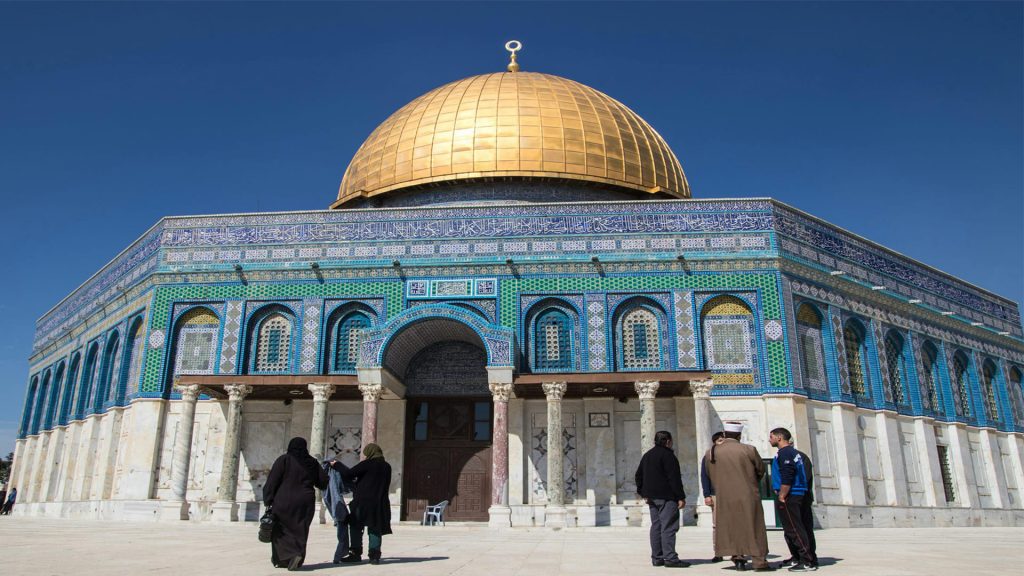
They are separate buildings in one compound. Use the correct name when you write or speak about them.
The Taj Mahal is not a mosque
It is a mausoleum, although a working mosque stands beside it. Many visitors expect a prayer hall and are surprised.
The Blue Mosque is not mainly blue outside
Its famous blue comes from the tiles inside. From the outside it looks grey and cream.
Not every mosque is open to everyone at all times
Policies differ by country and change often. The best habit is to check the official website and arrive politely.
Frequently Asked Questions About Famous mosques around the world
What are the most famous mosques around the world?
The most famous include Masjid al Haram in Mecca, Al Masjid an Nabawi in Medina, Al Aqsa in Jerusalem, Sheikh Zayed Grand Mosque in Abu Dhabi, Hassan II Mosque in Casablanca, the Blue Mosque and Hagia Sophia in Istanbul, Badshahi Mosque in Lahore, Faisal Mosque in Islamabad and Istiqlal Mosque in Jakarta.
Which is the largest mosque in the world?
Masjid al Haram in Mecca is the largest mosque in the world and the holiest site in Islam. It surrounds the Kaaba and has been expanded many times to host millions of pilgrims during Hajj and Ramadan.
Which mosque has the tallest minaret?
Hassan II Mosque in Casablanca, completed in 1993, has a minaret of about 210 metres, widely cited as the tallest minaret in the world.
Can non Muslims visit famous mosques?
Often yes. Sheikh Zayed Grand Mosque, Hassan II Mosque, the Blue Mosque and many others welcome respectful visitors outside prayer times. Mecca is closed to non Muslims, and rules at Medina and Al Aqsa can change, so always check current official guidance.
What should I wear when visiting a mosque?
Wear modest, loose clothing that covers shoulders and knees. Women usually cover their hair with a scarf, and everyone removes shoes before entering the carpeted prayer area.
Is Hagia Sophia a mosque today?
Yes. Hagia Sophia returned to use as a mosque in July 2020. Since January 2024 foreign visitors use a separate entrance and pay about 25 euros for the upper gallery, while the ground floor prayer hall is for worshippers. Check current rules before you travel.
What is the difference between Al Aqsa Mosque and the Dome of the Rock?
They are different buildings in the same compound in Jerusalem. The silver domed building is the Al Qibli prayer hall, commonly called Al Aqsa Mosque, while the golden domed shrine is the Dome of the Rock.
What is the best time to visit a famous mosque?
Early morning is usually quietest and best for photos. Avoid the five daily prayer times and Friday midday prayers, and check local prayer times before you set out.
Conclusion: Plan Your Journey Through Famous Mosques Around the World
From the Kaaba in Mecca to the lagoons of Abu Dhabi, famous mosques around the world tell one story in many architectural languages. Use the map to plan, the etiquette tips to behave well, and the Quran and hadith to keep your intention sincere.
Bookmark this guide to famous mosques around the world, and explore more in our mosque history section or the Islamic pictures gallery.
Sources and Further Reading
- UNESCO: Historic Areas of Istanbul
- UNESCO: Old City of Jerusalem and its Walls
- UNESCO: Old Towns of Djenne
- UNESCO: Kairouan
- Lonely Planet: Hagia Sophia entry rules
- Istanbul.com: Hagia Sophia tickets and hours
- Sheikh Zayed Grand Mosque Center
- Pew Research Center: The Future of the Global Muslim Population