
Dua for Death Person in Islam: 7 Powerful Duas for Mercy and Peace
The dua for death person in Islam is one of the greatest gifts a living Muslim can give to someone who has passed away. When a loved one dies, many of us feel helpless and ask what we can still do for them. The Sunnah teaches Muslims to make sincere dua and seek forgiveness for the deceased. Charity and beneficial deeds can also benefit them. This guide shares seven duas with Arabic, transliteration, meaning and references, alongside advice for the grieving.
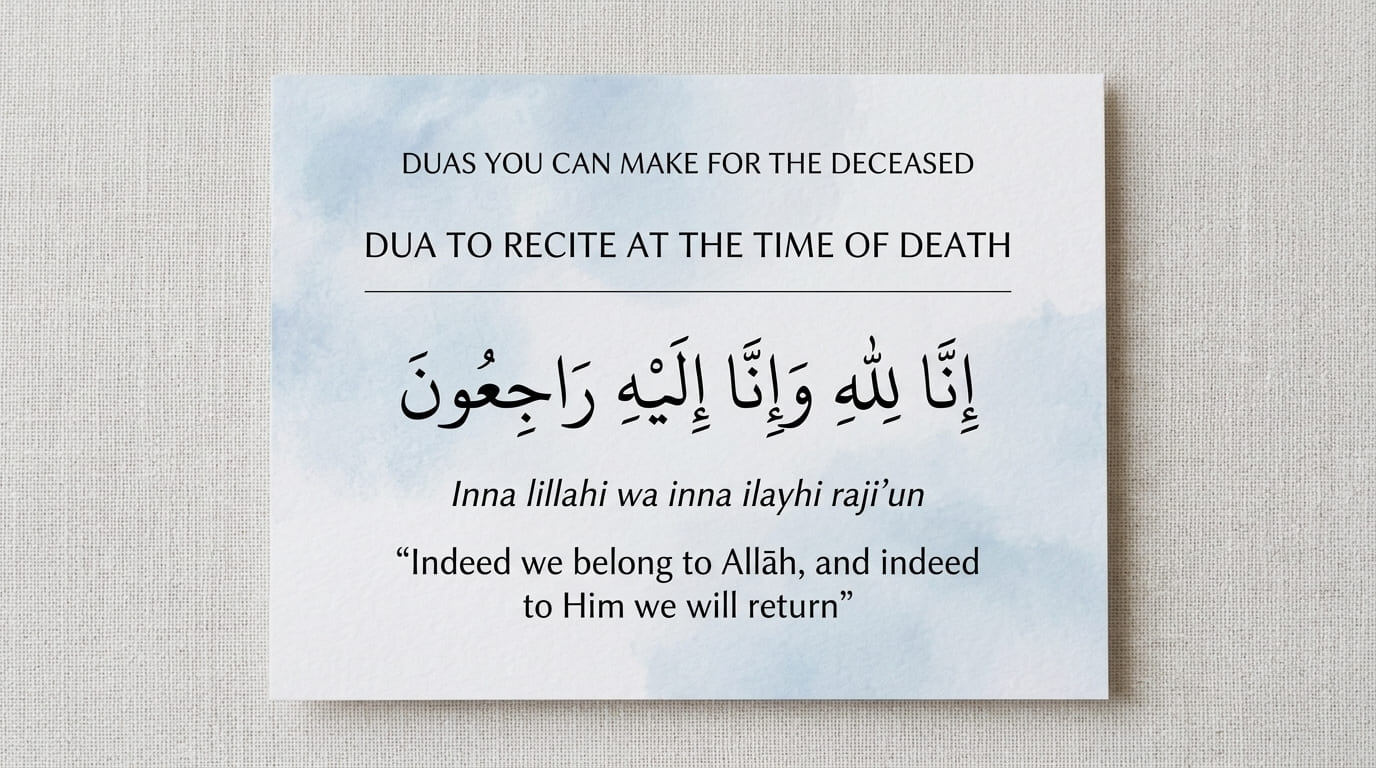
- When hearing news of a death, say "Inna lillahi wa inna ilayhi raji'un."
- Pray for the deceased's forgiveness, mercy and protection.
- After burial, ask Allah to forgive the deceased and make them steadfast.
- Give charity on their behalf and continue beneficial deeds.
Why Dua for the Deceased Matters in Islam
Death ends a person's opportunity to perform new deeds, but Allah's mercy remains vast. The Prophet Muhammad (peace be upon him) taught Muslims to pray for the deceased, and the funeral prayer itself includes supplications asking Allah to forgive and show mercy to the departed.
Deeds That Continue After Death
An authentic hadith explains that when a person dies, their deeds cease except for three: ongoing charity, beneficial knowledge, and a righteous child who prays for them. Read the narration in Sahih Muslim.
Patience During Grief
Grief is natural. The Prophet (peace be upon him) wept when his son Ibrahim died. Islam encourages patience without requiring people to suppress their tears. Dua can help a grieving person turn to Allah for comfort and strength.
7 Duas for the Deceased and the Grieving
1. Dua When Hearing News of a Death
Inna lillahi wa inna ilayhi raji'un. Allahumma'jurni fi musibati wa akhlif li khayran minha.
Meaning: Indeed, we belong to Allah, and to Him we will return. O Allah, reward me in my calamity and replace it with something better.
Umm Salamah (may Allah be pleased with her) reported this supplication in Sahih Muslim.
2. The Funeral Prayer Dua for the Deceased
Allahummaghfir lahu warhamhu wa 'afihi wa'fu 'anhu, wa akrim nuzulahu wa wassi' mudkhalahu, waghsilhu bil ma'i wath-thalji wal-barad, wa naqqihi minal-khataya kama naqqaytath-thawbal-abyada minad-danas, wa abdilhu daran khayran min darihi wa ahlan khayran min ahlihi wa zawjan khayran min zawjihi, wa adkhilhul-jannata wa a'idhhu min 'adhabil-qabri wa 'adhabin-nar.
Meaning: O Allah, forgive him, have mercy on him, grant him well-being and pardon him. Honor his place of rest and widen his entrance. Wash him with water, snow and hail, and cleanse him of sins as a white garment is cleansed of dirt. Give him a better home, family and spouse, admit him to Paradise, and protect him from the punishment of the grave and the Fire.
This supplication is recorded in Sahih Muslim. The wording above is for a male deceased; wording should be adjusted when praying for a woman.
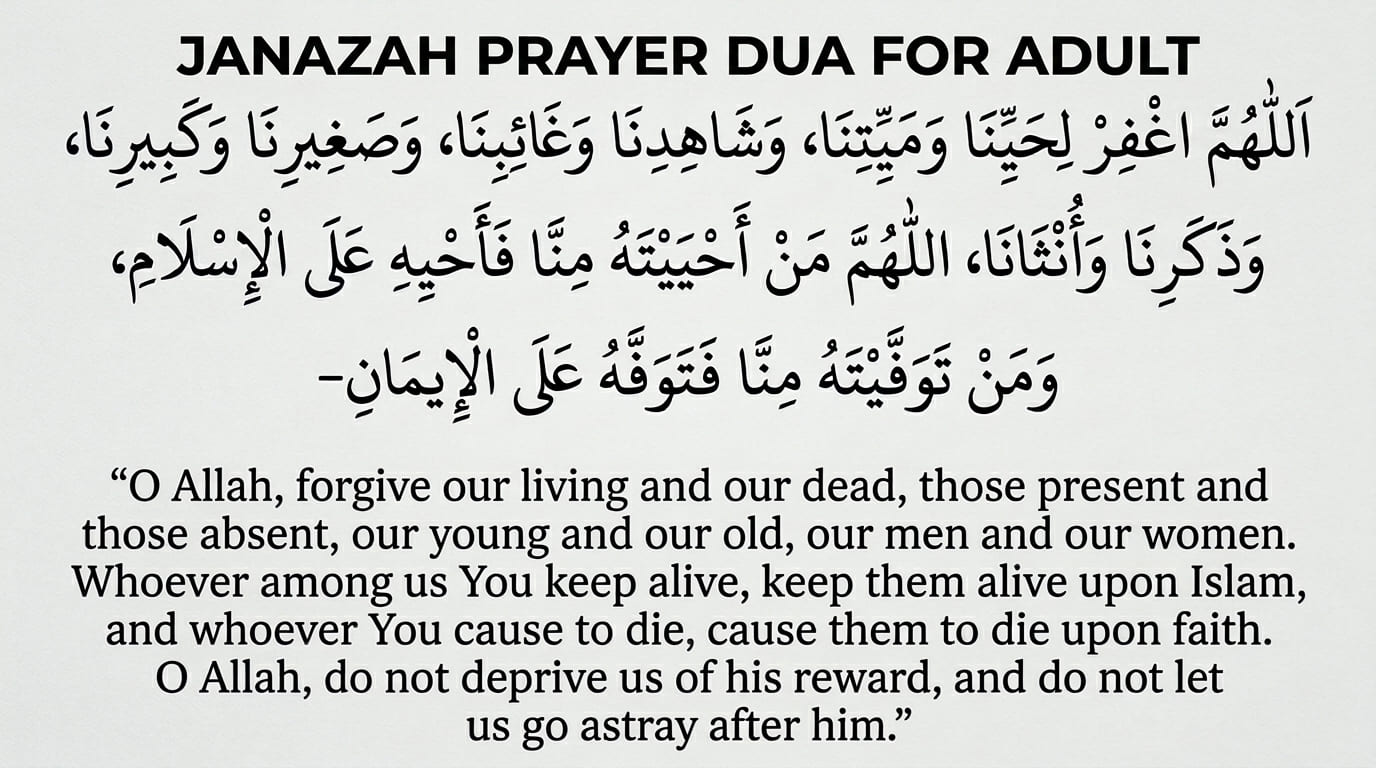
3. General Dua for the Living and the Dead
Allahummaghfir li-hayyina wa mayyitina, wa shahidina wa gha'ibina, wa saghirina wa kabirina, wa dhakarina wa unthana. Allahumma man ahyaytahu minna fa ahyihi 'alal-Islam, wa man tawaffaytahu minna fa tawaffahu 'alal-iman.
Meaning: O Allah, forgive our living and our dead, those present and absent, young and old, male and female. Whoever You keep alive among us, keep them upon Islam, and whoever You take, take them upon faith.
Source: Sunan Abi Dawud.
4. Dua After Burial
Uthman (may Allah be pleased with him) reported that after burial, the Prophet (peace be upon him) instructed people to seek forgiveness for the deceased and ask Allah to make them steadfast during questioning. This is recorded in Sunan Abi Dawud.
Allahummaghfir lahu, Allahumma thabbithu.
Meaning: O Allah, forgive him. O Allah, make him steadfast.
5. Dua When Visiting Graves
As-salamu 'alaykum ahlad-diyari minal-mu'minina wal-muslimin, wa inna in sha Allahu bikum lahiqun, nas'alullaha lana wa lakumul-'afiyah.
Meaning: Peace be upon you, people of this abode among the believers and Muslims. Allah willing, we will join you. We ask Allah for well-being for us and for you.
Source: Sahih Muslim.
6. Dua for Deceased Parents
The Quran teaches Muslims to pray for their parents with humility and mercy.
Rabbir-hamhuma kama rabbayani saghira.
Meaning: My Lord, have mercy on them as they raised me when I was small.
Read this supplication in Quran 17:24. Another prayer for parents and believers appears in Quran 14:41.
7. Condolence Dua for the Grieving Family
Inna lillahi ma akhadha wa lahu ma a'ta, wa kullu shay'in 'indahu bi ajalin musamma.
Meaning: To Allah belongs what He took and what He gave, and everything with Him has an appointed term.
The Prophet (peace be upon him) taught this message of patience in Sahih al-Bukhari.
How to Make Dua for a Deceased Loved One
You can make dua for someone who has died at any time. Ask Allah sincerely for forgiveness, mercy, and a place in Paradise. You may mention the person's name in your personal supplication.
A Simple Daily Routine
- After your prayers, ask Allah to forgive your loved one.
- Pray for your deceased parents and all deceased Muslims.
- Give charity on their behalf when you are able.
- Continue beneficial actions and preserve the good they taught you.
Charity on Behalf of the Deceased
Authentic narrations establish that charity given on behalf of a deceased person can benefit them. Depending on your means, you could support people in need, contribute to clean water projects, or help fund beneficial education. Keep your intention sincere and seek Allah's acceptance.
What to Avoid When Someone Dies
Wailing and Harmful Mourning Practices
Crying is natural and permitted. Islam teaches patience and prohibits wailing and practices associated with rejecting Allah's decree.
Unverified Rituals
Scholars differ on some practices, including gifting the reward of Quran recitation to the deceased. Seek guidance from a qualified scholar and avoid presenting disputed practices as universally agreed obligations.
Judging the Deceased
Do not claim certainty about another person's final destiny. Ask Allah for mercy and forgiveness, and leave ultimate judgment to Him.
Frequently Asked Questions
What is the best dua for a dead person in Islam?
The funeral prayer supplication beginning "Allahummaghfir lahu warhamhu" asks Allah to forgive and show mercy to the deceased. You can also make sincere personal duas.
Does the dua of the living reach the dead?
Yes. The Quran praises believers who ask Allah to forgive those who preceded them in faith, and authentic narrations encourage supplication for the deceased.
Can I make dua for a non-Muslim who has died?
Islamic teachings distinguish between showing kindness to grieving relatives and seeking forgiveness for someone who died upon disbelief. For a specific situation, consult a qualified scholar.
What should I say to someone who has lost a loved one?
You can offer sincere condolences, remind them that everything belongs to Allah, and pray that Allah grants the deceased mercy and the family patience.
Can I make dua for a deceased child?
Yes. You can ask Allah to grant the parents patience, comfort and reward, and to show mercy to the child.
How often should I make dua for the deceased?
You may make dua whenever you wish. There is no fixed limit on asking Allah to forgive and show mercy to the deceased.
A dua for a deceased person is a simple, meaningful way to seek Allah's mercy for someone you love. Learn these supplications, reflect on their meanings, and remember the deceased in your prayers. Charity and beneficial actions can also be ways to honor their memory.