Prayer

Eid Mubarak Message
Prayer

Taqabbalallahu Minna Wa Minkum

    Taqabbalallahu Minna Wa Minkum During the joyous occasions of Eid al-Fitr and Eid al-Adha, you will often hear Muslims exchanging a specific Arabic greeting rather than just a simple “Happy Eid.” This beautiful prayer is Taqabbalallahu Minna Wa Minkum. تَقَبَّلَ اللهُ مِنَّا وَمِنْكُمْ Translation: “May Allah accept [good deeds] from us and from you.” Pronunciation: Ta-kab-ba-lall-ahu min-na wa min-kum The Significance of the Greeting While “Eid Mubarak” (Blessed Eid) is a culturally popular way to celebrate, Taqabbalallahu Minna Wa Minkum is rooted in the tradition of the Sahaba (the companions of the Prophet Muhammad ﷺ). After a month of fasting in Ramadan or the days of sacrifice during Hajj, the primary concern of a believer is whether their efforts were accepted by Allah. This phrase shifts the focus from mere celebration to a spiritual petition for acceptance. The Sunnah of the Sahaba It is narrated that when the companions of the Messenger of Allah (ﷺ) met on the day of Eid, they would say to one another: “Taqabbalallahu minna wa minka” (May Allah accept it from us and from you). By using this greeting, you are following a practice that has been cherished for over 1,400 years, connecting you directly to the early generations of Islam. Grammar Breakdown Taqabbal: Accept / May He accept. Allah: God. Minna: From us. Wa: And. Minkum: From you (plural). How to Respond? If someone says this to you, the most common and appropriate response is to repeat the phrase back to them: “Taqabbalallahu Minna Wa Minkum” Alternatively, you can say “Ameen,” or “Minna wa minkum saalih al-a’maal” (From us and from you, [may He accept] righteous deeds). When to use it? While most commonly used on the days of Eid al-Fitr and Eid al-Adha, it can technically be used any time you see someone completing a virtuous act, such as finishing a prayer or a period of fasting, as a way of making dua for them. May Allah accept all our fasts, prayers, and charity. Ameen!

Taqabbalallahu Minna Wa Minkum Learn More »

When Is Eid 2027 in the UK
Prayer

Eid Prayer London | UK Eid Prayer Times 2026

UK All Mosque Eid Prayer Times 2026 | London, Birmingham, Manchester | Islamic Info Center 2026 UK All Mosque Eid ul-Adha Prayer Directory OFFICIAL LIVE TIMES: Wednesday, 27th May 2026 (10 Dhul Hijjah 1447) STATUS: VERIFIED LIVE FOR EID UL-ADHA Dhul Hijjah Moon Confirmed | Eid Celebrations Ongoing Today London Birmingham Manchester Leeds Scotland ⚠️ ATTENDANCE LOGISTICS: Due to heavy expected turnouts for the Festival of Sacrifice, please arrive early, bring your own prayer mat, and respect local parking restrictions. If a mosque layout uses multiple shifting Jamats, ensure you clear the prayer spaces promptly so following congregations can enter safely. London Central & Greater London Mosque Name Jamat Times Notes East London Mosque (Whitechapel) 07:00 | 08:30 | 09:30 | 10:30 | 11:30 BSL interpretation provided at the 10:30am Jamat London Central Mosque (Regent’s Park) 07:00 | 08:00 | 09:00 | 10:00 | 11:00 Strict “no parking” on site. Use public transport. Baitul Futuh Mosque (Morden) 09:30 Arrival by 08:45 highly recommended. Birmingham Mosque / Venue Prayer Time Note Birmingham Central Mosque 07:00 | 08:30 | 09:30 | 10:30 High area congestion expected. Plan alternative routes. Small Heath Park (Eid in the Park) 09:30 Confirmed: Outdoor prayers proceeding for Eid ul-Adha morning. Green Lane Masjid (Edgbaston Stadium) 08:30 | 10:00 Entry parameters apply; check digital pass allocations. Manchester Mosque Name Jamat Times Note Manchester Central Mosque (Victoria Park) 07:00 | 08:30 | 10:00 Sisters space available on upper tier levels. Didsbury Mosque 07:30 | 08:30 | 09:30 | 10:30 Strict one-way traffic management layout in operation. Leeds & West Yorkshire Mosque Name Jamat Times Leeds Grand Mosque 07:00 | 08:30 | 10:00 Bradford Grand Mosque 07:30 | 08:45 | 10:00 Scotland Mosque Name Confirmed Times Glasgow Central Mosque 07:30 | 09:00 | 10:30 Edinburgh Central Mosque 08:00 | 09:30 | 10:30 SEND EID WISHES: Click here for Eid ul-Adha Mubarak Messages and Wishes 2026

Eid Prayer London | UK Eid Prayer Times 2026 Learn More »

Prayer

Eid ki Namaz ka Tarika: A Simple Step-by-Step Guide

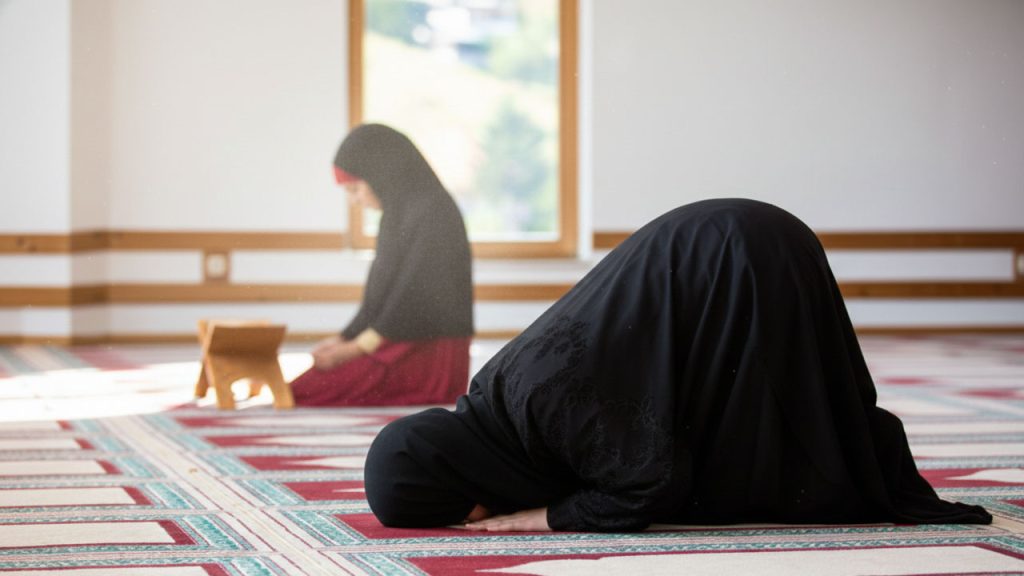
    Eid ki Namaz ka Tarika: Complete Illustrated Guide Eid-ul-Fitr and Eid-ul-Adha are the most significant celebrations in the Islamic calendar. They begin with a special congregational prayer called Salat-al-Eid. Because this prayer is only performed twice a year and includes essential additional Takbirs (saying “Allahu Akbar”), it is common for people to seek a detailed reminder on the correct method. This article provides a complete, easy-to-follow, and illustrated step-by-step guide to the Eid ki Namaz ka Tarika, ensuring you can perform this beautiful act of worship with confidence and peace of mind. Note: The Eid prayer is compulsory (Wajib) for all adult Muslim men who are able to attend. Women are also encouraged to participate in many communities. Preparation and Niyyah (Intention) Before you begin the prayer, ensure you have performed Wudu (ablution). The Eid prayer is performed in the congregation (Jama’at) behind an Imam. The Niyyah Stand in the row, calm your mind, and make the intention in your heart. You may also recite it silently: “I intend to perform two Rakat of the Eid-ul-Fitr (or Eid-ul-Adha) prayer, which is Wajib, with six extra Takbirs, for the sake of Allah, following this Imam.” The First Rakat (Rak’ah) The core difference in Eid prayer lies in the distribution of the extra Takbirs. In the first Rakat, these occur before the main recitation of the Qur’an. Takbir-e-Tahrima: The Imam will begin by raising his hands and saying “Allahu Akbar.” Follow the Imam: raise your hands, say “Allahu Akbar,” and then fold them over your chest (or below the navel, according to your school of thought). Recite Sana: Silently recite the opening supplication: “Subhanaka Allahumma wa bihamdika…” The 3 Extra Takbirs: The Imam will now say “Allahu Akbar” three times, pausing between each. 1st Takbir: Raise your hands to your ears, say “Allahu Akbar,” and let your hands hang by your sides. 2nd Takbir: Raise your hands, say “Allahu Akbar,” and let your hands hang by your sides. 3rd Takbir: Raise your hands, say “Allahu Akbar,” and this time, FOLD your hands as you normally would for recitation. Recitation: The Imam will proceed with the recitation of Surah Al-Fatiha and another Surah. Listen silently and attentively. Complete the Rakat: The Imam will say “Allahu Akbar” and move into Ruku (bowing), then to Sujud (prostration). Complete these movements normally following the Imam. The Second Rakat (Rak’ah) Rise from the prostration for the second Rakat. This Rakat reverses the order of the extra Takbirs; they occur after the recitation and just before the Ruku. Recitation: The Imam will begin by reciting Surah Al-Fatiha and another Surah immediately upon standing. The 3 Extra Takbirs: After the recitation is complete, but before moving to Ruku, the Imam will say “Allahu Akbar” three times. 1st Takbir: Raise your hands, say “Allahu Akbar,” and let your hands hang by your sides. 2nd Takbir: Raise your hands, say “Allahu Akbar,” and let your hands hang by your sides. 3rd Takbir: Raise your hands, say “Allahu Akbar,” and let your hands hang by your sides. Moving to Ruku (4th Takbir): The Imam will say “Allahu Akbar” a fourth time. Do NOT raise your hands for this fourth Takbir. Immediately move into the Ruku position. Conclusion: Complete the Ruku, two Sujud, the Tashahhud (sitting), and the final Salam (turning the head right and left) with the Imam. Important Final Step: The Khutbah Once the Salam is complete, the prayer is officially over, but your obligations are not. It is a vital Sunnah (practice of the Prophet) to remain seated and listen to the Eid Khutbah (sermon) delivered by the Imam. Unlike the Friday prayer (Jumu’ah) where the Khutbah comes first, the Eid Khutbah is delivered *after* the prayer. It generally covers the significance of the day, the concept of charity (Sadqat-ul-Fitr), and community unity. Leaving before the Khutbah concludes is highly discouraged. Eid Mubarak! We hope this illustrated guide helps you perform your Eid prayer accurately. May Allah accept your prayers and good deeds. Eid Mubarak to you and your loved ones!  

Eid ki Namaz ka Tarika: A Simple Step-by-Step Guide Learn More »

Prayer

Laylatul Qadr Dua: Seeking Mercy and Forgiveness on the Night of Power

    Laylatul Qadr Dua Laylatul Qadr, or the Night of Power, is the most sacred night in the Islamic calendar. Hidden within the last ten nights of Ramadan, it is a night where worship is equivalent to a thousand months. For every believer, the centerpiece of this night is the Laylatul Qadr Dua. The Main Dua for Laylatul Qadr (The Sunnah Prayer) When Aisha (RA) asked Prophet Muhammad (PBUH) how she should pray if she encountered the Night of Power, he taught her a concise yet deeply profound supplication. This is the most recommended prayer to recite during the odd nights of the last ten days. اللَّهُمَّ إِنَّكَ عَفُوٌّ تُحِبُّ الْعَفْوَ فَاعْفُ عَنِّي Transliteration: Allahumma innaka ‘afuwwun tuhibbul ‘afwa fa’fu ‘anni. Translation: “O Allah, You are Most Forgiving, and You love forgiveness; so forgive me.” (Source: Tirmidhi) Why This Supplication Matters The beauty of this dua lies in the word ‘Afuw. While “Maghfirah” means to cover up sins, ‘Afw means to completely erase them. By reciting this, you are asking Allah (SWT) to wipe your slate clean as if the mistakes never existed. Additional Duas for the Night of Decree While the Sunnah dua is the priority, scholars recommend various other supplications to cover all aspects of life and the hereafter: 1. Seeking Protection from the Fire One of the most frequent prayers of the Prophet (PBUH) was for protection and goodness in both worlds: “Rabbana atina fid-dunya hasanatan wa fil ‘akhirati hasanatan waqina ‘adhaban-nar.” Translation: “Our Lord, give us in this world that which is good and in the Hereafter that which is good and protect us from the punishment of the Fire.” (Surah Al-Baqarah, 2:201) 2. Dua for Seeking Guidance (Hidayah) To remain firm in faith, many recite: “Ya Muqallibal-qulub, thabbit qalbi ‘ala dinik.” Translation: “O Turner of the hearts, keep my heart steadfast upon Your religion.” 3. Dua for Parents and Family The Night of Power is the best time to seek mercy for those who raised us: “Rabbi irhamhuma kama rabbayanee sagheera.” Translation: “My Lord, have mercy upon them as they brought me up [when I was] small.” (Surah Al-Isra, 17:24) Spiritual Checklist for the Last 10 Nights Sincere Repentance (Tawbah): Turn to Allah with a heavy heart and a firm intention to improve. Extended Sujood: Use your prostration to speak to Allah in your own language; this is when the servant is closest to their Lord. Consistency: Recite the main dua (Allahumma innaka ‘afuwwun) throughout the night—while standing, sitting, or resting. Charity (Sadaqah): Even a small donation on this night is rewarded as if you gave charity daily for 83 years. Essential References This guide is curated from authentic Islamic sources to ensure spiritual accuracy: Alhiqma: Comprehensive list of Ramadan and Night of Power supplications. Alim.org: Authentic Hadith references for the Sunnah Dua. Islamic Relief UK: Guidance on the significance of the last ten nights. Duas.org: Detailed Amaal (deeds) and common prayers for Laylatul Qadr. Laylatul Qadr is a gift to the Ummah. It is a night of peace that lasts until the break of dawn. By focusing on the Laylatul Qadr dua and seeking Allah’s ‘Afw (forgiveness), you can transform your destiny. May Allah allow us to reach this night and accept our sincere efforts. Ameen.  

Laylatul Qadr Dua: Seeking Mercy and Forgiveness on the Night of Power Learn More »

Prayer

How to Pray Laylatul Qadr: The Ultimate Guide to the Night of Power

How to Pray Laylatul Qadr: A Complete Guide to the Night of Power How to Pray Laylatul Qadr Prayer Maximize your rewards during the most blessed night of the year. Laylatul Qadr, or the Night of Power, is described in the Holy Qur’an as being “better than a thousand months” (Surah Al-Qadr, 97:3). Observing this night in prayer and devotion can earn a believer rewards equivalent to over 83 years of worship. But how exactly should one pray on this night? This guide breaks down the specific prayers (Namaz), supplications (Duas), and spiritual acts (Amaal) recommended by Islamic scholars and traditions. 1. Prepare Spiritually and Physically Before beginning your prayers, ensure you are in the best state of mind and body: Perform Ghusl: It is highly recommended to take a ritual bath (Ghusl) near sunset to start the night in a state of physical and spiritual purity. Dress Cleanly: Wear your best clothes and use perfume (Attar) to honor the sanctity of the night. Sincere Intention (Niyyah): Center your heart on seeking Allah’s forgiveness and closeness. 2. Recommended Prayers (Nawafil Namaz) While there is no single “obligatory” way to pray, several Sunnah and Mustahab (recommended) prayers are traditionally performed: The 2-Rakat Forgiveness Prayer This is one of the most common prayers for Laylatul Qadr: In each Rakat, recite Surah Al-Fatiha once and Surah Al-Ikhlas 7 times. After completing the prayer (Salaam), recite the following 70 times: أَسْتَغْفِرُ اللهَ رَبِّي وَأَتُوبُ إِلَيْهِ Transliteration: Astaghfirullaaha Rabbee wa atoobu ilayh. Translation: I seek forgiveness from Allah, my Lord, and I turn to Him in repentance. How to pray Laylatul Qadr Prayer The 100-Rakat Prayer For those with the physical strength, praying 100 Rakats (in sets of 2) is highly meritorious. In each Rakat, it is recommended to recite Surah Al-Ikhlas 10 times after Surah Al-Fatiha. 3. The Essential Dua of Laylatul Qadr When Aisha (RA) asked the Prophet Muhammad (PBUH) what she should say if she encountered Laylatul Qadr, he taught her this beautiful supplication: اللَّهُمَّ إِنَّكَ عَفُوٌّ تُحِبُّ الْعَفْوَ فَاعْفُ عَنِّي Transliteration: Allahumma innaka ‘afuwwun tuhibbul ‘afwa fa’fu ‘annee. Translation: O Allah, You are Most Forgiving, and You love forgiveness; so forgive me. 4. Key Acts of Worship (Amaal) Beyond formal Namaz, diversify your worship with these acts: Recitation of the Qur’an: Spend time reading the Book of Allah. Surah Al-Qadr, Surah Yaseen, and Surah Ar-Rahman are particularly recommended. Quran on the Head (Traditional Amaal): Many traditions suggest placing the Qur’an on the head while seeking intercession through the Prophet (PBUH) and the Ahlul Bayt to have sins forgiven. Dua Jawshan al-Kabir: Reciting this long prayer containing 1,000 names of Allah is a powerful way to connect with the Divine. Giving Charity (Sadaqah): Since rewards are multiplied, giving even a small amount on this night is like giving charity for 83 years. 5. When is Laylatul Qadr? While the exact date is hidden, the Prophet (PBUH) advised us to: “Search for Laylatul Qadr in the odd nights of the last ten days of Ramadan” (Bukhari). This includes the 21st, 23rd, 25th, 27th, and 29th nights. The goal of Laylatul Qadr is sincerity. Whether you pray two Rakats or a hundred, what matters most is the presence of your heart. Use this night to cry out to your Creator, forgive those who have wronged you, and resolve to be a better version of yourself. May Allah accept your prayers and grant you the full blessings of the Night of Power. Ameen.

How to Pray Laylatul Qadr: The Ultimate Guide to the Night of Power Learn More »

Scroll to Top