
Best Duas to Read on Islamic New Year 1448: 7 Powerful Supplications
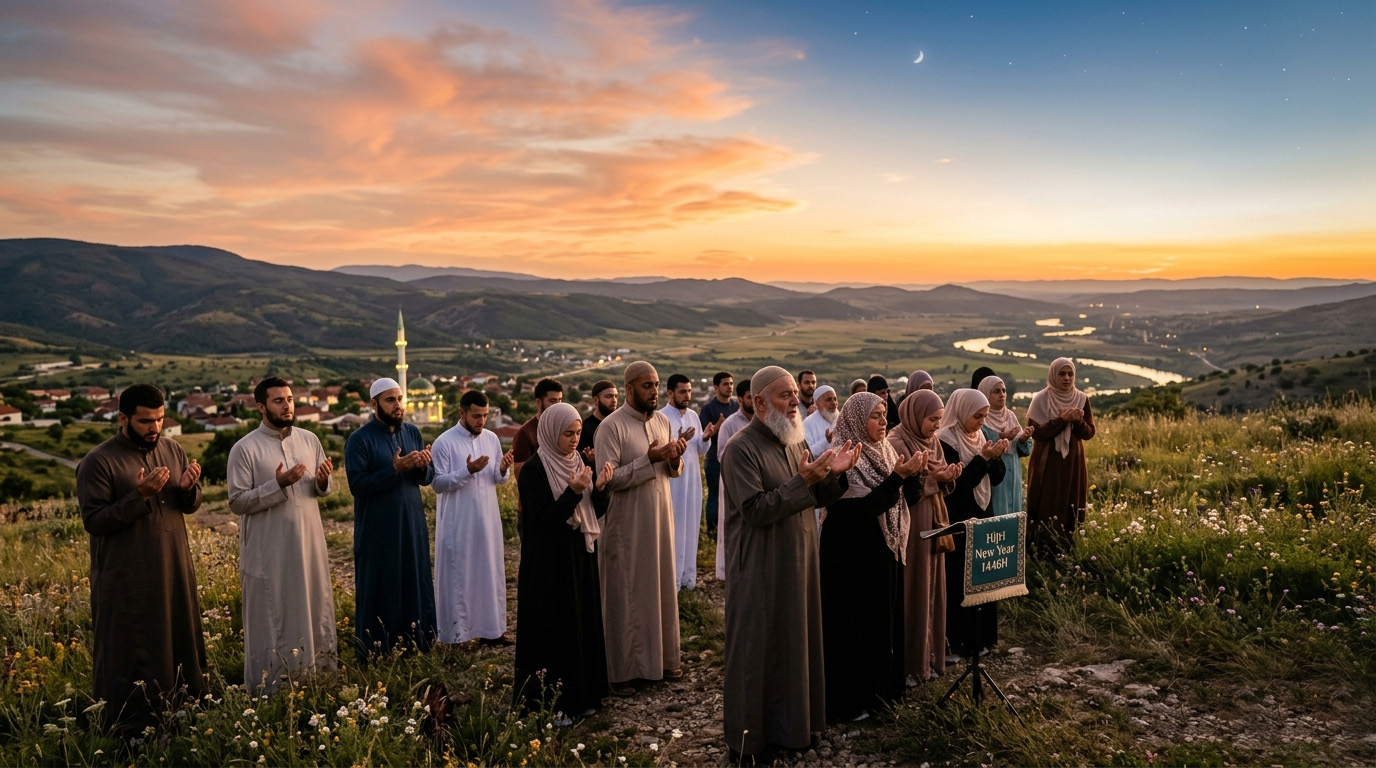
The arrival of a new Hijri year is a quiet but deeply meaningful moment for Muslims everywhere. Unlike the loud celebrations of the Gregorian New Year, the start of Muharram and the Islamic year 1448 is best marked with reflection, gratitude, and sincere dua. If you're searching for the best duas to read on Islamic New Year 1448, this guide brings together authentic supplications, their meanings, and practical guidance on how and when to recite them.
I've found that the start of the Hijri year is one of the most overlooked opportunities for spiritual reset in the Muslim calendar. While there isn't one "official" New Year dua prescribed in a single hadith, scholars across schools of thought agree that this is an excellent time to turn to Allah with duas for protection, forgiveness, gratitude, and guidance for the year ahead — and that's exactly what this article focuses on.
- Why Dua Matters at the Start of a New Hijri Year
- 1. Dua for Entering a New Year/Month
- 2. Dua Seeking Refuge from Evil of a New Period
- 3. Dua for Forgiveness (Sayyid al-Istighfar)
- 4. Dua for Guidance and Steadfastness
- 5. Dua for Gratitude (Shukr)
- 6. Dua for Protection (Ayat al-Kursi)
- 7. Dua for a Blessed Future
- How and When to Recite These Duas
- Practical Tips for a Spiritually Strong New Year
- Frequently Asked Questions
Why Dua Matters at the Start of a New Hijri Year
The Islamic New Year marks the anniversary of the Hijra — the migration of Prophet Muhammad ﷺ from Mecca to Medina. This event represented a fresh start, a move from hardship toward a community built on faith, patience, and trust in Allah. Beginning the new Hijri year with dua mirrors that spirit of renewal.
Dua is described in the Quran as the essence of worship, and the Prophet ﷺ taught that Allah is pleased when His servants ask of Him. Marking 1 Muharram with sincere supplication isn't a ritual requirement, but it is a beautiful sunnah-aligned habit — a moment to pause, take stock of the year that has passed, seek forgiveness for shortcomings, and ask for protection and guidance in the year ahead.
A Personal Reflection
Many people I know in the community treat the night before 1 Muharram much like others treat the eve of 1 January — except instead of resolutions shouted at a countdown, it's a quiet night of extra prayer, Qur'an recitation, and dua after Maghrib. There's something powerful about replacing noise with stillness, and that stillness is where these duas find their place.
1. Dua for Entering a New Year or New Month
One of the most fitting duas for the start of a new Hijri year is the traditional dua recited upon seeing the new crescent moon, since the Islamic New Year begins with the sighting of the Muharram moon.
"Allahu Akbar, Allahumma ahillahu 'alayna bil-yumni wal-iman, was-salamati wal-Islam, Rabbi wa Rabbukallah"
Meaning: "Allah is the Greatest. O Allah, bring this (month) to us with blessing and faith, with safety and Islam. My Lord and your Lord is Allah."
This dua, recorded in the collections of the Prophet's ﷺ supplications upon sighting a new moon, is a perfect way to greet 1 Muharram 1448. It frames the new lunar cycle as something to be welcomed with faith and safety, setting a spiritually positive tone for the days ahead.
2. Dua Seeking Refuge from the Evil of a New Period
Scholars often recommend combining gratitude for a new period with seeking Allah's protection from whatever difficulties it may bring — without knowing the future, a believer places their trust entirely in Allah's care.
"Allahumma inni a'udhu bika min sharri hadhal-'aam, wa as'aluka khayrahu"
Meaning: "O Allah, I seek refuge in You from the evil of this year, and I ask You for its good."
This style of dua follows the pattern the Prophet ﷺ used for new days and new situations — acknowledging that good and difficulty are both from Allah's decree, and asking specifically to be granted the good and protected from harm.
3. Dua for Forgiveness — Sayyid al-Istighfar
Known as the "master of seeking forgiveness," this dua is one of the most comprehensive supplications taught by the Prophet ﷺ and is especially fitting at the close of one year and the start of another, as a way of wiping the slate clean.
"Allahumma anta Rabbi, la ilaha illa anta, khalaqtani wa ana 'abduka, wa ana 'ala 'ahdika wa wa'dika mas-tata'tu, a'udhu bika min sharri ma sana'tu, abu'u laka bini'matika 'alayya, wa abu'u bidhanbi, faghfir li, fa innahu la yaghfirudh-dhunuba illa anta"
Meaning: "O Allah, You are my Lord, there is no god but You. You created me and I am Your servant, and I try my best to keep my covenant with You and to live in hope of Your promise. I seek refuge in You from the evil that I have done. I acknowledge Your favour upon me, and I acknowledge my sin, so forgive me, for none can forgive sins except You."
According to the Prophet ﷺ, whoever recites this with conviction during the day and dies that day enters Paradise — and the same is said for reciting it at night. Reciting it on the eve of the Islamic New Year is a powerful way to seek a clean spiritual start.
4. Dua for Guidance and Steadfastness
A new year often brings new responsibilities, decisions, and challenges. This dua asks Allah for guidance in matters of faith and steadiness on the right path — something every believer needs as they step into the unknown of a new year.
"Allahumma-hdini wa saddidni"
Meaning: "O Allah, guide me and keep me on the right path."
A Longer Version for Steadfastness
"Ya muqallibal-qulub, thabbit qalbi 'ala dinik"
Meaning: "O Turner of hearts, make my heart firm upon Your religion."
This was a dua the Prophet ﷺ frequently recited, despite his elevated status — a reminder that even the most righteous need to ask Allah to keep their hearts firm. At the start of a new year, asking for this firmness is especially relevant.
5. Dua for Gratitude (Shukr)
Before asking for anything new, it's important to thank Allah for everything that has passed — the blessings, the lessons, and even the difficulties that brought growth. Gratitude is described in the Quran as a means of increasing one's blessings.
"Alhamdulillahi Rabbil-'alamin, wal-hamdulillahi 'ala kulli hal"
Meaning: "All praise is due to Allah, Lord of all the worlds, and all praise is due to Allah in every condition."
Reflecting on the past Hijri year — 1447 AH — with this dua before moving into 1448 AH helps cultivate the mindset that every outcome, whether seen as good or difficult, carries wisdom from Allah.
6. Dua for Protection — Ayat al-Kursi
Ayat al-Kursi (the Verse of the Throne, Quran 2:255) is one of the most powerful verses for protection and is commonly recited at times of transition, before sleep, and at the start of new endeavours.
Reciting Ayat al-Kursi describes Allah's complete and eternal sovereignty over the heavens and the earth, His knowledge encompassing all things, and His protection that never tires. The Prophet ﷺ described it as the greatest verse in the Quran and encouraged its regular recitation for protection.
Many families make it a habit to recite Ayat al-Kursi together on the night of 1 Muharram, asking for Allah's protection over their household, health, and sustenance for the year ahead. You can find the full Arabic text and translation in any standard copy of the Quran or a trusted Quran app.
7. Dua for a Blessed Future and Ease in Affairs
Finally, a dua asking for ease, success, and blessings in the year ahead rounds off a New Year dua routine. This draws on the well-known Quranic dua of Prophet Musa (peace be upon him) when he was given a difficult task.
"Rabbi yassir wa la tu'assir, Rabbi tammim bil-khayr"
Meaning: "My Lord, make things easy and do not make them difficult. My Lord, complete (our affairs) with goodness."
This is a commonly used supplication among scholars and worshippers for new beginnings — whether starting a new job, a new journey, or, fittingly, a new year.
How and When to Recite These Duas
There's no fixed ritual prescribed for Islamic New Year duas, which gives flexibility in how you approach this. That said, certain times are traditionally considered more spiritually significant and are worth prioritising.
The Night Before (After Maghrib on 29/30 Dhul Hijjah)
Since the Islamic day begins at sunset, the "eve" of 1 Muharram is actually the evening before the Gregorian date most calendars show. This is a good time for the Sayyid al-Istighfar and the dua of gratitude, reflecting on the closing year.
After Fajr on 1 Muharram
The morning of the new year is an excellent time for the moon-sighting dua, the dua for guidance, and Ayat al-Kursi — setting the tone for the day and the year ahead.
Throughout the Day
The protection dua and the "Rabbi yassir" dua for ease can be recited anytime — while commuting, before starting work, or during a quiet moment at home.
Practical Tips for a Spiritually Strong New Year
Beyond reciting duas, here are some practical ways to make the start of 1448 AH meaningful, drawn from common practices in Muslim communities across the UK and beyond.
1. Pair Dua with Reflection
Take ten minutes to write down what you're grateful for from 1447 AH and what you hope to improve in 1448 AH. This turns dua from a passive recitation into an active, personal conversation with Allah.
2. Recite in Congregation Where Possible
Many mosques hold short gatherings around the Islamic New Year. Reciting these duas together with family or community members after a shared meal or Maghrib prayer adds a communal dimension to the occasion.
3. Combine with Charity
Marking the new year with a small act of charity — even if it's just a few pounds to a trusted cause — is a beautiful way to "open" the year with good deeds, in line with the broader spirit of Muharram as a sacred month.
4. Set a Realistic Spiritual Goal
Rather than vague resolutions, pick one specific, achievable habit — such as reading one page of Quran daily, or praying Duha regularly — and ask Allah for help maintaining it through these duas.
Frequently Asked Questions
Is there a specific dua for the Islamic New Year mentioned in the Quran or Hadith?
There is no single dua specifically labelled for the Islamic New Year in the Quran or authentic Hadith collections. However, scholars recommend general duas for new beginnings, forgiveness, and protection — many drawn from the Quran and the Prophet's ﷺ own supplications found in collections such as Sahih Bukhari and Sahih Muslim.
What is the best time to recite duas on 1 Muharram?
Many scholars recommend reciting duas after Maghrib on the eve of 1 Muharram, since the Islamic day begins at sunset, and again after Fajr on the morning of the new year — both considered times when supplications are especially encouraged.
Is it Sunnah to fast on Islamic New Year's Day?
Fasting on 1 Muharram itself is not specifically established as Sunnah, though Muharram as a whole is one of the four sacred months in which voluntary fasting is highly rewarded. The most emphasised fasting in this month is on the 9th and 10th days, known as Tasu'a and Ashura.
Can I make dua in my own language instead of Arabic?
Yes. While reciting Quranic duas in Arabic carries the reward of reciting the Quran itself, personal supplication (dua) can be made in any language. What matters most is sincerity, humility, and a present heart when calling upon Allah.
When is Islamic New Year 1448 in 2026?
Islamic New Year 1448 AH is expected to begin on or around Tuesday, 16 June 2026, marking the start of the month of Muharram. The exact date depends on the official sighting of the new crescent moon and may be confirmed a day either side by local moon-sighting committees.
Note on accuracy: The duas in this article are drawn from well-established sources within Islamic tradition, including supplications recorded in Sahih Bukhari, Sahih Muslim, and the Quran. Translations are presented in commonly accepted English renderings. For precise Arabic text and pronunciation, please refer to a trusted Quran app or scholar, and consult your local mosque for the confirmed date of 1 Muharram 1448.