
When is Laylatul Qadr in UK 2026
When is Laylatul Qadr in UK 2026
When is Laylatul Qadr in UK 2026 Learn More »

When is Laylatul Qadr in UK 2026
When is Laylatul Qadr in UK 2026 Learn More »
500+ Happy Eid Mubarak Wishes, Messages & Quotes (2026) 500+ Happy Eid Mubarak Wishes, Messages & Quotes Best Eid greetings to share with family, friends, and loved ones What is Eid Mubarak? Eid Mubarak is a traditional greeting used by Muslims worldwide during the celebrations of Eid ul-Fitr and Eid ul-Adha. The phrase means “Blessed Eid” and is used to spread happiness, blessings, and good wishes among family members, friends, and communities. Top Happy Eid Mubarak Wishes May Allah accept your prayers and fill your life with happiness. Eid Mubarak! Wishing you peace, prosperity, and countless blessings this Eid. May this Eid bring joy and success to you and your family. Sending warm wishes and lots of love on this blessed Eid. May Allah guide you to success and happiness always. Eid Mubarak! May your home be filled with love and laughter. May Allah bless your life with prosperity and joy. Wishing you a joyful and peaceful Eid celebration. May your heart be filled with faith and happiness. Eid Mubarak! May Allah’s blessings always be with you. Eid Wishes for Friends Dear friend, may this Eid bring success and happiness into your life. Wishing you laughter, joy, and unforgettable memories this Eid. Eid Mubarak to my amazing friend. May Allah bless you always. Eid Wishes for Family Eid Mubarak to my wonderful family. May Allah keep us united forever. May Allah bless our family with love, peace, and prosperity. Eid Wishes for Loved Ones You are always in my prayers. May Allah bless you with happiness. Eid Mubarak to someone very special in my life. Short Eid Mubarak Messages Eid Mubarak! May Allah bless you always. Wishing you a joyful and blessed Eid. May your Eid be filled with happiness. Eid Mubarak to you and your family. May Allah accept all your prayers. Frequently Asked Questions What does Eid Mubarak mean? Eid Mubarak means “Blessed Eid”. It is used as a greeting during the Eid festival. How do you wish someone Eid Mubarak? You can simply say “Eid Mubarak” or send a message wishing happiness, peace, and blessings. When is Eid celebrated? Eid ul-Fitr is celebrated after Ramadan, while Eid ul-Adha is celebrated during the Hajj season.
Special Person Happy Eid Mubarak Wishes Learn More »
Complete List of Quranic Surahs List of Quranic Chapters (Surahs) The Qur’an contains 114 chapters (Surahs). Each Surah varies in length and theme. They were revealed to Prophet Muhammad ﷺ over approximately 23 years. Surahs are categorized as Meccan (revealed in Mecca) or Medinan (revealed in Medina). # Surah Name Meaning Verses Type 1 Al-Fatihah The Opening 7 Meccan 2 Al-Baqarah The Cow 286 Medinan 3 Ali ‘Imran Family of Imran 200 Medinan 4 An-Nisa The Women 176 Medinan 5 Al-Ma’idah The Table Spread 120 Medinan 6 Al-An’am The Cattle 165 Meccan 7 Al-A’raf The Heights 206 Meccan 8 Al-Anfal The Spoils of War 75 Medinan 9 At-Tawbah The Repentance 129 Medinan 10 Yunus Jonah 109 Meccan 11 Hud Hud 123 Meccan 12 Yusuf Joseph 111 Meccan 13 Ar-Ra’d The Thunder 43 Medinan 14 Ibrahim Abraham 52 Meccan 15 Al-Hijr The Rocky Tract 99 Meccan 16 An-Nahl The Bee 128 Meccan 17 Al-Isra The Night Journey 111 Meccan 18 Al-Kahf The Cave 110 Meccan 19 Maryam Mary 98 Meccan 20 Ta-Ha Ta-Ha 135 Meccan 21 Al-Anbiya The Prophets 112 Meccan 22 Al-Hajj The Pilgrimage 78 Medinan 23 Al-Mu’minun The Believers 118 Meccan 24 An-Nur The Light 64 Medinan 25 Al-Furqan The Criterion 77 Meccan 26 Ash-Shu’ara The Poets 227 Meccan 27 An-Naml The Ant 93 Meccan 28 Al-Qasas The Stories 88 Meccan 29 Al-Ankabut The Spider 69 Meccan 30 Ar-Rum The Romans 60 Meccan 31 Luqman Luqman 34 Meccan 32 As-Sajdah The Prostration 30 Meccan 33 Al-Ahzab The Confederates 73 Medinan 34 Saba Sheba 54 Meccan 35 Fatir Originator 45 Meccan 36 Ya-Sin Ya-Sin 83 Meccan 37 As-Saffat Those Who Set the Ranks 182 Meccan 38 Sad The Letter Sad 88 Meccan 39 Az-Zumar The Troops 75 Meccan 40 Ghafir The Forgiver 85 Meccan 41 Fussilat Explained in Detail 54 Meccan 42 Ash-Shura The Consultation 53 Meccan 43 Az-Zukhruf The Gold Adornments 89 Meccan 44 Ad-Dukhan The Smoke 59 Meccan 45 Al-Jathiyah The Kneeling 37 Meccan 46 Al-Ahqaf The Wind-Curved Sandhills 35 Meccan 47 Muhammad Muhammad 38 Medinan 48 Al-Fath The Victory 29 Medinan 49 Al-Hujurat The Chambers 18 Medinan 50 Qaf The Letter Qaf 45 Meccan 51 Adh-Dhariyat The Winnowing Winds 60 Meccan 52 At-Tur The Mount 49 Meccan 53 An-Najm The Star 62 Meccan 54 Al-Qamar The Moon 55 Meccan 55 Ar-Rahman The Most Merciful 78 Medinan 56 Al-Waqi’ah The Inevitable 96 Meccan 57 Al-Hadid The Iron 29 Medinan 58 Al-Mujadila The Pleading Woman 22 Medinan 59 Al-Hashr The Exile 24 Medinan 60 Al-Mumtahanah The Woman to be Examined 13 Medinan 61 As-Saff The Ranks 14 Medinan 62 Al-Jumu’ah The Congregation 11 Medinan 63 Al-Munafiqun The Hypocrites 11 Medinan 64 At-Taghabun The Mutual Loss and Gain 18 Medinan 65 At-Talaq Divorce 12 Medinan 66 At-Tahrim The Prohibition 12 Medinan 67 Al-Mulk The Sovereignty 30 Meccan 68 Al-Qalam The Pen 52 Meccan 69 Al-Haqqah The Reality 52 Meccan 70 Al-Ma’arij The Ascending Stairways 44 Meccan 71 Nuh Noah 28 Meccan 72 Al-Jinn The Jinn 28 Meccan 73 Al-Muzzammil The Enshrouded One 20 Meccan 74 Al-Muddathir The Cloaked One 56 Meccan 75 Al-Qiyamah The Resurrection 40 Meccan 76 Al-Insan The Human 31 Medinan 77 Al-Mursalat The Emissaries 50 Meccan 78 An-Naba The Tidings 40 Meccan 79 An-Nazi’at Those Who Drag Forth 46 Meccan 80 Abasa He Frowned 42 Meccan 81 At-Takwir The Overthrowing 29 Meccan 82 Al-Infitar The Cleaving 19 Meccan 83 Al-Mutaffifin The Defrauding 36 Meccan 84 Al-Inshiqaq The Splitting Open 25 Meccan 85 Al-Buruj The Constellations 22 Meccan 86 At-Tariq The Morning Star 17 Meccan 87 Al-A’la The Most High 19 Meccan 88 Al-Ghashiyah The Overwhelming 26 Meccan 89 Al-Fajr The Dawn 30 Meccan 90 Al-Balad The City 20 Meccan 91 Ash-Shams The Sun 15 Meccan 92 Al-Layl The Night 21 Meccan 93 Ad-Duhaa The Morning Brightness 11 Meccan 94 Ash-Sharh The Relief 8 Meccan 95 At-Tin The Fig 8 Meccan 96 Al-Alaq The Clot 19 Meccan 97 Al-Qadr The Power 5 Meccan 98 Al-Bayyinah The Clear Proof 8 Medinan 99 Az-Zalzalah The Earthquake 8 Medinan 100 Al-Adiyat The Chargers 11 Meccan 101 Al-Qari’ah The Calamity 11 Meccan 102 At-Takathur Rivalry in Worldly Increase 8 Meccan 103 Al-Asr The Time 3 Meccan 104 Al-Humazah The Slanderer 9 Meccan 105 Al-Fil The Elephant 5 Meccan 106 Quraysh Quraysh 4 Meccan 107 Al-Ma’un Small Kindnesses 7 Meccan 108 Al-Kawthar Abundance 3 Meccan 109 Al-Kafirun The Disbelievers 6 Meccan 110 An-Nasr The Divine Help 3 Medinan 111 Al-Masad The Palm Fiber 5 Meccan 112 Al-Ikhlas The Sincerity 4 Meccan 113 Al-Falaq The Daybreak 5 Meccan 114 An-Nas Mankind 6 Meccan
List of chapters in the Quran Learn More »
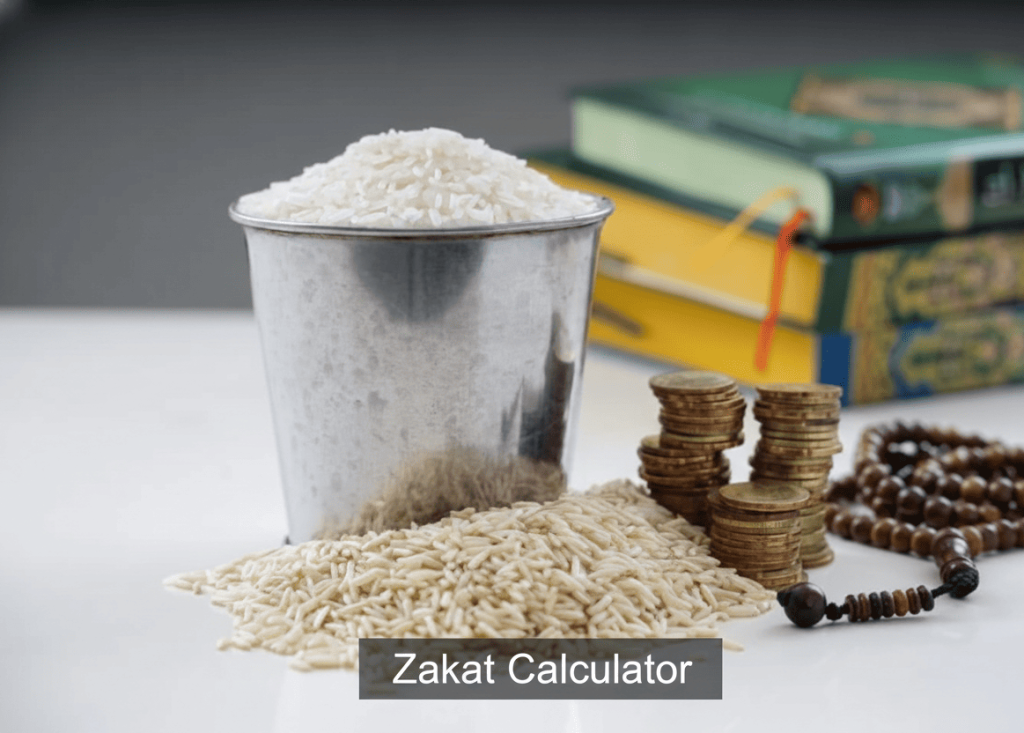
Learn how to calculate Zakat on gold step-by-step. Check Nisab value, gold weight, and calculate 2.5% accurately with our easy guide.
How to Calculate Zakat on Gold 2026: Fast & Accurate Results Learn More »
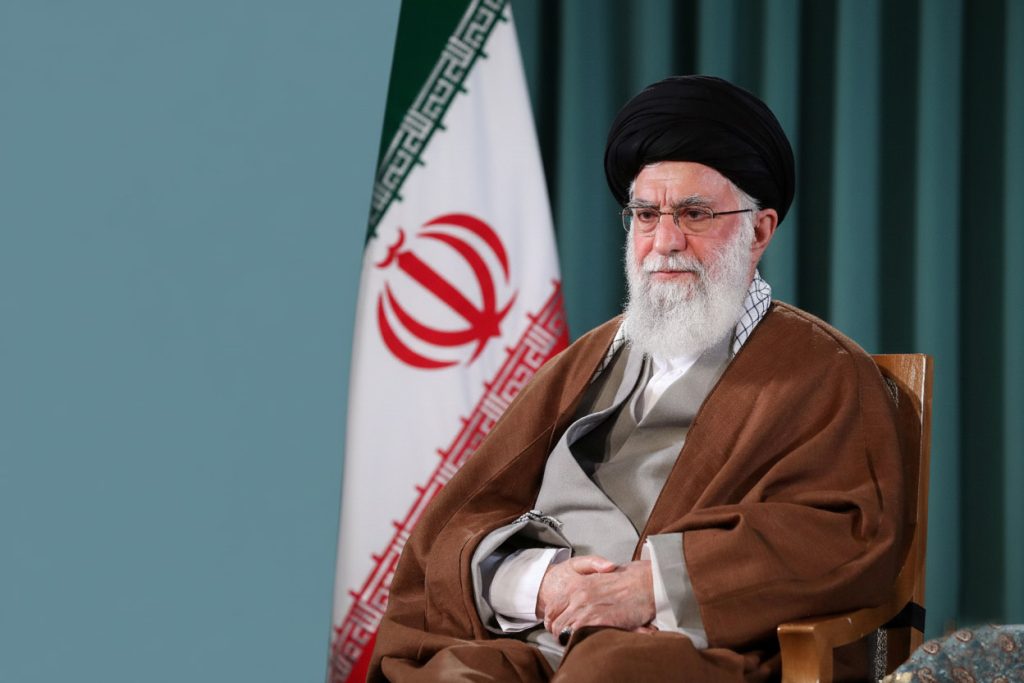
Ayatollah Ali Khamenei Published: March 2026 | Historical Biography Series Fast Facts Full Name: Sayyid Ali Hosseini Khamenei Born: April 19, 1939 (Mashhad, Iran) Died: February 28, 2026 Positions: 3rd President (1981–1989) 2nd Supreme Leader (1989–2026) Succession: Succeeded Ruhollah Khomeini Ayatollah Ali Khamenei was the second Supreme Leader of the Islamic Republic of Iran, serving for over 36 years until his death in February 2026. As the ultimate authority in the country, he wielded absolute power over the military, judiciary, and state media, steering the nation through decades of international sanctions, regional proxy wars, and internal dissent. Early Life and Education Born in 1939 in the holy city of Mashhad, Khamenei was the second of eight children in a religious family. His father was a prominent cleric of Azerbaijani descent. Following the traditional path of a scholar, Khamenei began his religious education at a young age, eventually moving to the theological seminaries of Najaf and Qom. It was in Qom that he met Ayatollah Ruhollah Khomeini, the future founder of the Islamic Republic. This mentorship shaped his political ideology, leading him to join the opposition against the pro-Western Shah, Mohammad Reza Pahlavi. During the 1960s and 70s, Khamenei was arrested six times by the Shah’s secret police (SAVAK) and was eventually exiled for his revolutionary activities. Rise to Power and Presidency Following the 1979 Revolution, Khamenei emerged as a central figure in the new government. He survived an assassination attempt in 1981 that left his right arm paralyzed, an injury that only served to bolster his reputation as a “living martyr.” He served as the President of Iran from 1981 to 1989 during the brutal Iran-Iraq War. While the presidency was largely ceremonial at the time, Khamenei focused on maintaining internal stability and forging a deep alliance with the Islamic Revolutionary Guard Corps (IRGC). The Supreme Leadership (1989–2026) After Khomeini’s death in 1989, the Assembly of Experts elected Khamenei as the Supreme Leader. Though some clerics initially questioned his religious credentials, the constitution was amended to allow his elevation. Over the next three decades, he consolidated power, transforming the office into the epicenter of Iranian politics. His tenure was marked by a steadfast commitment to the “Axis of Resistance”—a network of regional allies including Hezbollah in Lebanon, the Syrian government, and various militias in Iraq and Yemen. Domestically, he was known for his conservative stance, suppressing movements for reform such as the 2009 Green Movement and the 2022 “Woman, Life, Freedom” protests. Legacy and Death Khamenei’s leadership concluded in early 2026. He leaves behind a nation that is both a regional energy superpower and a state deeply divided by economic challenges and social restrictions. To his supporters, he was the defiant guardian of Islamic sovereignty against “Global Arrogance” (the West); to his critics, he was an authoritarian who prioritized ideological purity over the welfare of his people. His passing marks the end of an era for the Islamic Republic, leaving a vacuum at the top of one of the Middle East’s most influential and controversial political systems.
Ayatollah Ali Khamenei: The Architect of Modern Iran Learn More »

What Happened in Iran Today and the Future of the Middle East
Latest News on Iran: What Happened in Iran Today and the Future of the Middle East Learn More »
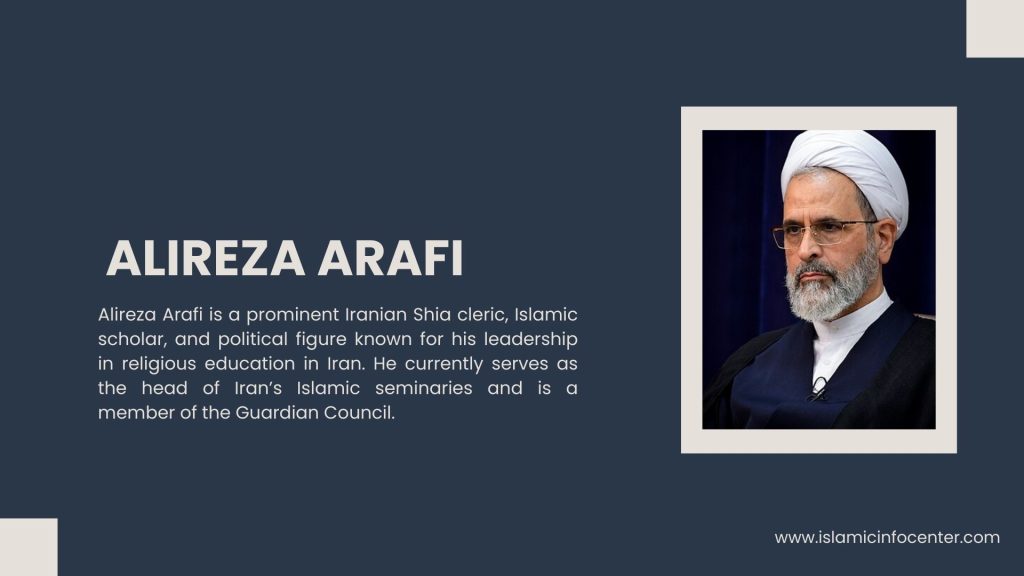
Alireza Arafi Biography Alireza Arafi is a prominent Iranian Shia cleric, Islamic scholar, and political figure known for his leadership in religious education in Iran. He currently serves as the head of Iran’s Islamic seminaries and is a member of the Guardian Council. Arafi is recognized for his intellectual contributions, administrative leadership, and influence in shaping Iran’s religious academic institutions. Short Biography of Alireza Arafi Ayatollah Alireza Arafi was born on 1959 in Meybod, Yazd Province, Iran. He is a senior Shia cleric and Islamic scholar who has played a significant role in Iran’s religious education system. Over the years, he has held several high-ranking positions, including head of the Islamic Seminaries of Iran and representative in the Assembly of Experts. In 2024, he was appointed as a member of Iran’s Guardian Council, further strengthening his political and religious influence in the country. Personal Information Full Name: Alireza Arafi Father: Mohammad Ibrahim Arafi Wife: Information not publicly disclosed Date of Birth: 1959 Age: 67 (as of 2026) Place of Birth: Meybod, Yazd Province, Iran Nationality: Iranian Religion: Shia Islam Education: Islamic jurisprudence and theology (Hawza studies in Qom) Profession: Islamic Scholar, Cleric, Politician Born: 1959, Meybod, Iran Eye Color: Brown Hair Color: Gray Zodiac Sign: Not publicly available Awards: Recognized for contributions to Islamic scholarship and education Hobbies: Reading, research, teaching Marital Status: Married Children: Information not publicly available Height: Not publicly available Hometown: Meybod, Yazd Province Founder of: Various academic and religious initiatives within Iran’s seminary system Channel: Official speeches broadcast through Iranian state media Other Activities: Member of Assembly of Experts, Member of Guardian Council, Head of Iran’s Islamic Seminaries Early Life and Education Alireza Arafi was born into a religious family in Meybod, a historic city in Yazd Province, Iran. From a young age, he showed strong interest in Islamic studies. He moved to Qom, the religious center of Iran, where he pursued advanced studies in Islamic jurisprudence (Fiqh), principles of jurisprudence (Usul al-Fiqh), philosophy, and theology. He studied under prominent Shia scholars and gradually achieved the rank of Ayatollah. His academic excellence and leadership abilities helped him gain recognition within the Hawza (Islamic seminary) system. Religious and Academic Career Arafi has played a crucial role in the modernization and expansion of Iran’s seminary education system. He served as the head of Al-Mustafa International University, an institution dedicated to educating international students in Islamic sciences. Later, he became the head of Iran’s Islamic Seminaries (Hawza Ilmiyya), overseeing curriculum development, international outreach, and institutional reforms. His leadership strengthened the global presence of Iranian religious education. Political Role In addition to his religious leadership, Arafi is active in Iranian politics. He serves as a member of the Assembly of Experts, the body responsible for selecting and supervising the Supreme Leader of Iran. In 2024, he was appointed as a member of the Guardian Council, one of Iran’s most powerful political institutions. The Guardian Council reviews legislation and supervises elections in the country, making Arafi an influential figure in national decision-making. Influence and Legacy Alireza Arafi is considered one of the most influential contemporary clerics in Iran. His impact extends beyond theology into education policy and governance. Through his administrative reforms and international initiatives, he has helped shape the direction of Shia religious education in the 21st century. His role in both religious and political institutions highlights the interconnected nature of faith and governance within the Islamic Republic of Iran. Alireza Arafi remains a significant figure in Iran’s religious and political landscape. As a scholar, educator, and policymaker, he continues to influence Islamic scholarship and state affairs. His leadership within the seminary system and Guardian Council ensures his lasting role in shaping Iran’s religious and political future.
Alireza Arafi Biography Learn More »
The Ali Larijani Biography is not merely the story of a single politician but a reflection of the intricate evolution of the Islamic Republic of Iran over the last four decades. As a philosopher-turned-politician, Larijani has navigated the volatile waters of Middle Eastern diplomacy, nuclear negotiations, and internal power struggles with a unique blend of intellectual rigor and pragmatic governance.
Ali Larijani Biography: The Architect of Modern Iranian Policy Learn More »

Sayyid Javad Husaini Khamenei was a respected Shia cleric and Islamic scholar who lived during a transformative period in Iranian history. His life is often discussed not only because he was the father of Iran’s Supreme Leader, but because he represented a traditional model of religious scholarship rooted in humility, discipline, and devotion.
Javad Khamenei Biography: Life, Scholarship & Spiritual Legacy Learn More »
Ayatollah Khamenei death claims: Fact-checking the reports of the Supreme Leader’s passing in 2026. Analysis of the Assembly of Experts and the future of Iran’s leadership.
Ayatollah Khamenei Death: A Seismic Shift in Middle Eastern Geopolitics Learn More »