
57 Muslim Country List 2026: Amazing Facts on Names, Capitals and Population

The 57 Muslim country list names every member of the Organisation of Islamic Cooperation (OIC), the second largest intergovernmental body after the United Nations. This guide gives you each country, its capital, its population and its Muslim share in one searchable table, followed by charts, a capital map and clear analysis. Together these nations are home to roughly 2 billion people, or about one quarter of humanity.
What Does the 57 Muslim Country List Really Mean?
People search for the 57 Muslim country list because the number appears often in news and textbooks. It does not mean that exactly 57 countries are Muslim majority. It refers to the 57 member states of the OIC, which was founded in 1969 and is headquartered in Jeddah, Saudi Arabia.
Muslim Majority and Non Muslim Majority Members
Of the 57, about 49 are Muslim majority. Eight members have Christian majorities: Gabon, Uganda, Cameroon, Benin, Mozambique, Suriname, Togo and Guyana. Guinea Bissau and Ivory Coast sit just below 50 percent Muslim in the data used here, but they are usually counted with the Muslim majority group.
Why Some Muslim Heavy Countries Are Missing
India, China, Ethiopia and Russia have very large Muslim populations, yet they are not full members. Russia and Thailand are observers. According to Pew Research Center, India alone has about 213 million Muslims, so membership is a political choice, not a population test. You can read more in our guide to Muslim population in Nigeria and Muslim population in Egypt.
Complete 57 Muslim Country List with Capital and Population
Use the search box to find any country or capital. The figures are approximate and combine estimates from 2020 to 2025.
| No | Country | Capital | Population | Muslim | Joined |
|---|---|---|---|---|---|
| 1 | Afghanistan | Kabul | 41,144,133 | 99.8% | 1969 |
| 2 | Algeria | Algiers | 45,847,599 | 99.1% | 1969 |
| 3 | Chad | N'Djamena | 19,319,000 | 58% | 1969 |
| 4 | Egypt | Cairo | 107,206,514 | 95% | 1969 |
| 5 | Guinea | Conakry | 14,033,298 | 90% | 1969 |
| 6 | Indonesia | Jakarta | 280,813,676 | 87% | 1969 |
| 7 | Iran | Tehran | 86,708,850 | 99.4% | 1969 |
| 8 | Jordan | Amman | 10,458,701 | 97.1% | 1969 |
| 9 | Kuwait | Kuwait City | 4,429,966 | 75% | 1969 |
| 10 | Lebanon | Beirut | 6,748,419 | 54% | 1969 |
| 11 | Libya | Tripoli | 7,107,348 | 99% | 1969 |
| 12 | Malaysia | Kuala Lumpur | 33,412,468 | 66% | 1969 |
| 13 | Mali | Bamako | 21,723,855 | 95% | 1969 |
| 14 | Mauritania | Nouakchott | 4,957,932 | 100% | 1969 |
| 15 | Morocco | Rabat | 38,013,335 | 99% | 1969 |
| 16 | Niger | Niamey | 26,342,784 | 99.3% | 1969 |
| 17 | Pakistan | Islamabad | 241,499,431 | 98% | 1969 |
| 18 | Palestine | Jerusalem | 4,420,549 | 99% | 1969 |
| 19 | Saudi Arabia | Riyadh | 34,220,000 | 95% | 1969 |
| 20 | Senegal | Dakar | 18,077,537 | 96.6% | 1969 |
| 21 | Somalia | Mogadishu | 19,000,000 | 99.9% | 1969 |
| 22 | Sudan | Khartoum | 50,000,000 | 97% | 1969 |
| 23 | Tunisia | Tunis | 11,400,000 | 99.1% | 1969 |
| 24 | Turkey | Ankara | 86,000,000 | 99.8% | 1969 |
| 25 | Yemen | Sanaa | 25,235,000 | 99.1% | 1969 |
| 26 | Bahrain | Manama | 1,234,571 | 75% | 1970 |
| 27 | Oman | Muscat | 4,020,000 | 95% | 1970 |
| 28 | Qatar | Doha | 2,174,035 | 66% | 1970 |
| 29 | Syria | Damascus | 21,987,000 | 97% | 1970 |
| 30 | United Arab Emirates | Abu Dhabi | 9,446,000 | 75% | 1971 |
| 31 | Sierra Leone | Freetown | 8,400,512 | 80% | 1972 |
| 32 | Bangladesh | Dhaka | 165,158,616 | 92% | 1974 |
| 33 | Gabon | Libreville | 1,711,000 | 12% | 1974 |
| 34 | The Gambia | Banjul | 1,882,450 | 96.4% | 1974 |
| 35 | Guinea Bissau | Bissau | 1,746,000 | 46% | 1974 |
| 36 | Uganda | Kampala | 47,729,952 | 15% | 1974 |
| 37 | Burkina Faso | Ouagadougou | 22,489,126 | 65% | 1975 |
| 38 | Cameroon | Yaoundé | 30,135,732 | 32% | 1975 |
| 39 | Comoros | Moroni | 850,886 | 99% | 1976 |
| 40 | Iraq | Baghdad | 43,500,000 | 99% | 1976 |
| 41 | Maldives | Malé | 317,280 | 100% | 1976 |
| 42 | Djibouti | Djibouti City | 886,000 | 95% | 1978 |
| 43 | Benin | Porto Novo | 14,111,000 | 29% | 1982 |
| 44 | Brunei | Bandar Seri Begawan | 393,162 | 84% | 1984 |
| 45 | Nigeria | Abuja | 206,630,269 | 54% | 1986 |
| 46 | Azerbaijan | Baku | 9,477,100 | 90% | 1991 |
| 47 | Albania | Tirana | 2,821,977 | 52% | 1992 |
| 48 | Kyrgyzstan | Bishkek | 5,976,570 | 90% | 1992 |
| 49 | Tajikistan | Dushanbe | 8,860,000 | 98% | 1992 |
| 50 | Turkmenistan | Ashgabat | 5,607,000 | 96% | 1992 |
| 51 | Mozambique | Maputo | 34,000,000 | 20% | 1994 |
| 52 | Kazakhstan | Astana | 17,244,000 | 74% | 1995 |
| 53 | Uzbekistan | Tashkent | 33,492,800 | 97% | 1995 |
| 54 | Suriname | Paramaribo | 534,189 | 15% | 1996 |
| 55 | Togo | Lomé | 6,993,000 | 19% | 1997 |
| 56 | Guyana | Georgetown | 784,894 | 8% | 1998 |
| 57 | Ivory Coast | Yamoussoukro | 23,202,000 | 42.5% | 2001 |
Download the 57 Muslim Country List PDF
Get the full table offline. The PDF includes all 57 OIC members with capital, population, Muslim share and year joined, in a clean A4 layout that is easy to print, share in class or save to your phone.
- 57 countries, 6 columns, 2 pages
- Capitals, population and Muslim percentage
- Notes on Palestine, Ivory Coast and observer states
Charts From the 57 Muslim Country List
Top 10 Most Populous Members (millions)
These ten countries hold more than 1.3 billion people. The first four, Indonesia, Pakistan, Nigeria and Bangladesh, account for nearly 900 million alone, which is why South Asia and Southeast Asia dominate the 57 Muslim country list by headcount.
Members by Region (number of countries)
Muslim Share of Population (number of countries)
Thirty three of the 57 are at least 90 percent Muslim. At the other end, ten members are below 50 percent, mostly in West, Central and East Africa and in South America.
Map: Capitals of the 57 Muslim Countries
Each dot marks a capital city, coloured by region. Hover or tap a dot to see the name.

In Depth Analysis of the 57 Muslim Countries
Middle East and North Africa: 19 Countries
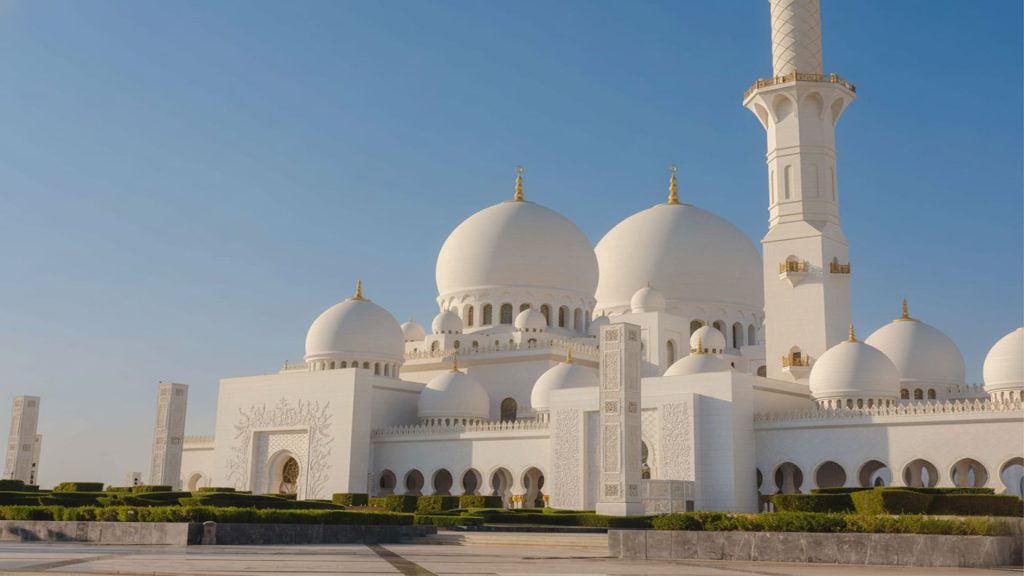
This is the heartland most readers imagine. It includes Saudi Arabia, Iran, Turkey, Egypt, Iraq and the Gulf states. The group has about 550 million people. Egypt is the largest Arab country at about 107 million, and Iran and Turkey follow with about 86 million each.
Africa: 22 Countries
Africa has the most members and the greatest variety. Sudan, Algeria, Morocco and Niger are overwhelmingly Muslim, while Nigeria is about half Muslim and Uganda and Mozambique are small minorities. The region has about 574 million people and one of the fastest growing populations. Pew Research expects Nigeria to become the third largest Muslim country by 2070.
South and Southeast Asia: 7 Countries
Indonesia, Pakistan, Bangladesh and Afghanistan, with Malaysia, Brunei and the Maldives, form the largest block, with about 763 million people. Pew counts Indonesia and Pakistan as the two largest Muslim populations in the world, and Pakistan is projected to overtake Indonesia by 2070.
Central Asia and Caucasus: 6 Countries
Uzbekistan, Kazakhstan, Azerbaijan, Tajikistan, Turkmenistan and Kyrgyzstan add about 80 million people. Most gained OIC membership in the 1990s after the end of the Soviet Union, and the region has a rich Islamic heritage in cities such as Samarkand and Bukhara.
Europe and South America
Albania is the only European member, with a Muslim share of about 52 percent in these figures. Guyana and Suriname, in South America, joined in 1998 and 1996, and both have small Muslim communities.
Top 10 Countries in the 57 Muslim Country List
1. Indonesia (Jakarta)
The world's largest Muslim population, with about 239 million Muslims in 2020 according to Pew. Islam arrived through trade and scholarship across the archipelago.
2. Pakistan (Islamabad)
A country of about 241 million people, created in 1947 as a homeland for South Asian Muslims. It is roughly 96 to 98 percent Muslim.
3. Nigeria (Abuja)
Africa's most populous country has a Muslim north and a mixed south. Muslims are roughly half the population.
4. Bangladesh (Dhaka)
One of the most densely populated countries on Earth, with about 165 million people and a Muslim share around 91 to 92 percent.
5. Egypt (Cairo)
Home to Al Azhar, founded in 970 CE, one of the oldest universities in the world and a leading centre of Sunni scholarship.
6. Iran (Tehran)
The largest Shia majority country, with about 87 million people and an ancient Persian cultural heritage.
7. Turkey (Ankara)
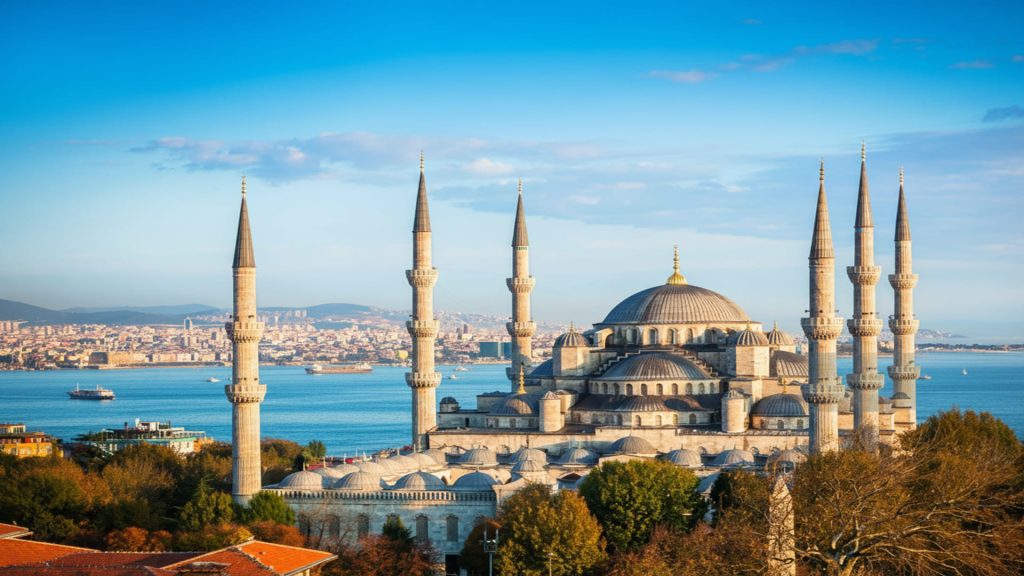
A bridge between Europe and Asia. Istanbul is the largest city, but Ankara is the capital.
8. Sudan (Khartoum)
Khartoum sits where the Blue and White Nile meet. The population figure is a rough estimate because of recent instability.
9. Uganda (Kampala)
A Christian majority country with a Muslim minority of about 15 percent, yet it ranks ninth by population.
10. Algeria (Algiers)
The largest country in Africa by land area, with about 46 million people and a Muslim share above 99 percent.
History: How the OIC Grew to 57 Members
The OIC was founded in 1969 after leaders of Muslim countries met in Rabat, Morocco, following the arson attack on the Al Aqsa Mosque in Jerusalem. The organisation was known as the Organisation of the Islamic Conference until 2011, when it adopted its present name. It began with a few dozen founding states and grew steadily as new countries gained independence.
Membership by Period
- 1969: 25 members joined in the founding year.
- 1970 to 1979: 17 more members, including the Gulf states, Bangladesh and Iraq.
- 1980 to 1989: 3 new members, among them Benin, Brunei and Nigeria.
- 1990 to 1999: 11 members, mostly from Central Asia and the Caucasus after the Soviet Union ended.
- 2000 onward: 1 member, Ivory Coast in 2001.
This pattern shows that the 57 Muslim country list reflects history as much as religion. Several members joined because of trade, diplomacy or regional ties, not because Muslims were a majority.
Capital Cities Versus Largest Cities
Many readers are surprised that the capital is not always the biggest city. Remembering these cases saves mistakes in exams and quizzes.
- Turkey: the capital is Ankara, but Istanbul is far larger.
- Nigeria: the capital is Abuja, while Lagos is the largest city.
- Pakistan: the capital is Islamabad, and Karachi is the largest city.
- Ivory Coast: the official capital is Yamoussoukro, yet Abidjan is the economic centre.
- Kazakhstan: the capital is Astana, renamed from Nur Sultan in 2022, and Almaty is the largest city.
- Indonesia: Jakarta is the capital in this list, although the country is building a new capital named Nusantara on Borneo.
- Benin: Porto Novo is the official capital, and Cotonou is the main commercial city.
Largest and Smallest Members Compared
The gap between the biggest and smallest members is huge. Indonesia has about 280 million people, while the Maldives has about 317,000, so Indonesia is almost 900 times larger by population. In land area, Kazakhstan, Saudi Arabia, Sudan and Algeria are giants, while the Maldives, Bahrain and Palestine are among the smallest.
Population size also changes political weight. The five members with more than 100 million people, Indonesia, Pakistan, Nigeria, Bangladesh and Egypt, carry enormous demographic influence, yet small Gulf states such as Qatar and the UAE have outsized economic and diplomatic roles.
Young Populations and Future Growth
Many member states have young populations. In Africa and South Asia, a large share of people are under 30, which helps explain why Pew expects the global Muslim population to reach about 2.57 billion by 2035 and more than 3.6 billion by 2070. For the full global picture, read our guide to world Muslim population statistics.
Growth brings both opportunity and pressure. Governments in the 57 member states are investing in schools, jobs and health care, and Islamic finance is expanding in Malaysia, the Gulf and Turkey. Learn more about the ethics behind it in our guide to Islamic economics.
Governments and Languages Across the 57 Members
The OIC mixes many political systems. According to the member list used here, 47 members are republics and 10 are monarchies. The monarchies are Saudi Arabia, Jordan, Kuwait, Bahrain, Oman, Qatar, the United Arab Emirates, Morocco, Malaysia and Brunei. Malaysia is unusual because its king is chosen in rotation by the rulers of nine states.
Language is just as varied. The OIC itself uses Arabic, English and French as official languages. Arabic is official in the Arab world and in Chad, Somalia and Djibouti. French is widely used in West and Central Africa, English in Nigeria, Uganda and Sierra Leone, and local languages such as Urdu, Bengali, Indonesian, Persian and Turkish serve hundreds of millions of people.
A Practical Example
Imagine you are planning a study trip to three member countries. Starting in Rabat, Morocco, you would use Arabic and French. Flying on to Kuala Lumpur, Malaysia, Malay and English are common. Ending in Tashkent, Uzbekistan, you would hear Uzbek and Russian. One passport stamp tour shows how the 57 members share a faith but not a single culture or language.
That diversity is also an invitation to learn. Visit our guides on Islamic culture and Islamic calligraphy to see how art and writing connect these lands.
Easy Tips to Remember the 57 Muslim Country List
Learn by Region
Study 19 countries in the Middle East and North Africa first, then 22 in Africa, then the remaining 16 in Asia, Europe and South America.
Use the Table Search
Type a capital such as Dakar or Tashkent in the search box above to check the country instantly. This is a quick way to test yourself.
Print the PDF
Download the 57 Muslim country list PDF, print it and cover one column at a time to test your memory of capitals.
Practise With a Quiz
Try our Islamic quiz to keep your general knowledge sharp, then return to the table to review mistakes.
Quran and Hadith: Unity Beyond Borders
The OIC says it speaks for the Muslim world, and Islamic teaching places great value on brotherhood across nations.
(Quran 49:10)
(Quran 49:13)
The Prophet Muhammad (peace be upon him) said that believers, in their mutual love and mercy, are like one body: when one part suffers, the whole body responds with sleeplessness and fever (Sahih al Bukhari 6011, Sahih Muslim 2586). Read more about the faith in Islam religion basics and the five pillars of Islam.
Special Cases and Common Questions
Palestine
Palestine is the only OIC member that is not a United Nations member. Its declared capital is Jerusalem, while the government sits in Ramallah.
Syria
Syria was suspended in 2012 and, according to the sources used here, was readmitted in March 2025.
Observer States
Five observers are listed: Bosnia and Herzegovina, the Central African Republic, the Turkish Cypriot State, Thailand and Russia. They are not counted in the 57.
How to Use the 57 Muslim Country List
- Students: memorise capitals by region, starting with the Gulf and North Africa, and keep the PDF copy for revision.
- Travellers: check prayer times and local Ramadan timetables with our Islamic prayer times finder.
- Researchers: pair the table with Pew Research data for religion statistics.
- Writers: always say "OIC member states" rather than "Muslim countries" when you need accuracy.
Data Notes and Sources
The total in our table is about 1.97 billion people, and the estimated Muslim population is about 1.6 billion once each country's Muslim share is applied. That is lower than Pew's global figure of 2.02 billion, because large Muslim communities live in non member countries such as India. For official updates, visit the OIC official website, the Al Jazeera explainer and the World Bank population data.
Related Reading
- Muslim Population in Saudi Arabia 2026
- Muslim Population in Egypt 2026
- Muslim Population in Nigeria 2026
- World Muslim Population Statistics 2026
- Sunni vs Shia Differences
- Islamic history
Frequently Asked Questions
How many Muslim countries are there in the world?
There is no single official count, but 57 countries are members of the Organisation of Islamic Cooperation (OIC). About 49 of them are Muslim majority, while eight, including Uganda and Mozambique, have a non Muslim majority.
Where can I download the 57 Muslim country list PDF?
You can download the free 2 page PDF from this page using the download section above or directly from islamicinfocenter.com. It lists all 57 OIC members with capital, population, Muslim share and year joined.
Which country has the largest Muslim population among the 57?
Indonesia has the largest population of the 57 members, at about 281 million people, around 87 percent of them Muslim. Pakistan is second with about 241 million.
Which is the smallest of the 57 Muslim countries?
By population, the Maldives is the smallest, with about 317,000 people. Brunei and Suriname are also very small.
Is Palestine one of the 57 OIC members?
Yes. Palestine is an OIC member, although it is the only one of the 57 that is not a United Nations member state. Jerusalem is its declared capital, and its government sits in Ramallah.
Is Syria still an OIC member?
Syria was suspended in 2012. According to the sources used here, the OIC resumed its membership in March 2025.
Are all 57 countries Muslim majority?
No. Gabon, Uganda, Cameroon, Benin, Mozambique, Suriname, Togo and Guyana have Christian majorities. Guinea Bissau and Ivory Coast have large Muslim populations just under 50 percent.
Why is India not on the list of 57 Muslim countries?
India is not an OIC member even though it has more than 200 million Muslims. The OIC lists only member states, not every country with a large Muslim minority.
How accurate are the population figures?
They are approximate and come from mixed years, mostly 2020 to 2025. Check the UN, World Bank or national statistics offices for the latest official numbers.
The 57 Muslim country list is a map of diversity, from the deserts of Arabia to the rainforests of Guyana. Bookmark this page, download the PDF, share it with students and explore more at Islamic Info Center. May Allah bless the ummah with unity and peace.