
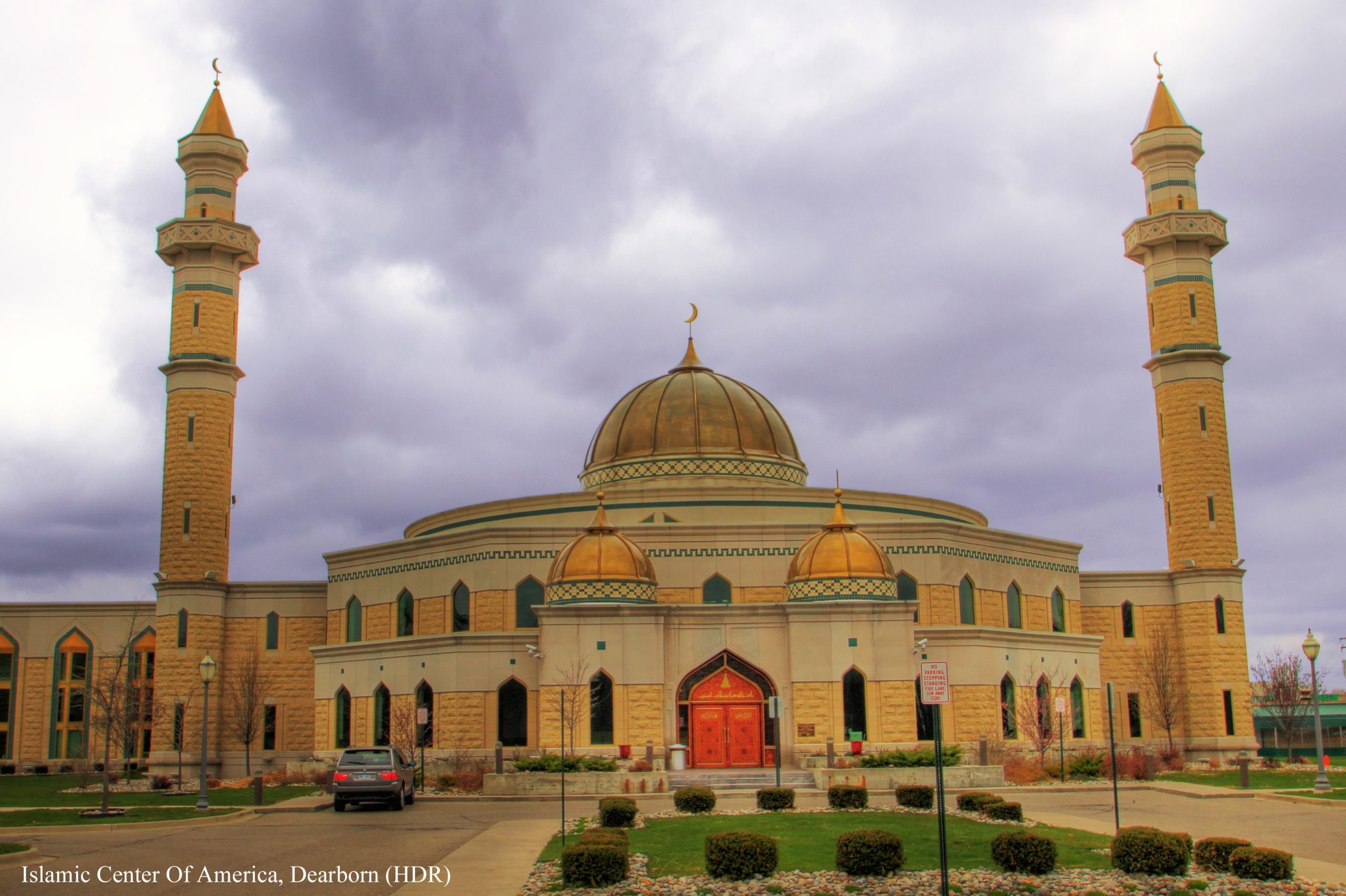
Knowing accurate Prayer Times in United States is one of the most common daily needs for American Muslims, whether you're in New York City, Los Angeles, Houston, or a small town in the Midwest. Because the U.S. spans multiple time zones and a wide range of latitudes, Fajr, Dhuhr, Asr, Maghrib, and Isha can shift by more than an hour between cities on the very same day.
This guide explains how prayer times are calculated across the country, gives you a live, auto-updating calculator below, and covers the practical details — from Daylight Saving Time shifts to choosing the right calculation method — that every Muslim living in America should understand.
Live Prayer Times Today in the United States
The widget below detects your location automatically (with your permission) or lets you pick a major U.S. city. Times refresh every day and adjust automatically for Daylight Saving Time, so you never need to update this page manually.
How Prayer Times Are Calculated Across the U.S.
Unlike a fixed clock schedule, prayer times are tied to the sun's position relative to a specific set of coordinates. Each of the five daily prayers is defined by an astronomical event:
- Fajr begins at true dawn, when the first light appears on the horizon before sunrise.
- Dhuhr starts just after the sun passes its highest point (solar noon).
- Asr begins when the shadow of an object reaches a defined length relative to its height.
- Maghrib starts immediately after sunset.
- Isha begins once twilight has fully disappeared.
Because the sun's angle changes with latitude and season, the exact clock time for these events depends heavily on where you live. This is why Prayer Times in United States can differ by more than an hour between a southern city like Miami and a northern city like Minneapolis on the same day.
Calculation Methods Used by U.S. Mosques
Different Islamic organizations set slightly different angles for calculating Fajr and Isha, which is why you may notice small variations between apps or mosques:
- ISNA (Islamic Society of North America) — the most widely used method in the United States, using a 15° angle for both Fajr and Isha.
- Muslim World League — commonly used internationally, with an 18° angle for Fajr and 17° for Isha.
- University of Islamic Sciences, Karachi — popular among communities with South Asian roots.
- Umm al-Qura, Makkah — used by some communities following Saudi conventions, with a fixed interval after Maghrib for Isha.
If your local mosque follows a specific method, select the matching option in the calculator above so your personal schedule lines up with your community's congregational prayers.

Prayer Times in Major U.S. Cities (Reference Table)
The table below gives a general sense of how much prayer times can vary between major American cities. For the exact time today, always check the live calculator above, since these figures shift daily.
| City | Time Zone | Typical Fajr–Isha Range |
|---|---|---|
| New York, NY | Eastern | Widest swing in summer/winter |
| Los Angeles, CA | Pacific | Relatively stable year-round |
| Chicago, IL | Central | Moderate seasonal swing |
| Houston, TX | Central | Mild seasonal swing |
| Minneapolis, MN | Central | Largest swing (northern latitude) |
| Miami, FL | Eastern | Smallest swing (southern latitude) |
| Seattle, WA | Pacific | Very large swing (northern latitude) |
| Phoenix, AZ | Mountain (no DST) | Stable, no clock change |
Notice that Phoenix doesn't observe Daylight Saving Time, while nearly every other U.S. city does. This is a common source of confusion, covered in more detail below.
Daylight Saving Time and Prayer Times
Because prayer times follow the sun rather than the clock, Daylight Saving Time changes can feel confusing. Here's a practical example: if Fajr is at 5:10 AM the day before clocks move forward in March, it will typically show as roughly 6:10 AM the next morning on the new clock time, even though the sun's actual position hasn't changed. A live calculator handles this shift automatically, but if you rely on a printed schedule, double-check it after every time change in March and November.
Understanding the Five Daily Prayers
Fajr
The pre-dawn prayer, consisting of two rak'ahs, performed before sunrise. Many Muslims in the U.S. set an early alarm for Fajr since its window can be quite short, especially in summer months at northern latitudes.
Dhuhr
The midday prayer, consisting of four rak'ahs, offered after the sun passes its zenith. On Fridays, this is replaced by the congregational Jumu'ah prayer at the mosque.
Asr
The afternoon prayer, consisting of four rak'ahs, timed by shadow length. Its window can be relatively long, but many people miss it by working through the late afternoon without a reminder.
Maghrib
The sunset prayer, consisting of three rak'ahs, with a comparatively short window that begins right after sunset.
Isha
The night prayer, consisting of four rak'ahs, performed once twilight has fully faded. Its window extends until roughly midnight or the following Fajr, depending on the school of thought followed.
Finding a Mosque Near You in the U.S.
Congregational prayer carries extra spiritual reward, and most American cities have at least one mosque or Islamic center. A few practical ways to find one near you:
- Search "mosque near me" or "Islamic center near me" on Google Maps.
- Check community directories maintained by organizations like ISNA or your state's Council on American-Islamic Relations (CAIR) chapter.
- Ask within local Muslim community groups on Facebook or WhatsApp, which are common in most metro areas.
Prayer Times for Travelers and Students in the U.S.
The United States has one of the largest international student and business-travel populations in the world, which means many Muslims are constantly moving between time zones. A student flying from Chicago to Los Angeles for a semester, for example, needs to recalculate Fajr and Isha for the new coordinates rather than simply subtracting two hours from their old schedule — the sunrise and sunset times themselves are different, not just the clock.
A few practical points worth knowing if you travel frequently within the U.S.:
- Recheck your city on arrival. Even a short domestic flight can shift Fajr or Isha by 20–40 minutes depending on latitude.
- Shortening and combining prayers (Qasr and Jam'). Many scholars permit travelers covering a significant distance to shorten four-rak'ah prayers to two, and to combine Dhuhr with Asr or Maghrib with Isha. The exact distance and conditions vary by school of thought, so it's worth confirming with a local scholar before your trip.
- Airport prayer rooms. Most major U.S. international airports — including JFK, LAX, O'Hare, and Dulles — now have dedicated multi-faith or Muslim prayer rooms, often listed on the airport's website under "amenities."
- Time zone confusion during layovers. When connecting through a different time zone, use a live calculator like the one above rather than mental math, since layover clocks reset but the sun's position doesn't follow airline schedules.
Students living in university dorms often find it helpful to sync a prayer-time app with their class schedule at the start of each semester, since Dhuhr and Asr frequently fall during lecture blocks in fall and winter terms.
Tips for Never Missing a Prayer
- Set location-based alerts. Most prayer time apps can send a push notification for each of the five prayers based on your GPS location.
- Bookmark a live calculator. Save this page or a trusted app so you always have today's exact times, not a static list that goes stale.
- Account for work schedules. If Dhuhr or Asr falls during work hours, plan a short break in advance rather than trying to remember in the moment.
- Adjust after time changes. Double-check your alerts right after Daylight Saving Time begins or ends each year.
- Use qada when needed. If you do miss a prayer, make it up as soon as you remember rather than skipping it entirely.
Frequently Asked Questions
How accurate are online Prayer Times in United States?
Online calculators use established astronomical formulas and the calculation angles set by recognized bodies like ISNA and the Muslim World League. They're accurate for nearly all U.S. locations, though it's still a good habit to confirm timings with your local mosque, particularly in northern states where daylight hours vary widely.
Which calculation method is used for prayer times in the United States?
Most American mosques follow the ISNA method, which uses a 15° angle for Fajr and Isha. Some communities with Middle Eastern or South Asian roots use the Muslim World League or University of Karachi methods instead — check with your local mosque if you're unsure.
Do prayer times change with Daylight Saving Time?
Yes. Since prayer times track the sun's position rather than the clock, all five prayers shift by an hour when clocks change in March and November. A live, location-based calculator adjusts for this automatically.
Why do prayer times vary so much between U.S. cities?
Prayer times depend on longitude, latitude, and time zone. Northern cities like Minneapolis or Seattle see much bigger seasonal swings in Fajr and Isha than southern cities like Miami or Houston.
What should I do if I miss a prayer time?
If a prayer is missed unintentionally, it should generally be made up (qada) as soon as it's remembered, aside from a few specifically prohibited times. Setting daily alerts for each prayer can help prevent this.
Can I use the same calculator all year?
Yes — a live calculator recalculates times daily for your exact location, unlike a printed monthly timetable, which only stays accurate for a limited period.
