Dr. Tim Winter (Abdal Hakim Murad): 9 Essential Facts About His Inspiring Life
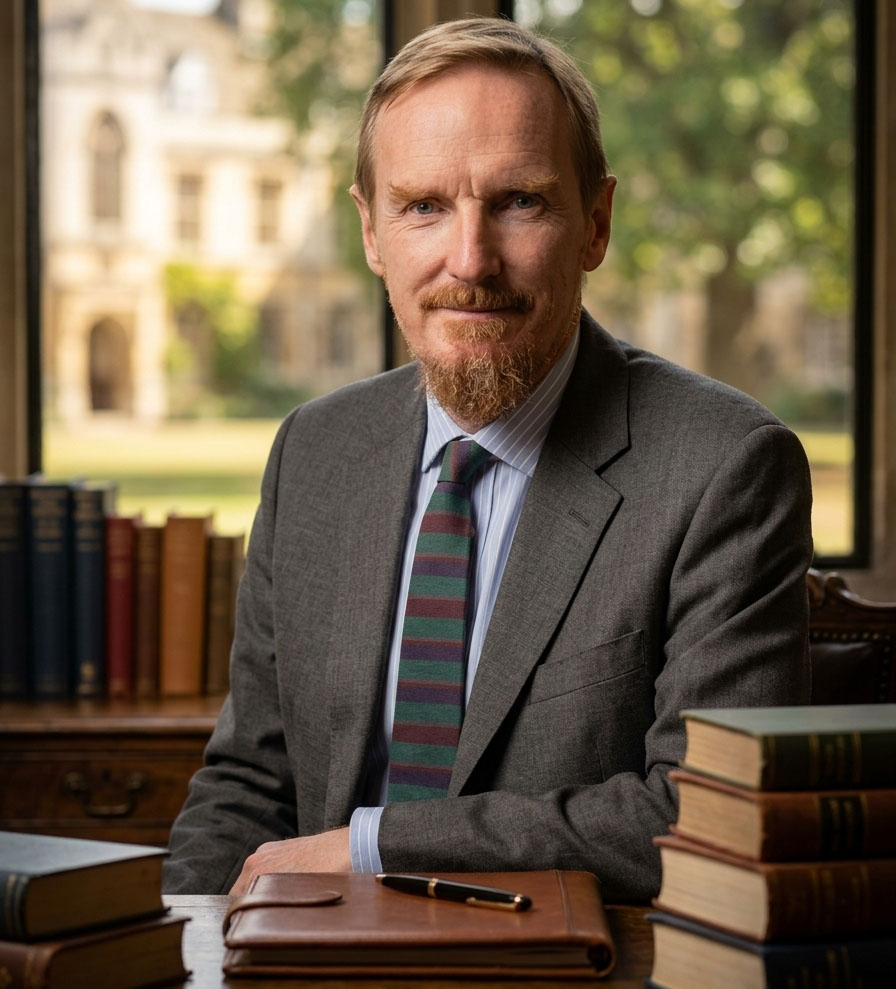
Dr. Tim Winter, known in Muslim communities as Shaykh Abdal Hakim Murad, is one of Britain's most respected Islamic scholars. He teaches Islamic studies at the University of Cambridge, leads the Cambridge Muslim College and helped to bring Cambridge Central Mosque to life.[1][2] This biography explains who he is, how his life unfolded, what he has written and why his voice matters. Sensitive details such as dates, family, awards and criticism are referenced at the end.
Key Takeaways
- Born Timothy John Winter in London in 1960, he became a Muslim in 1979.[1]
- He earned a double first in Arabic at Pembroke College, Cambridge, then studied at Al Azhar in Cairo.[1]
- He founded the Cambridge Muslim College in 2009 to train British imams and scholars.[1][4]
- He started the Cambridge Mosque Project in 2008; the mosque opened on 24 April 2019.[1]
- He ranked 35th on The Muslim 500 list for 2026.[10]
Dr. Tim Winter at a Glance
The table below gives the main facts in the format used by British reference works. Where sources disagree, both versions are shown.
| Full name | Timothy John Winter[1] |
| Also known as | Shaykh Abdal Hakim Murad[1] |
| Born | 1960, London. One source gives 15 May 1960[1]; another gives 1 November 1960[2] |
| Nationality | British |
| Religion | Islam (Sunni)[1] |
| Education | Westminster School; Pembroke College, Cambridge; Al Azhar University, Cairo; University of London; PhD, Vrije Universiteit Amsterdam (2015)[1] |
| Main roles | Founder and Dean, Cambridge Muslim College; Shaykh Zayed Lecturer in Islamic Studies, University of Cambridge; Director of Studies (Theology and Religious Studies), Wolfson College[1][5][6] |
| Family | Son of the architect John Winter; older brother of the football writer Henry Winter[1] |
| Notable awards | Pilkington Teaching Prize (2003); King Abdullah I Prize for Islamic Thought (2007)[1][3] |
Who Is Dr. Tim Winter?
Dr. Tim Winter is an English Islamic scholar, theologian and translator. His work covers Islamic theology, modernity, Sufism and relations between Muslims and Christians.[1][3] He is a leading voice of what scholars call Islamic neo traditionalism, an approach that values classical learning while engaging openly with modern life.[1]
Two names, one scholar
Readers often wonder whether Tim Winter and Abdal Hakim Murad are different people. They are the same person. Timothy Winter is his birth name and the name he uses in academic settings. After becoming a Muslim he took the name Abdal Hakim Murad, which he uses in Muslim communities and in many of his publications.[1] The name Tim Winter is shared by other public figures, so this article refers only to the Cambridge scholar.
Early Life and Family
Dr. Tim Winter was born in London and grew up in Highgate. His father was the architect John Winter and his mother was a painter.[1] His younger brother is the football journalist Henry Winter.[1] A creative household, with design and art close at hand, helps to explain the strong interest in beauty that runs through his later teaching.
The decision to become a Muslim
Dr. Tim Winter became a Muslim in 1979, in his late teens.[1] Reflecting on those years, he has said that as a teenager he doubted purely materialist explanations of beauty and could not accept that it was only an effect of brain function.[1] A profile in The Independent in 2010 described him as Britain's most influential Muslim and explored the personal path that led him to Islam.[7]
This part of his life is worth understanding because it shapes his message. He speaks as someone who has seen both British secular culture and Islamic tradition from the inside, and he often invites listeners to look for meaning rather than only rules.
Education and Training
Dr. Tim Winter combined a British academic education with years of study in the Muslim world. This mix is one of the main reasons his work is trusted by both university colleagues and religious students.
School and Cambridge
Dr. Tim Winter was educated at Westminster School and graduated with a double first in Arabic from Pembroke College, Cambridge, in 1983.[1] A double first means first class honours in both parts of the degree, a rare result.
Al Azhar and private study
After Cambridge he studied at Al Azhar University in Cairo, one of the oldest centres of Islamic learning. He also studied privately with individual scholars in Saudi Arabia and Yemen.[1] On returning to England he studied Turkish and Persian at the University of London.[1][3] These languages opened the great literature of the Ottoman and Persian worlds to him.
Doctorate
In 2015 he received a PhD from Vrije Universiteit Amsterdam. His dissertation was titled "An assessment of Islamic Christian dichotomies in the light of Scriptural Reasoning" and is embargoed until 2050.[1][12] This is why he is properly styled Dr. Tim Winter as well as Shaykh Abdal Hakim Murad.
Career Timeline
The timeline shows how a young convert became a senior academic and institution builder.
| Year | Milestone |
|---|---|
| 1960 | Born in London[1] |
| 1979 | Becomes a Muslim[1] |
| 1983 | Double first in Arabic, Pembroke College, Cambridge[1] |
| 1989 | Publishes his translation of Al Ghazali's The Remembrance of Death and the Afterlife[1] |
| 2003 | Wins the Pilkington Teaching Prize, University of Cambridge[1][3] |
| 2007 | Awarded the King Abdullah I Prize for Islamic Thought; signs the open letter A Common Word[1][13] |
| 2008 | Starts the Cambridge Mosque Project; edits The Cambridge Companion to Classical Islamic Theology[1] |
| 2009 | Cambridge Muslim College opens[1][4] |
| 2012 | Ranked 50th on The Muslim 500; mosque plans approved in Cambridge[1][8] |
| 2015 | Receives his PhD; nominated for a British Muslim Award for Services to Education[1] |
| 2017 | Cambridge Muslim College launches a three year BA in Islamic Studies[4] |
| 2019 | Cambridge Central Mosque opens on 24 April[1] |
| 2020 | Publishes Travelling Home: Essays on Islam in Europe[1] |
| 2022 and 2026 | Ranked 45th and 35th on The Muslim 500[1][10] |
Cambridge Muslim College
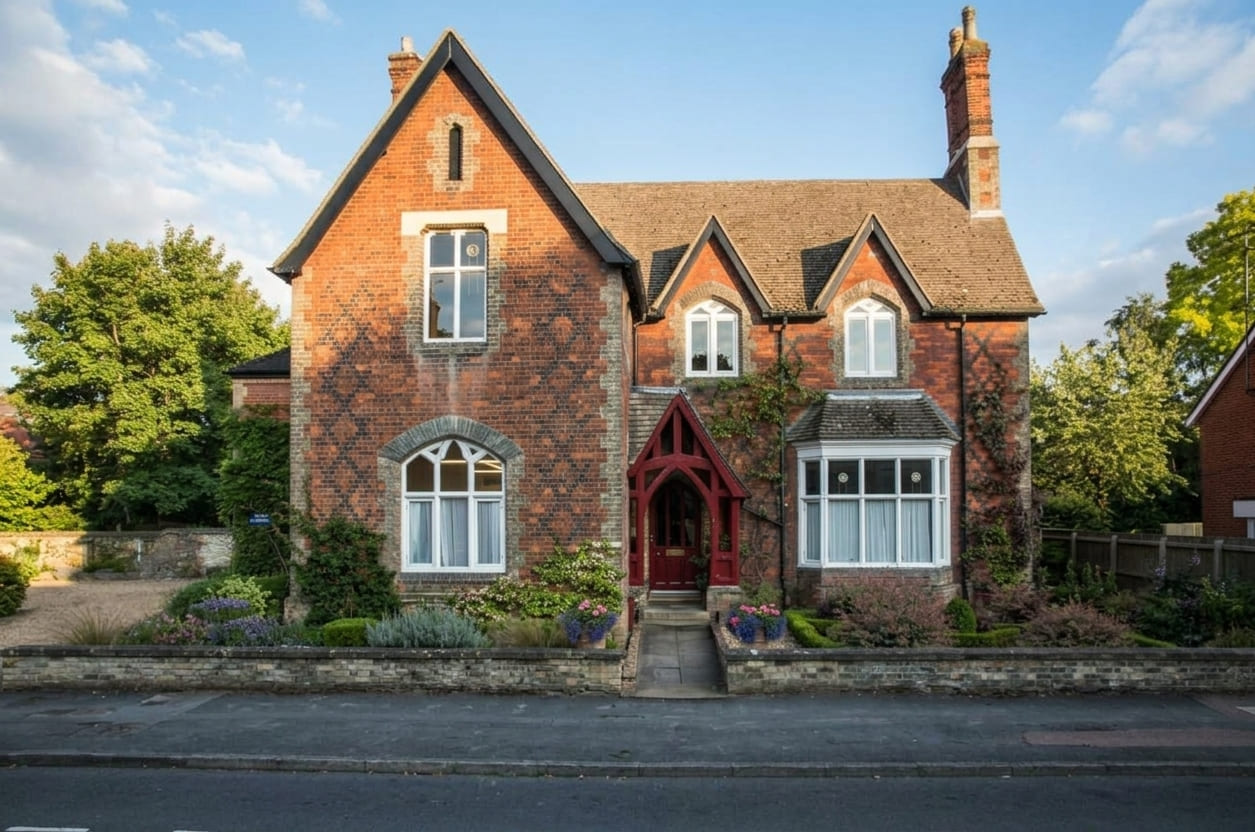
Dr. Tim Winter founded the Cambridge Muslim College in 2009. It is an independent institution designed to train British imams and Muslim leaders.[1][4] It has been based at Unity House on St Paul's Road in central Cambridge since July 2011.[4]
Why the college was needed
For many years, British mosques relied heavily on imams trained overseas. Some arrived with excellent knowledge but little experience of British schools, hospitals, prisons or the media. The college set out to offer trained Muslim scholars a one year diploma in Islamic studies and leadership, designed to help them serve in twenty first century Britain.[4]
Programmes
The college offers the Diploma in Contextual Islamic Studies and Leadership, the Diploma in Islamic Psychology and, since 2017, a three year BA (Hons) in Islamic Studies validated by The Open University.[4] It also hosts early career researchers as research fellows.[4]
Practical example: an imam in a northern English town who also works as a hospital chaplain might take the diploma to learn how classical Islamic ethics apply to patient care, interfaith work and public speaking in Britain.
Cambridge Central Mosque
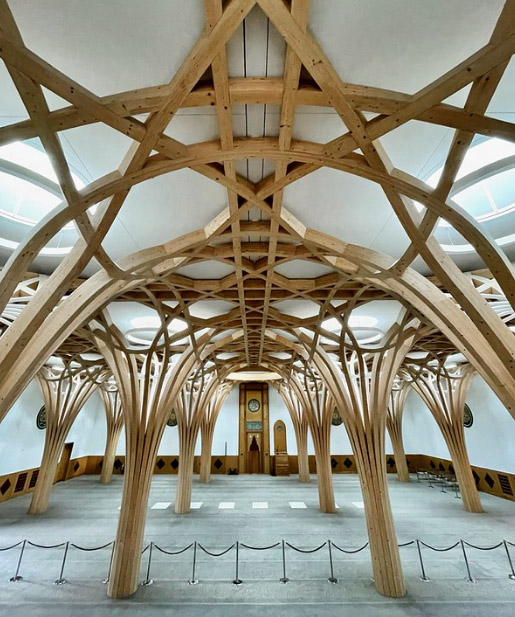
In 2008 Dr. Tim Winter started the Cambridge Mosque Project to raise money for a purpose built mosque in the city.[1] The BBC reported plans for a £15 million mosque on the Mill Road site being approved in August 2012.[8] The Guardian reported in 2011 that the scheme was winning support from local people of other faiths.[9]
Cambridge Central Mosque opened on 24 April 2019. It is described as the first purpose built mosque in Cambridge and the first eco mosque in Europe, with heavy use of green energy and a very low carbon footprint.[1] It can hold up to 1,000 worshippers.[1]
The mosque matters beyond Cambridge. It shows that a British Muslim community can build a landmark that is beautiful, sustainable and open to neighbours. Visitors from schools, universities and local groups regularly use it to learn about Islamic architecture and community life.
Teaching, Research and Publications
As Shaykh Zayed Lecturer in Islamic Studies at the Faculty of Divinity, Dr. Tim Winter has taught generations of Cambridge students.[5] His research interests include Muslim and Christian relations, computerised hadith databases and Sufism.[3] He is also Director of Studies in Theology and Religious Studies at Wolfson College, Cambridge.[6]
Translations
Dr. Tim Winter has translated several classical texts into English. Important examples include Al Ghazali's The Remembrance of Death and the Afterlife (1989) and Disciplining the Soul and Breaking the Two Desires (1995), both published by the Islamic Texts Society, and two volumes of Al Ghazali's Ihya Ulum al Din.[1] These books made classical Islamic spirituality available to English readers.
Books and edited volumes
- The Cambridge Companion to Classical Islamic Theology (2008), which he edited for Cambridge University Press.[1]
- Commentary on the Eleventh Contentions (2012).[1]
- Travelling Home: Essays on Islam in Europe (The Quilliam Press, 2020).[1]
- Bombing without Moonlight, an essay on the origins of suicidal terrorism, first published in 2004.[1]
Other work
Dr. Tim Winter also directs the Sunna Project, which has published leading scholarly Arabic editions of major Sunni hadith collections, and the Anglo Muslim Fellowship for Eastern Europe. He serves as secretary of the Muslim Academic Trust.[1] His book reviews have appeared in the Times Literary Supplement, and he is a regular contributor to BBC Radio 4's Thought for the Day.[1][3]
Views and Public Voice
Dr. Tim Winter is often asked to comment on extremism, identity and the place of Islam in Europe. His positions, as recorded in published sources, are summarised below.
On extremism and violence
Dr. Tim Winter is a traditionalist who considers the views of groups such as al Qaeda to be religiously illegitimate. He rejects suicide bombing and holds that killing noncombatants is always forbidden.[1] His essay Bombing without Moonlight earned the King Abdullah I Prize for Islamic Thought in 2007.[1]
On Islamophobia and Europe
Dr. Tim Winter has criticised the term Islamophobia, arguing that it wrongly suggests hostility to Muslims is mainly about race or tribal fear rather than opposition to their religion. At the same time he has condemned rising hostility to Islam in Europe and suggested that it is fuelled by a loss of faith and tradition within Europe itself.[1]
On politics and ideology
Dr. Tim Winter is critical of Western foreign policy for fuelling anger in the Muslim world. He is equally critical of Wahhabi ideology, which he believes gives extremists a theological excuse for violence.[1]
Interfaith dialogue
In 2007 he was among the signatories of A Common Word Between Us and You, an open letter from Muslim scholars to Christian leaders calling for peace and understanding.[1][13] He has also co edited a book of Jewish, Christian and Muslim conversation.[1]
Criticism and debate
As with any public intellectual, some of his views are debated. Reference works note, for example, that he has expressed agreement with the philosopher Julius Evola's views on modernity while disagreeing with Evola's racist views.[1] Readers who want to judge his ideas should read his own essays and lectures rather than rely on short summaries, and compare them with the writing of other British Muslim scholars.
Awards and Recognition
- Pilkington Teaching Prize (2003): awarded by the University of Cambridge for teaching.[1][3]
- King Abdullah I Prize for Islamic Thought (2007): for Bombing without Moonlight.[1][3]
- British Muslim Awards nomination (2015): Services to Education.[1][3]
- The Muslim 500: ranked 50th in 2012, 45th in 2022 and 35th in 2026.[1][10] The list is compiled each year by the Royal Islamic Strategic Studies Centre in Jordan.[10]
The Muslim 500 profile describes Dr. Tim Winter as one of the most respected Muslim intellectuals of the contemporary age.[2] Rankings reflect an editorial judgement, so they are best read as one signal of influence rather than a final measure.
9 Essential Facts About Dr. Tim Winter
- The birth name of Dr. Tim Winter is Timothy John Winter.
- He is also known as Shaykh Abdal Hakim Murad.
- He was born in London in 1960 and became a Muslim in 1979.
- He earned a double first in Arabic from Cambridge in 1983.
- He studied at Al Azhar, and privately in Saudi Arabia and Yemen.
- He holds a PhD from Vrije Universiteit Amsterdam (2015).
- He founded the Cambridge Muslim College in 2009.
- He started the project that created Cambridge Central Mosque, which opened in 2019.
- He ranked 35th on The Muslim 500 list for 2026.
How to Learn From the Work of Dr. Tim Winter
You do not need to live in Cambridge to benefit from the teaching of Dr. Tim Winter. Here are practical ways to begin, depending on what you want.
- If you are a student: start with The Cambridge Companion to Classical Islamic Theology for a clear overview of Islamic theology.
- If you serve a community: read the programme details of the Cambridge Muslim College to see how it prepares scholars for British life.
- If you enjoy short talks: search for his Thought for the Day broadcasts on BBC Radio 4.
- If you want longer reading: his essays are collected in Travelling Home, and many older articles are archived on the Masud website.
- If you want to hear his personal story: a 2024 interview called "Converting to Islam and the Pursuit of Meaning" is available on YouTube.[14]
Readers who enjoy this style of biography may also like our profiles of Mufti Ismail Menk, Yasir Qadhi and Yasmin Mogahed, or the full Islamic scholars biography library.
Frequently Asked Questions About Dr. Tim Winter
Who is Dr. Tim Winter?
He is a British Islamic scholar, theologian and translator, born Timothy John Winter in London in 1960. He is the Shaykh Zayed Lecturer in Islamic Studies at the University of Cambridge and the founder and Dean of the Cambridge Muslim College.[1]
Is Dr. Tim Winter the same person as Abdal Hakim Murad?
Yes. Abdal Hakim Murad is the Muslim name he took after becoming a Muslim in 1979. He uses Timothy Winter in academic settings and Abdal Hakim Murad in Muslim communities.[1]
When did he become a Muslim?
He became a Muslim in 1979, in his late teens, before studying Arabic at Cambridge and then at Al Azhar University.[1]
What is the Cambridge Muslim College?
It is an independent college founded in 2009 that trains Muslim scholars and leaders for life in modern Britain. It offers two diplomas and a BA in Islamic Studies.[4]
What was his role in Cambridge Central Mosque?
He started the Cambridge Mosque Project in 2008 to raise funds for a purpose built mosque. The building opened on 24 April 2019 and is described as the first eco mosque in Europe.[1]
Which books has he written or translated?
Key titles include his translation of Al Ghazali's The Remembrance of Death and the Afterlife, the edited volume The Cambridge Companion to Classical Islamic Theology, Commentary on the Eleventh Contentions and Travelling Home: Essays on Islam in Europe.[1]
How old is Dr. Tim Winter?
He was born in 1960, so he is 65 or 66 in October 2026. Sources differ on the exact birthday, giving either 15 May or 1 November.[1][2]
Where does he rank on The Muslim 500?
He ranked 35th in the 2026 edition, after ranking 45th in 2022 and 50th in 2012.[1][10]
Conclusion
Dr. Tim Winter, or Abdal Hakim Murad, has built a rare career that joins Cambridge scholarship, classical Islamic learning and practical service to British Muslims. Through teaching, translation, the Cambridge Muslim College and Cambridge Central Mosque, he has influenced how Islam is studied and lived in the United Kingdom. Whether you agree with every opinion or not, his life offers a useful case study in faith, education and public responsibility.
 Ismail ibn Musa Menk: Influential Islamic Scholars in the World 2026
 Browse every Islamic scholar biography on Islamic Info Center
References
- Wikipedia (2026). Timothy Winter. Accessed 11 October 2026.
- The Muslim 500 (2026). Timothy Winter profile. Royal Islamic Strategic Studies Centre.
- University of Cambridge, Centre for Science and Policy. Dr Tim Winter.
- Wikipedia (2026). Cambridge Muslim College.
- University of Cambridge, Faculty of Divinity. Dr Timothy Winter.
- Wolfson College, Cambridge. People: Timothy Winter.
- Peck, T. (2010). Timothy Winter: Britain's most influential Muslim. The Independent, 20 August 2010.
- BBC News (2012). Cambridge £15m mosque plans approved for Mill Road site. 22 August 2012.
- Butt, R. (2011). Cambridge mosque wins support from local non-Muslims. The Guardian, 3 October 2011.
- Islam Channel (2025). The Muslim 500: 2026 edition announced.
- Cambridge Muslim College. People.
- Winter, T. (2015). An assessment of Islamic Christian dichotomies in the light of Scriptural Reasoning. PhD thesis, Vrije Universiteit Amsterdam.
- MacFarquhar, N. (2007). In open letter, Muslims seek cooperation with Christians. The New York Times, 12 October 2007.
- The Sacred (2024). Converting to Islam and the Pursuit of Meaning with Dr Timothy Winter. YouTube, 15 October 2024.

CEO and Editor in Chief, Islamic Info Center. Covers Islamic history, scholars and the Hijri calendar.
Editorial note: this biography is compiled from the public sources listed above and is for general information. Dates and rankings can change, so please check the original sources for the latest details.